
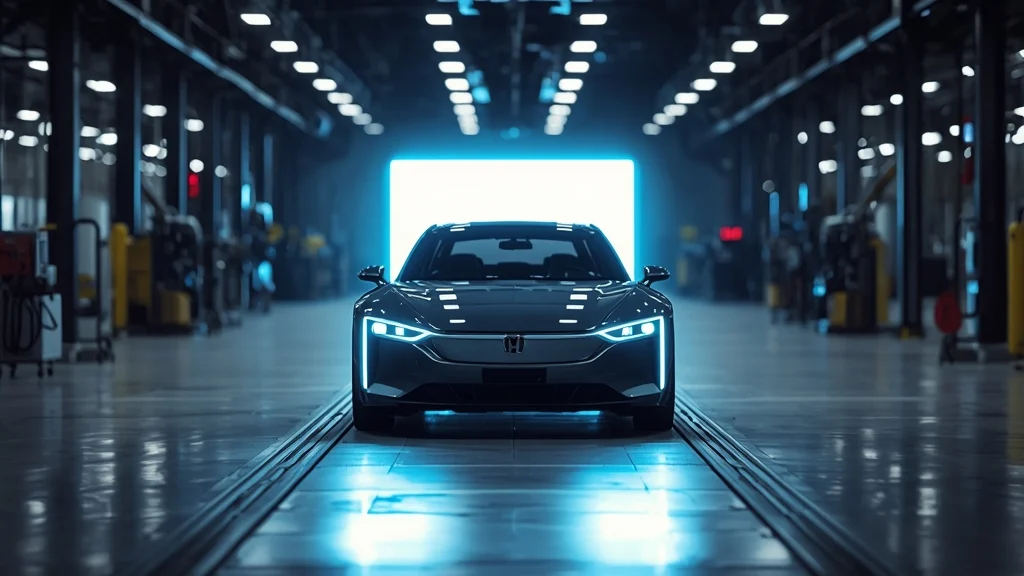
Honda is cutting gas-powered car production in China to combat the rise of EV rivals like BYD. Discover how this shift impacts the global giant.
The landscape of the global automotive industry is shifting rapidly, and legacy giants are feeling the heat. Honda, the Japanese automotive powerhouse, is reportedly planning to shut down at least one of its internal combustion engine (ICE) production plants in China as it struggles to keep pace with the meteoric rise of domestic electric vehicle (EV) manufacturers.
A Strategic Cutback in Production
According to industry sources, Honda is preparing to reduce its footprint in the world’s largest auto market. The company plans to close one of its joint-venture plants with the Guangzhou Automobile Group (GAC) starting in June. Furthermore, Honda is considering the suspension of another facility operated through its partnership with Dongfeng Motor Group by next year.
While Honda has declined to officially comment on these reports, the move signals a significant retreat. For decades, joint ventures were the golden ticket for foreign automakers entering China, but the tide has turned as consumer preferences pivot toward electrification.
The Numbers: A Steep Decline
The impact of these closures on Honda’s operational capacity is substantial. Currently, Honda operates six plants in China across its two main joint ventures. If the plan to close one ICE plant per venture goes through, Honda’s gas-powered production capacity will be slashed by half—dropping from 960,000 vehicles per year to approximately 480,000.
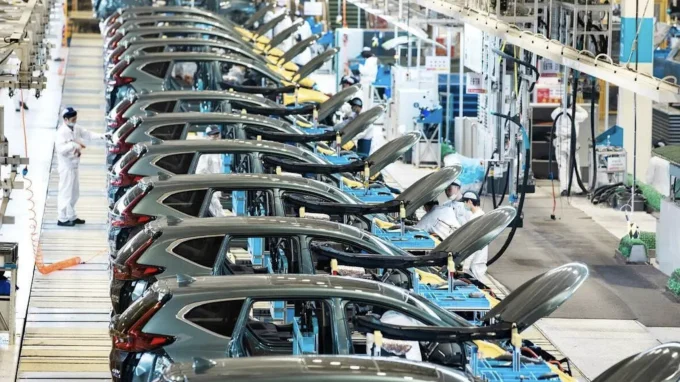
Overall, Honda’s total market capacity in China would plummet from 1.2 million vehicles to roughly 720,000 annually. This drastic reduction reflects a harsh reality: the traditional combustion engine is losing its grip.
Facing the ‘EV Storm’ and Financial Pressure
The primary catalyst for this retreat is the aggressive growth of Chinese EV brands, most notably BYD. Honda’s sales figures tell a sobering story: in 2025, sales are projected to drop by about 24% compared to the previous year, falling below 647,000 units. To put that in perspective, this is nearly half of the 1.2 million vehicles the company sold in 2023.
This downturn isn’t just a sales problem; it’s a financial crisis. Honda is currently restructuring its EV strategy with an estimated cost of $15.7 billion. This massive investment and the write-down of business value in China could potentially lead to Honda recording its first annual loss in nearly 70 years of being a publicly traded company.
The Road Ahead: A Pivot to 2028
Despite the current setbacks, Honda isn’t abandoning China entirely. The company is shifting its focus toward a more sustainable, electrified future. Sources indicate that Honda’s EV plants in Guangzhou and Wuhan will transition to producing electric and plug-in hybrid (PHEV) models developed by its Chinese partners starting in 2028.
Meanwhile, Honda’s partners, GAC and Dongfeng, are not sitting idle. Both companies are aggressively expanding their export strategies, targeting markets in Europe, Southeast Asia, the Middle East, and Africa to diversify their revenue streams and reduce reliance on the volatile domestic market.
Honda’s struggle serves as a cautionary tale for the global auto industry: in the race toward electrification, legacy prestige is no longer enough to guarantee market dominance.