
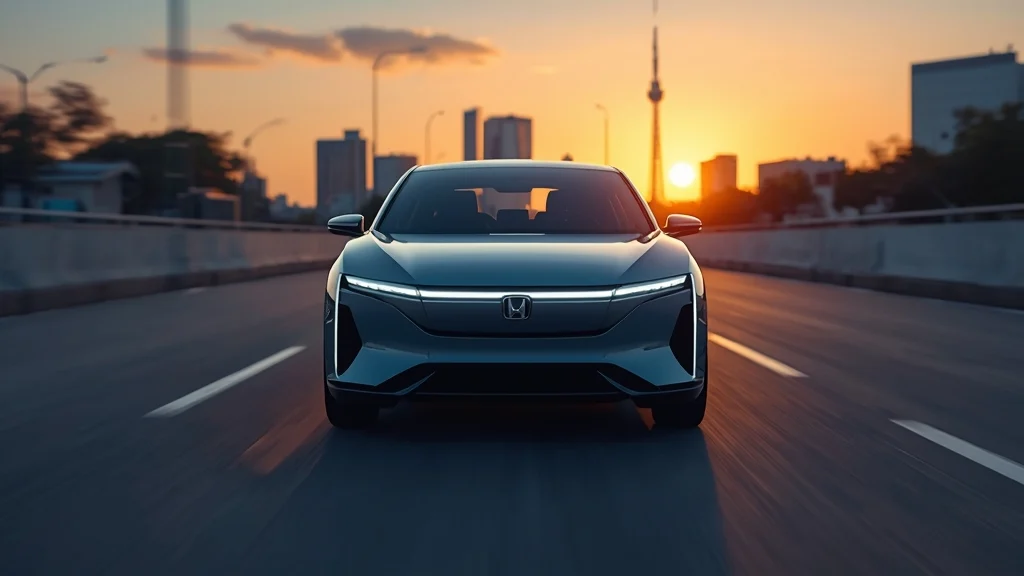
Honda plans to debut an all‑electric N‑Box in 2027, keeping its lead in Japan’s best‑selling kei‑car segment. Learn more now!
Japanese automaker Honda is preparing to introduce the first fully electric version of its wildly popular N‑Box kei‑car, slated for release in 2027. The move marks a pivotal shift for a model that has dominated Japan’s micro‑car market for more than a decade.
Why the N‑Box Matters
First launched in 2011, the N‑Box quickly earned a reputation for spacious interiors, compact dimensions, and an affordable price tag of around ¥1.7 million (≈ $12,500). Its clever packaging—offering roomier cabin space than many larger vehicles—has made it a favorite among urban drivers.
Sales figures illustrate the model’s strength. In 2024 alone, Honda sold over 200,000 N‑Box units, outpacing the Toyota Corolla and clinching the title of Japan’s best‑selling car for the third consecutive year. Cumulatively, the model has approached 3 million units since its debut.
From Gas to Electric: What We Know So Far
The current N‑Box is powered by a 658 cc three‑cylinder gasoline engine that delivers 58 hp in naturally aspirated form, or 63 hp with a mild‑turbo setup. Honda has not yet disclosed the exact range or pricing for the upcoming electric variant, but the company has indicated that both electric and gasoline models will coexist for a period to cater to diverse consumer needs.
The Kei‑Car Landscape
Kei‑cars are a uniquely Japanese vehicle class, limited to a maximum length of 3.4 m, width of 1.48 m, and height of 2.0 m. Their low ownership costs and city‑friendly dimensions have long made them the go‑to choice for city dwellers.
Electric kei‑cars benefit from the same tax breaks and subsidies granted to their gasoline counterparts, keeping registration fees and annual taxes markedly lower than those for larger vehicles. This advantage is crucial in a market where electric vehicles (EVs) currently represent only about 2 % of new car sales—the lowest share among major economies.
Growing Momentum for Electric Kei‑Cars
Despite the modest overall EV penetration, the electric kei‑car segment is gaining traction. In 2024, Nissan’s Sakura and Mitsubishi’s eK X collectively accounted for more than 40 % of all electric vehicle sales in Japan.
Rising Competition
The upcoming electric N‑Box will face intensified rivalry. Chinese EV giant BYD plans to launch the Racco—a direct challenger slated for release roughly a year before Honda’s model. Suzuki is also targeting a 2026 (or later) launch of its own electric kei‑car.
What This Means for Consumers
For Japanese buyers, the electric N‑Box could combine the classic N‑Box’s practicality with the environmental and cost benefits of electric propulsion. For international observers, the development signals Honda’s commitment to electrifying even its most size‑restricted platforms, a trend that could influence compact-car strategies worldwide.
Stay tuned as Honda reveals more details on range, pricing, and launch timelines for the electric N‑Box—an evolution that could reshape Japan’s micro‑car market.