
India’s EV sales are soaring, but charging stations aren’t keeping up. Explore the infrastructure gap and the road ahead. Learn more here!
India’s transition to electric mobility is currently a story of two contrasting realities. While consumer demand for electric vehicles (EVs) is skyrocketing, the physical infrastructure required to power them is struggling to keep up with the pace of adoption.
The numbers tell a compelling story. By 2025, sales of battery electric vehicles (BEVs)—spanning two-wheelers, passenger cars, and commercial vehicles—surpassed 2.3 million units, bringing the total number of EVs on Indian roads to nearly 5.9 million. However, the support system is lagging significantly.
The Infrastructure Gap: India vs. The World
With only about 26,000 public charging stations nationwide, India currently averages one charging station for every 225 electric vehicles. To put this in perspective, global leaders like China maintain a far more robust ratio, with approximately one station for every seven vehicles.
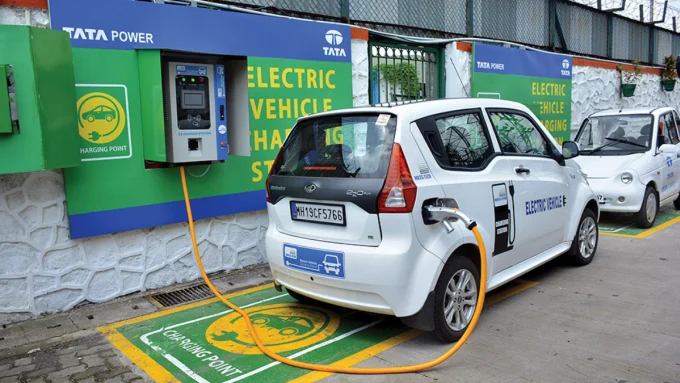
This disparity highlights a classic “chicken and egg” paradox: infrastructure developers are hesitant to invest heavily without a massive fleet of EVs to ensure profitability, while potential buyers are reluctant to switch to electric if they don’t feel confident in the charging network.
From “Quantity” to “Quality”
Industry experts suggest that the conversation is shifting. It is no longer just about how many chargers are available, but where they are placed and how effectively they operate. Vivek Srivatsa, Commercial Director at Tata Passenger Electric Mobility, notes that the ecosystem is evolving toward a data-driven approach, where automakers and charging operators collaborate to identify high-demand hotspots.
There is a silver lining on the highways. Key arterial roads are being equipped with chargers, making long-distance travel—once a major deterrent—increasingly viable. Data from Tata Motors reveals that their EV network now covers 95% of India’s road network, with nearly half of their customers completing trips over 500 km. This indicates that “range anxiety” is gradually being replaced by a new concern: charger reliability.
The Performance Bottleneck and Economic Hurdles
A significant technical gap is hindering the user experience. Much of India’s existing charging network operates at 25-30 kW, yet newer EV models support capacities of 60 kW or higher. This incompatibility slows down charging speeds, particularly on highways where time is of the essence. Furthermore, early-generation stations with only one or two plugs often lead to congestion and long queues.
The Utilization Challenge
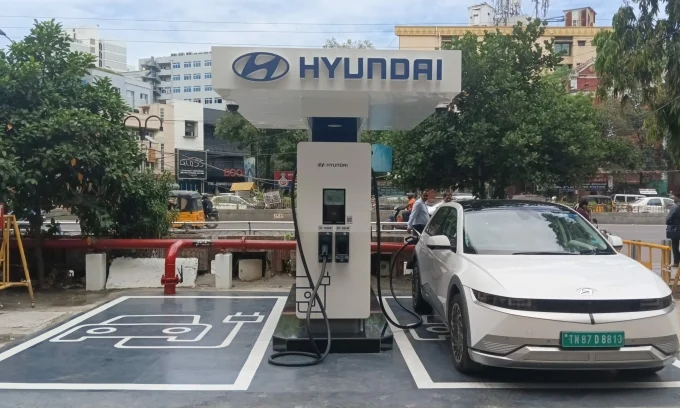
For operators like Tata Power, one of India’s largest charging network providers, the focus has shifted to optimizing utilization. Currently, the average charger utilization rate nationwide is a meager 4-5%. This means most stations spend the vast majority of their time idle.
While Tata Power has deployed over 5,600 public and private charging points across 630 cities—including 450 highway locations—the economic viability remains a struggle. Maxson Lewis, CEO of Magenta Mobility, and Kartikey Hariyani, CEO of ChargeZone, both point out that poor location planning and the prevalence of home charging have kept public utilization rates low, fluctuating between 5% and 35%.
The High Cost of Going Fast
The financial barrier to upgrading infrastructure is steep. A single 60 kW DC fast charger can cost over 800,000 rupees (~$8,600), with additional infrastructure costs ranging from 500,000 to 1,500,000 rupees (~$5,400 to $16,000). For large-scale projects, investments can run into tens of millions of rupees, making strategic placement critical for financial survival.
Looking Ahead: A Two-Tiered Strategy
The future of India’s charging landscape will likely be bifurcated based on usage patterns:
- Urban Centers: Reliance will remain high on slow AC charging, driven by the habit of charging at home or the workplace. However, in densely populated cities like Mumbai, where street parking is common, public charging hubs will be essential.
- Highways: The priority will be a dense network of high-capacity DC fast chargers. For example, 180 kW stations on the Mumbai-Ahmedabad route can now charge a battery from 20% to 80% in just 15-30 minutes, drastically improving the travel experience.
As India continues its push toward a greener future, the success of the EV revolution will depend not on the number of cars sold, but on the reliability and efficiency of the grid that powers them.