
Discover how China’s rail‑mounted mobile charging robots bring power directly to electric cars in parking garages, cutting costs and boosting convenience. Learn more today!
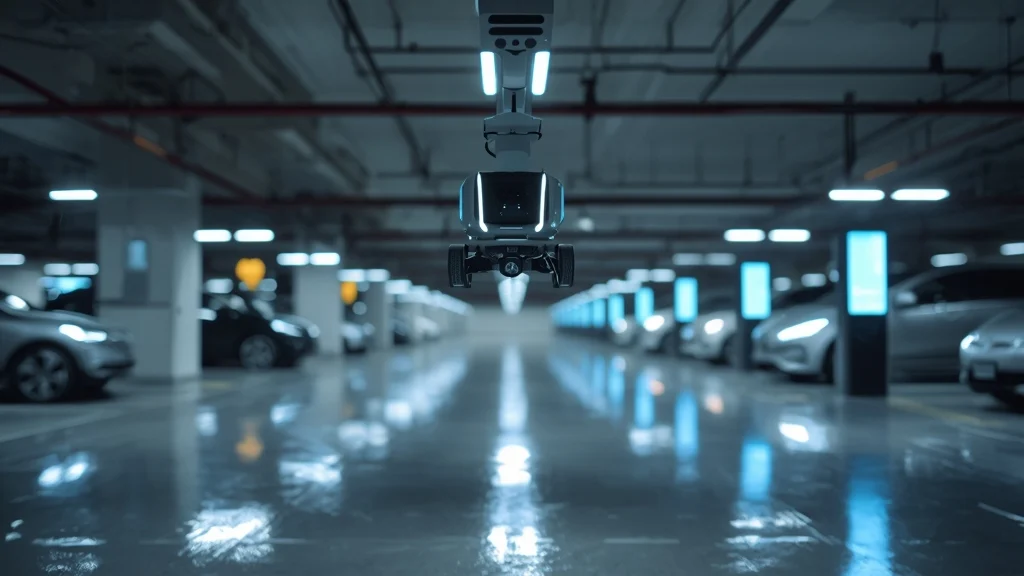
Imagine pulling into a underground parking lot and having a robot glide along a ceiling‑mounted rail, stopping right above your electric car to plug in and charge – no hunting for a free slot, no tangled cords. This futuristic scene is already a reality in several Chinese cities, where rail‑based mobile charging robots are turning every parking space into a potential power point.
How the System Works
The technology combines an electric rail that serves both as a power conduit and a guideway. When an EV driver requests a charge—typically through a mobile app, WeChat, or a QR code—the robot rolls along the elevated track, aligns itself over the vehicle, lowers a connector, and begins charging.
Key Advantages
- Infrastructure efficiency: One central power feed can serve dozens of parking spots, eliminating the need for costly individual chargers at each space.
- Space savings: The rail system resides overhead, preserving valuable floor area in tight underground garages.
- User convenience: Drivers no longer need to search for an available charger; the robot comes to them.
Limitations to Consider
Because the rail also carries the charging current, the system operates at AC Level‑2 speeds rather than ultra‑fast DC. While it won’t power a car in minutes, it’s well‑suited for vehicles parked for hours—think office lots, shopping centre decks, or overnight residential garages. The slower but reliable charge aligns with the “slow and steady” philosophy of many EV owners who park for extended periods.
Leading Players in the Race
Several Chinese firms are sprinting to commercialise the technology:
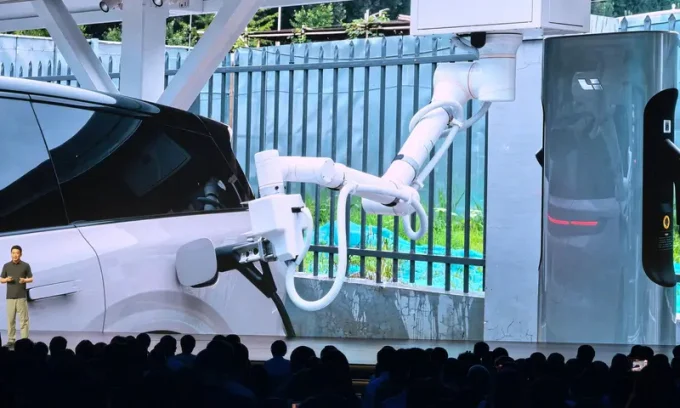
- Li Auto & CGXi: Their joint effort has produced the world’s first rail‑mounted autonomous charging arm. Li Xiang, CEO of Li Auto, confirmed active field trials during the July 2025 Li i8 launch event.
- Wawa: Offers the “Robot HAVA,” a flexible 18‑degree‑of‑freedom arm that travels on an H‑shaped overhead rail, capable of serving eight or more parking spaces simultaneously. The company touts it as the first commercially available automated charging robot.
- SkyvoltRobot: Described in a 2024 ScienceDirect paper, this framework provides the technical backbone for high‑rail charging robots, supporting ongoing commercial deployments.
Beyond the Rails: The Bigger Robot‑Charging Landscape
Rail‑based chargers represent just one slice of China’s booming mobile EV‑charging ecosystem. Ground‑based robots from companies like CharGo (a CATL subsidiary), NaaS Technology, GGSN and VMR are also racing ahead. CharGo’s CEO predicts that by 2030, robots could handle 20% of all new‑energy vehicle charging. Beijing alone plans to install 1,000 mobile charging robots across 150 parking facilities.
What This Means for Global EV Infrastructure
While the technology is still maturing, its potential to slash installation costs and maximise parking‑lot utility is attracting attention from investors worldwide. As electric vehicle adoption accelerates, rail‑mounted mobile chargers could become an attractive complement to fast‑DC stations, especially in dense urban environments where space and budget are at a premium.
Stay tuned as these robots glide onto more rooftops and parking decks, reshaping how we think about refuelling the electric fleet.