
Tesla has changed the 0‑100 km/h acceleration figure for the Canada‑sold Model 3 Premium RWD, prompting buyer backlash. Discover the latest specs and what it means for owners – read more now.
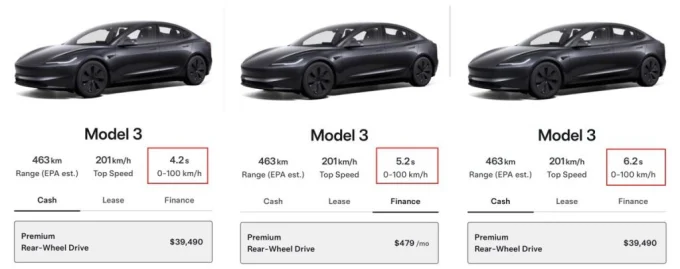
In early May, Tesla announced that the newly‑launched Model 3 Premium RWD, built at the Giga Shanghai plant and priced at CAD 39,490 (≈ USD 28,680), could sprint from 0 to 100 km/h in just 4.2 seconds. Within days, the figure was quietly revised to 5.2 seconds, and by mid‑May it settled at 6.2 seconds – a full two seconds slower than the original claim.
How the numbers changed
When the model was first listed on Tesla’s Canadian website (May 1), the specifications read:
- Range: 463 km (WLTP)
- 0‑100 km/h: 4.2 seconds
- Maximum DC charging power: 250 kW
On May 3, Tesla updated the acceleration time to 5.2 seconds, labeling the earlier figure as a “website error”. At the same time, the maximum charging power was reduced to 175 kW and the battery‑pack warranty was cut from 192,000 km to 160,000 km.
Another amendment arrived on May 19, pushing the 0‑100 km/h time to 6.2 seconds with the explanation that the previous numbers were the result of a “miscommunication”.
Why the performance drop?
The 6.2‑second figure matches the acceleration spec Tesla lists for the Standard‑range RWD version sold in Europe – a model that also uses the Shanghai‑built LFP (lithium‑iron‑phosphate) battery pack. The Premium RWD sold in Canada shares the same battery chemistry and the same 3D7 rear‑motor (260 hp, 340 Nm). LFP cells are cheaper and longer‑lasting than the higher‑energy NMC cells, but they deliver lower peak power, which translates into slower launch speeds.
Earlier Model 3s built in Fremont, California, used a more powerful 3D6 motor (295 hp, 440 Nm) and NMC batteries, which is why the Canadian Premium version feels less brisk despite its “premium” badge.
Price advantage and trade‑offs
The CAD 39,490 price tag is the lowest ever for a Model 3 in Canada, made possible by the new 6.1 % tariff rate for Chinese‑made cars and the lower cost of LFP cells. While the price is attractive, the trade‑off is evident in the reduced acceleration and a slightly lower charging ceiling.
Consumer reaction
Several buyers who placed deposits based on the original 4.2‑second claim have voiced disappointment, arguing that a two‑second difference is significant for performance‑oriented customers. Tesla has responded by offering to cancel orders and refund deposits for those who are unsatisfied with the revised specs.
What’s next?
It remains unclear whether the 6.2‑second figure is final or if further tweaks will appear before deliveries begin in early June. The rapid succession of spec changes has also raised questions about the reliability of other advertised figures, such as range and charging speed.
Prospective owners should keep an eye on Tesla’s official site for the most up‑to‑date specifications and consider the balance between price, battery longevity, and performance before committing.