
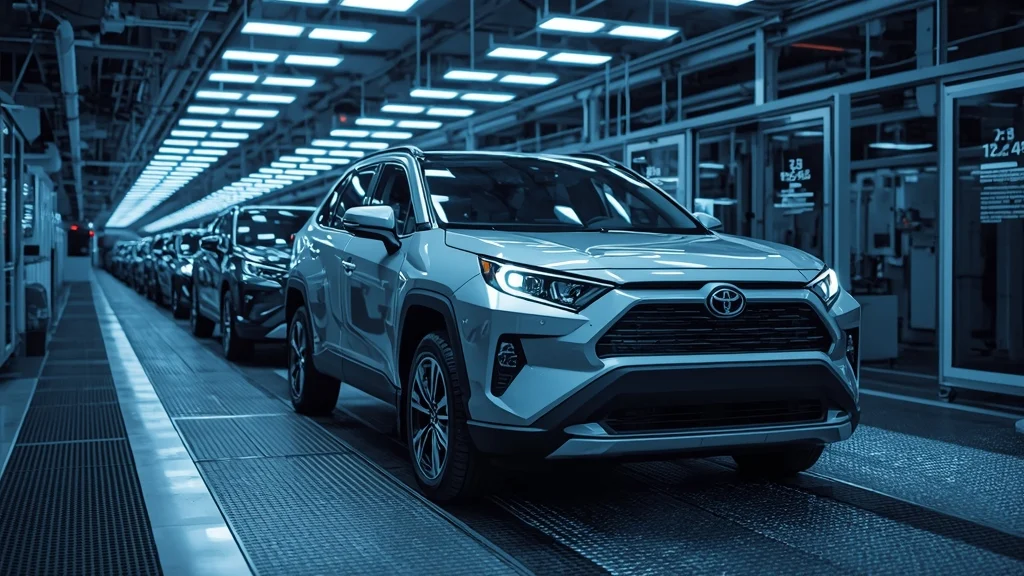
Toyota targets a 30% rise in hybrid vehicle production to 6.7 million units by 2028, expanding U.S. battery investments. Learn more now!
Toyota Motor Corporation, the world’s largest automaker, has unveiled a bold plan to increase its global hybrid‑vehicle output by roughly 30% over the next two years. By 2028 the company aims to produce about 6.7 million hybrid and plug‑in hybrid (PHEV) units, up from the 5.1 million slated for 2026.
Why Hybrids, Not Full‑Electric?
The Japanese giant sees hybrids as the quickest pathway to a low‑carbon fleet. While fully electric cars are gaining traction, Toyota expects hybrids to make up around 60% of its total production by 2028, compared with roughly half of the mix this year.
Investment Surge in the United States
To back the strategy, Toyota will inject an additional US$10 billion into its U.S. operations over the next five years. The funding will primarily support lithium‑ion battery manufacturing and the scaling of hybrid‑powertrain facilities.
Key highlights include:
- A new battery plant in North Carolina, already a $13.9 billion project, will create about 5,100 jobs and produce cells for EVs, hybrids and PHEVs.
- Beginning in 2027‑2028, the popular Corolla Hybrid will be assembled at Toyota’s Mississippi factory, shifting from imports to domestic production.
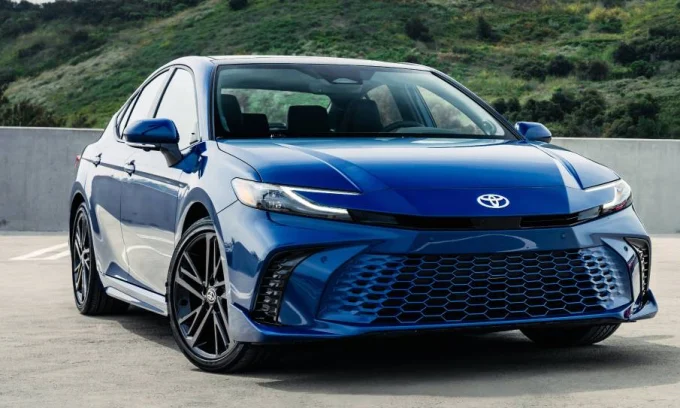
- Hybrid variants of best‑selling models such as the Camry, Tacoma and RAV4 will receive expanded production capacity.
These moves are expected to lift Toyota’s U.S. sales by 8% in 2025, reaching 2.51 million vehicles, with hybrid models accounting for a large share of the growth.
European and Asian Expansion
Beyond the United States, Toyota is upgrading its Sakarya plant in Turkey—a crucial hub for European hybrid production. An investment of €317 million will enable the factory to launch the second generation of the Toyota C‑HR, including its first plug‑in hybrid versions, and to start on‑site battery assembly.
In Vietnam, the automaker is rolling out a $360 million hybrid‑assembly facility in Phú Thọ province, reinforcing its regional electrification push.
Current Hybrid Line‑up
Toyota now offers six hybrid models worldwide, all sourced from its plants in Indonesia and Thailand:
- Altis (Corolla Altis)
- Camry
- Yaris Cross
- Corolla Cross
- Innova Cross
- Alphard
With the new production targets, these models are set to dominate sales in markets where full‑electric infrastructure is still developing.
What This Means for the Auto Industry
Toyota’s commitment signals a clear industry trend: major manufacturers are betting on hybrids as a transitional technology toward full electrification. By scaling up hybrid output and battery capacity, Toyota aims to keep its leadership position while meeting stricter emissions regulations across the globe.
Consumers can expect more hybrid options, lower prices due to economies of scale, and greater availability of domestically produced batteries—especially in the United States.
Looking Ahead
While the exact production numbers remain preliminary estimates for suppliers and partners, the strategic direction is set: Toyota will continue to prioritize hybrid technology, invest heavily in battery manufacturing, and expand its global footprint. The goal is clear—by 2028, a greener, more hybrid‑centric Toyota lineup will be on roads worldwide.