
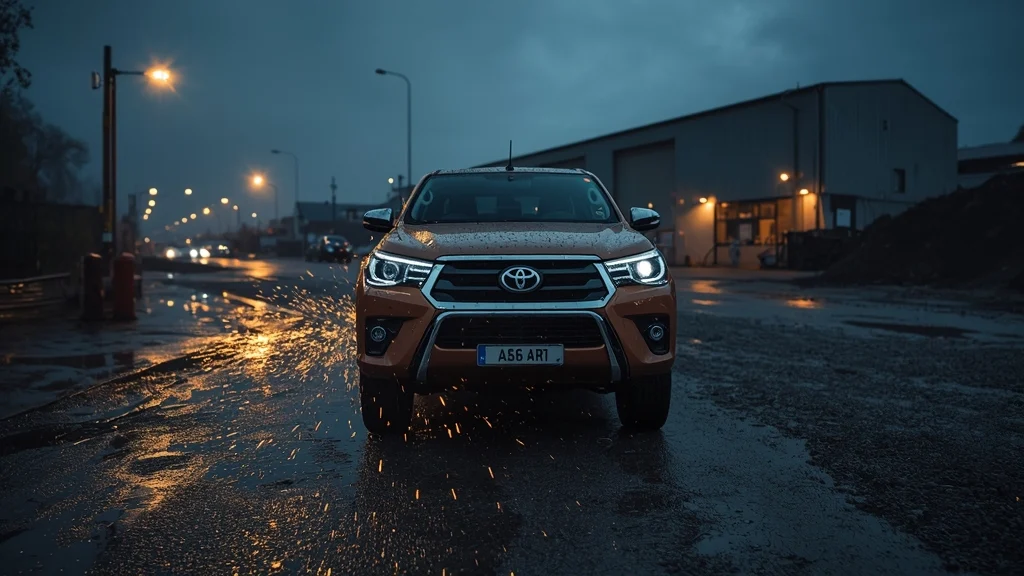
Discover Toyota’s new electric Hilux truck, its specs, and why it may never arrive in Vietnam. Learn more now!
Renowned for its rugged durability, the Toyota Hilux is stepping into the electric era. At the recent Brussels Motor Show, Toyota unveiled the ninth‑generation Hilux for Europe, offering both a 2.8 L diesel mild‑hybrid and a brand‑new fully electric (BEV) version.
Why an Electric Hilux Matters
European regulators are tightening emission standards, and commercial buyers are demanding lower operating costs. By adding an all‑electric model, Toyota aims to keep the Hilux relevant on markets where zero‑emission pickups are becoming the norm.
Two Powertrains, One Legend
The diesel mild‑hybrid continues to deliver 201 hp and the familiar 48 V system that powers the latest European‑spec Hilux. Some markets will even receive a non‑hybrid diesel option, ensuring that customers who need maximum payload (up to 1,000 kg) and towing capacity (3,500 kg) still have a reliable choice.
Hilux BEV – Specs at a Glance
- Battery: 59.2 kWh lithium‑ion pack
- Motors: Dual electric motors (front 205 Nm, rear 268 Nm) delivering all‑wheel drive
- WLTP range: ~258 km (up to ~380 km in urban cycles)
- Payload: 715 kg
- Maximum tow: 1,600 kg
While the range is modest compared with passenger EVs, it aligns with typical urban and intra‑city work routes that many fleet operators run.
Off‑Road Capability Remains Intact
The electric Hilux retains the body‑on‑frame chassis, a 212 mm ground clearance and a fording depth of 700 mm. A dedicated off‑road mode exploits the instant torque of the electric motors and regenerative braking to enhance traction on rugged terrain.
New ‘Cyber Sumo’ Design Language
Both the hybrid and BEV variants showcase Toyota’s “Cyber Sumo” styling, developed by the Australian design team. Square, muscular proportions, a closed‑grid front fascia and reshaped bumper give the pickup a modern, large‑truck presence. The BEV can be identified by its sleek, fully‑covered grille.
Tech‑Rich Cabin
Inside, the Hilux steps up with a 12.3‑inch digital instrument cluster, a sizeable central touchscreen borrowed from the latest Land Cruiser, and a steering wheel that mirrors the premium SUV’s layout. While advanced driver‑assist systems are fully integrated, Toyota retains physical buttons for frequently used functions, keeping the cockpit familiar for long‑time users.
Market Outlook
Sales in the United Kingdom are slated to begin in June, with pricing positioned above the outgoing generation. Toyota has confirmed that the BEV will be sold alongside the diesel variants, but the electric model’s limited payload and tow ratings may restrict its appeal to niche commercial fleets.
What About Vietnam?
The electric Hilux is unlikely to arrive in Vietnam in its current form. The Vietnamese launch, scheduled for later this month, will feature only the diesel powertrain, reflecting local market preferences for higher payload and longer range.
In summary, the new Toyota Hilux BEV demonstrates the brand’s commitment to a multi‑path electrification strategy—offering diesel, mild‑hybrid, full‑electric, and even experimental hydrogen‑fuel‑cell variants. Whether the electric version will become a staple on Vietnamese roads remains an open question, but the shift signals a clear direction for the future of pickups worldwide.