
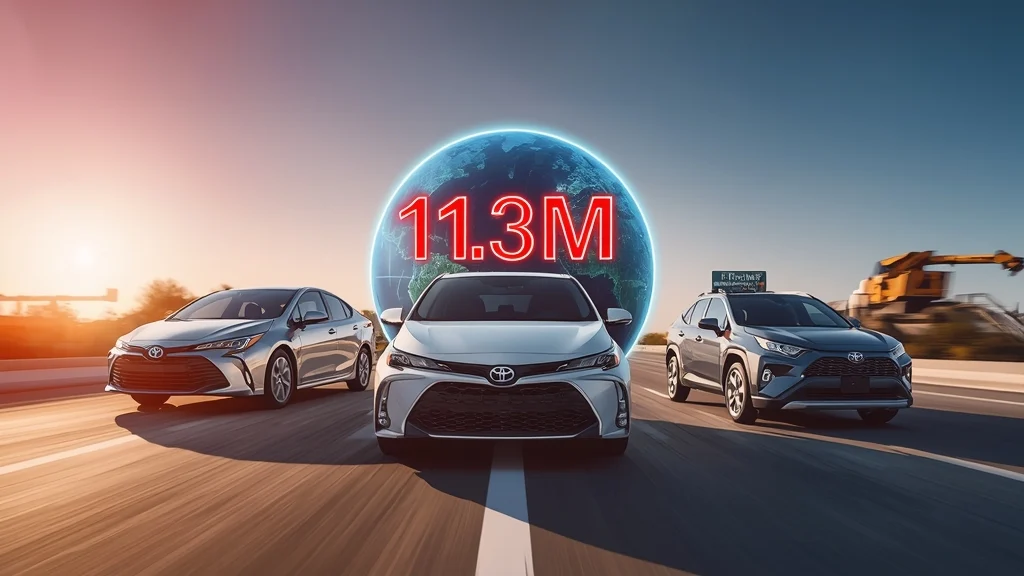
Toyota keeps its crown as the world’s top carmaker in 2025, delivering a record 11.3 million vehicles. Discover the trends shaping the auto industry today. Read more now.
In its latest sales report released on January 29, Toyota announced a new world record: 11.3 million vehicles sold in 2025. The Japanese automaker kept its spot as the best‑selling car manufacturer for the sixth consecutive year, widening the gap with its nearest rival, Volkswagen.
Strong Growth Across All Brands
Overall group sales rose 4.6% year‑on‑year, covering Toyota, Lexus, Daihatsu and Hino models. Production volume climbed 5.7% to reach the 11.3 million‑unit milestone.
Key Drivers of the Surge
- Hybrid resurgence: In the United States, Toyota and Lexus sales jumped 8%, with vehicle volume up nearly 10% thanks to a rebound in demand for gasoline‑electric hybrids.
- Domestic strength: Japan accounted for about 18% of global sales, posting a 12% increase.
Trade Tensions and Cost Pressures
U.S. tariffs remain a challenge. President Donald Trump imposed a 15% duty on Japanese‑made cars and parts, up from the previous 2.5%. While negotiations softened the impact, the higher levy still forces Japanese manufacturers to absorb billions of yen in losses or shift production to North America.
China Market and the EV Race
Toyota’s foothold in China steadied, a rare achievement as local electric‑vehicle (EV) brands, led by BYD, dominate the world’s largest passenger‑car market. BYD delivered 4.6 million EVs in 2025, overtaking Tesla to become the top global EV producer.
In contrast, Toyota’s pure‑electric sales lag far behind, with fewer than 200,000 battery‑electric vehicles (BEVs) sold worldwide and only 4,227 units delivered to Japanese customers.
Competitor Snapshot
Volkswagen, the second‑largest automaker, reported a 0.5% decline, slipping to just under 9 million vehicles as it trims domestic costs and contends with fierce competition in China.
Looking Ahead
Despite trade headwinds and the rapid rise of EV makers, Toyota’s diversified portfolio—spanning conventional, hybrid and emerging electric models—has kept it at the forefront of the global automotive landscape. The next few years will test how quickly the company can scale its EV lineup while maintaining the hybrid strength that has powered its recent growth.