
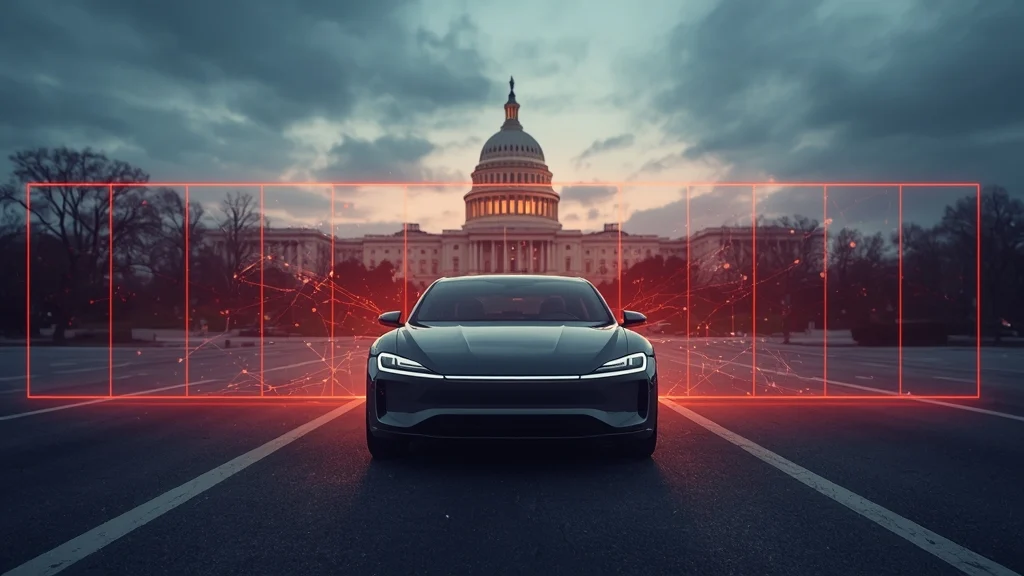
Senator Bernie Moreno proposes a strict ban on Chinese vehicles over national security risks. See how this impacts the global EV market.
In a bold move to protect national security and domestic industry, Republican Senator Bernie Moreno has announced plans to introduce legislation that would severely tighten restrictions on Chinese automakers attempting to enter the United States market.
Expanding the Shield Against Chinese Auto Imports
Speaking on March 31, Senator Moreno revealed that his upcoming bill aims to go far beyond existing regulations. While the Biden administration has already implemented broad rules—effectively blocking Chinese passenger vehicles from US soil by January 2025—Moreno believes these measures do not go far enough.
The current restrictions are primarily driven by national security concerns, specifically the potential for Chinese-manufactured vehicles to collect sensitive data from American owners via integrated software and connectivity features.
A ‘Total Lockout’ of Hardware and Software
Senator Moreno’s proposed legislation seeks to create a comprehensive barrier, ensuring that Chinese automotive influence is completely erased from the US landscape. He emphasized that the goal is to prevent any scenario where Chinese vehicles could penetrate the market, regardless of the entry point.
“It’s not just about the cars,” Moreno stated, clarifying that the ban would extend to hardware, software, and strategic partnerships. He compared this move to the US government’s decisive action against Huawei in the telecommunications sector, arguing that the same vigilance must be applied to the automotive industry.
Provocative Rhetoric and Global Appeals
In a stark warning to other nations, Moreno described the influx of Chinese automobiles as a “cancer” spreading through the global market. He urged allies in Europe, Canada, and Latin America (including Mexico) to adopt similar standards, suggesting that these countries perform a metaphorical “chemotherapy” to purge Chinese automotive dominance.
This hardline stance is echoed by major US auto trade groups, who have urged the government to maintain a firm barrier ahead of high-level diplomatic meetings between US and Chinese leadership.
China’s Response: Protectionism vs. Fair Trade
The Chinese Embassy in Washington has pushed back strongly against these proposals. In an official statement, the embassy claimed that while China has kept its markets open to global automakers, the US is engaging in “trade protectionism.”
The embassy further argued that Senator Moreno’s proposed bill violates the fundamental principles of a market economy and fair competition, labeling the move as a form of “economic coercion” and discriminatory subsidy policy.
The Trump Perspective: A Different Approach?
Interestingly, the political landscape remains nuanced. Former President Donald Trump has previously indicated a slightly different strategy. While opposing imports, Trump has expressed openness to Chinese companies building factories within the United States.
“If they want to come and build plants, hire you, your friends, and your neighbors, that’s great,” Trump told the Detroit Economic Club, suggesting that domestic job creation could be the only acceptable path for Chinese automotive investment in the US.