

Learn the 2024 Vietnam parking law – why the nearest wheel must stay within 25 cm of the curb or road marking. Stay safe and avoid fines. Read more now!
Recent social‑media posts from Vietnam have sparked a heated debate: when parking on a city street, should a vehicle line up with the sidewalk edge or with the painted road marking? The answer lies in the newly‑effective Vietnam parking law 2024, which sets clear distance limits and outlines hefty penalties for non‑compliance.
What the 2024 Traffic Law Says
Article 18 of the Law on Road Traffic Safety 2024 specifies that drivers may only stop or park in areas with a sufficiently wide roadway edge or on land outside the carriageway. If the edge is narrow or absent, the vehicle must be positioned on the right‑hand side of the travel direction, hugging the curb.
The law also mandates a crucial measurement: the wheel closest to the curb (usually the passenger‑side wheel) must not be farther than 25 cm from the curb or the edge of the sidewalk. The vehicle must not obstruct pedestrians, other road users, or create a safety hazard.

Sidewalk vs. Road Marking: Which Guides the 25 cm Rule?
In Vietnamese street design, a white line—known as line 3.1 under QCVN 41:2019 standards—is often painted along the curb. This line marks the outer limit of the carriageway and separates motorized lanes from the pedestrian zone. Drivers are allowed to place the wheel directly over this line to satisfy the 25 cm requirement.
Therefore, the legally correct position is:
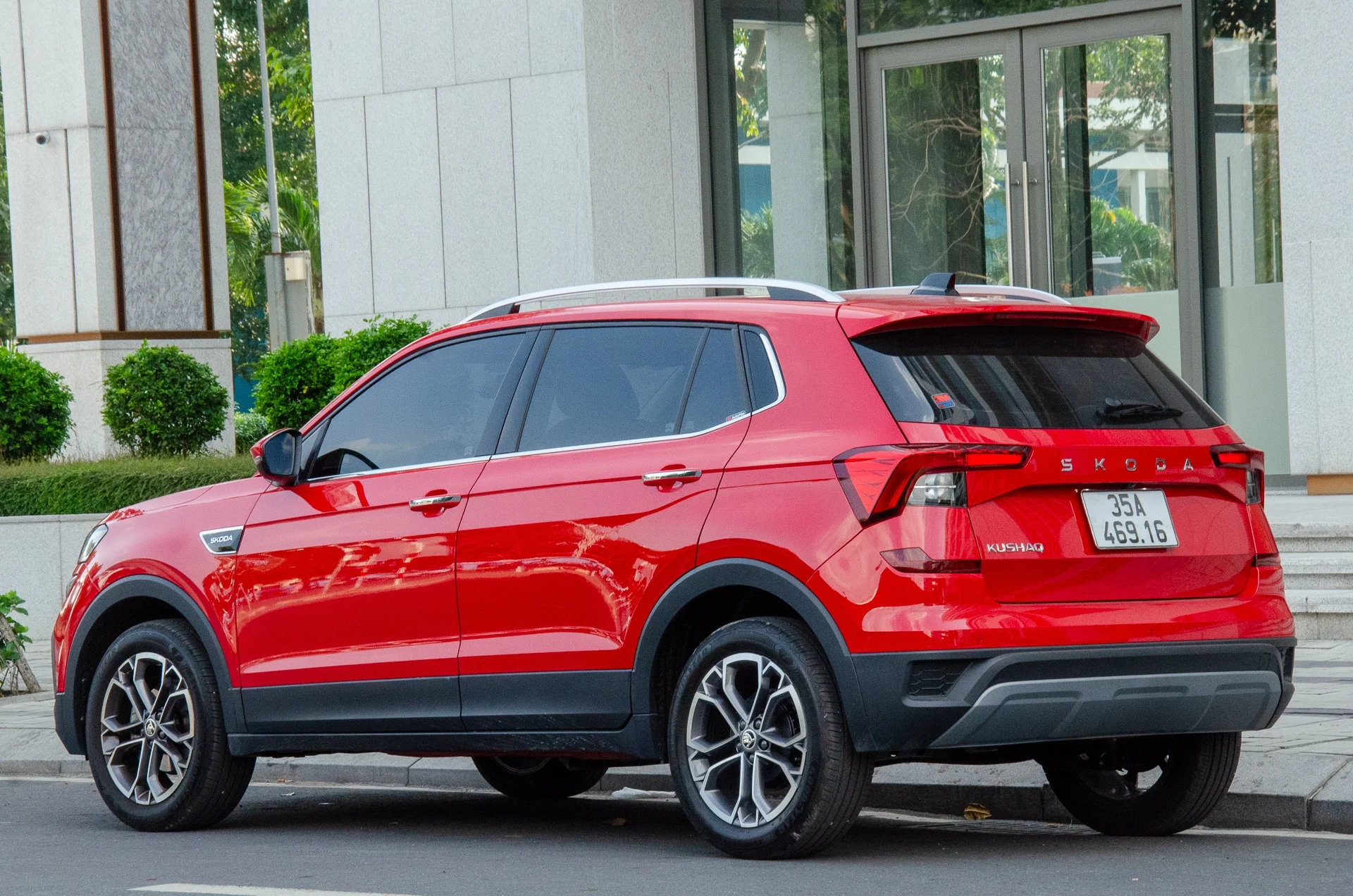
- Park as close as possible to the curb or sidewalk edge on the right‑hand side of the direction of travel.
- Ensure the nearest wheel is no more than 25 cm away from that edge, even if it means the tire slightly overlaps the white line.
Penalties for Ignoring the Rule
Failure to comply can lead to substantial fines under Decree 168:
- Improper parking: VND 600,000 – VND 3,000,000 (approx. $25–$130).
- If the illegal parking results in a traffic accident: fines jump to VND 20,000,000 – VND 22,000,000 and a deduction of 10 driver’s licence points.
Additional Parking Restrictions to Keep in Mind
The 2024 law also outlines several other “no‑park” zones:
- No stopping on the left side of a one‑way street, on bridges, under overpasses, or in blind‑spot areas near hills.
- Prohibited within 5 m of intersections, bus lanes, drainage inlets, electrical vaults, fire‑hydrant spots, and pedestrian‑only paths.
- On narrow streets, you must keep at least 20 m (or 40 m on single‑lane roads) between your car and a vehicle parked in the opposite direction.
Practical Tips for Drivers
- Look for the white line 3.1 along the curb—parking the wheel over it usually satisfies the 25 cm rule.
- Always signal before pulling into a spot so other road users are aware of your intention.
- Check local signage; some areas may have specific allowances or stricter limits.
- When in doubt, leave a small gap between your car and the curb and verify with a measuring tool or your phone’s camera.
Bottom Line
The Vietnam parking law 2024 is clear: to park legally, your nearest wheel must be within 25 cm of the curb or the designated road marking, and you must do so on the right‑hand side of the travel direction. Ignoring these rules can cost you thousands of dollars and valuable licence points.
Stay informed, respect the markings, and keep Vietnam’s streets safe for everyone.