
Audi’s legendary 5-cylinder engine is being phased out due to Euro 7 emission standards. Discover what this means for the RS3 and future models.
For automotive enthusiasts, the distinct growl of Audi’s five-cylinder engine is more than just a sound—it’s a symbol of racing heritage and engineering prowess. However, that symphony is nearing its final movement. Audi has confirmed that it will phase out this iconic powerhouse as the industry pivots toward a greener future.
The Catalyst: Euro 7 Emission Standards
According to reports from Automotive News, the decision stems from the upcoming Euro 7 emission standards, which are expected to take effect in Europe by late 2026. Meeting these stringent requirements would require a massive financial investment in engine redesigns—costs that Audi is reluctant to incur while the company aggressively shifts its focus toward electrification.
A Powerhouse Leaving the Stage: The Audi RS3
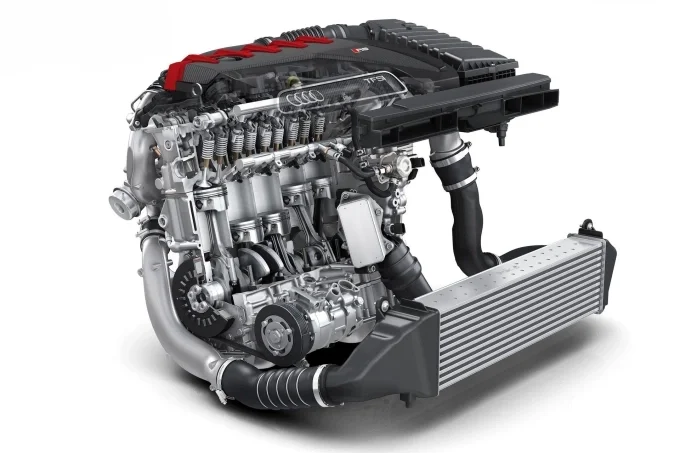
The current star of the show is the EA855 engine, a 2.5-liter masterpiece currently powering the Audi RS3. With a staggering 394 horsepower and 500 Nm of torque, paired with the legendary quattro all-wheel-drive system, the RS3 can sprint from 0 to 100 km/h in just 3.8 seconds.
Production of this hand-assembled engine in Hungary is expected to wind down by mid-2027, coinciding with the end of the current RS3’s life cycle.
The Last Stand of the Five-Cylinder
While the clock is ticking, a few remaining models will keep the flame alive:
- Cupra Formentor VZ5: A limited edition arriving late this year, boasting 385 hp and a 0-100 km/h time of 4.2 seconds.
- Volkswagen Golf R: Rumors suggest a 25th-anniversary edition in 2027 may feature the five-cylinder layout.
- The Australian Market: Due to differing emission timelines (Euro 6d), the RS3 might remain available in Australia until mid-2028, provided supplies last.
A Legacy Forged in Rallying
To understand why this loss is so felt, one must look back to 1976, when the engine first appeared in the Audi 100. It reached legendary status in 1980 with the Audi Quattro, which dominated the world of rally racing with its turbocharged 2.1-liter five-cylinder engine and groundbreaking all-wheel drive.
The Path Forward: Hybridization and ‘Technology Neutrality’
Audi isn’t abandoning performance; it’s evolving it. Marco Schubert, head of global sales, emphasized a strategy of “technology neutrality,” meaning Audi will maintain a diverse range of powertrains through the 2030s rather than rushing into a 100% electric lineup.
Introducing the New RS5 PHEV
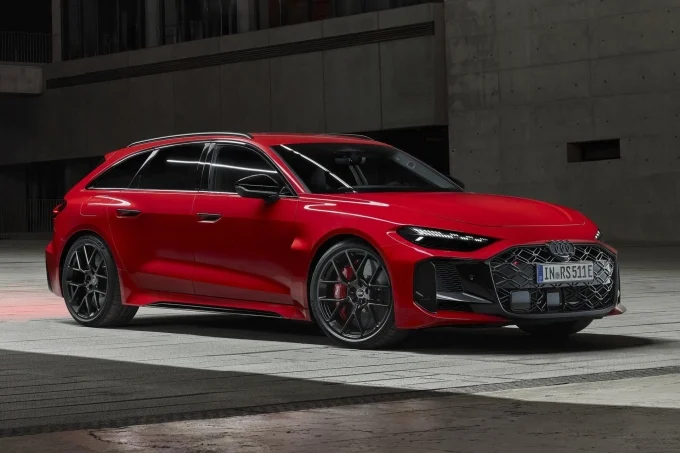
The next chapter of performance is already here with the new Audi RS5. As the first RS model to utilize a plug-in hybrid (PHEV) powertrain, it delivers a massive 630 horsepower and 870 Nm of torque—far surpassing its predecessor. Not only is it Euro 7 compliant, but it also positions Audi to compete fiercely with the BMW M3, which is similarly transitioning toward hybrid and electric options.
While the roar of the five-cylinder may eventually fade, Audi’s commitment to high-performance engineering remains as strong as ever.