
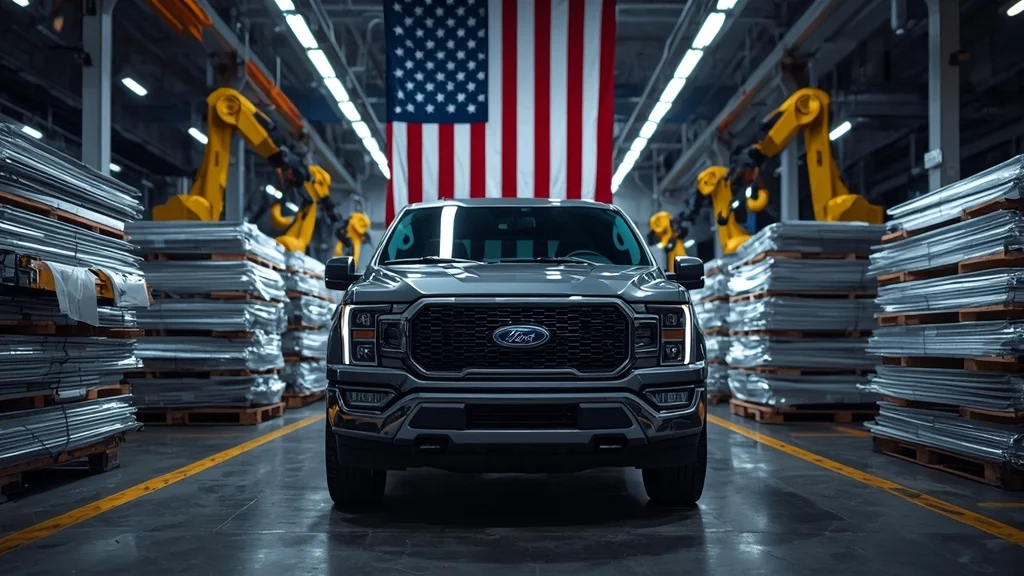
Could the Ford F-150 face a 25% import tax despite being ‘Made in USA’? Discover how aluminum shortages are impacting sales. Read more.
The Ford F-150 is more than just a pickup truck; it is a symbol of American industrial might and the quintessential “Made in USA” product. However, this automotive icon is currently finding itself in a paradoxical situation where it may be subject to heavy import taxes—despite being built on home soil.
The Aluminum Crisis: A Chain Reaction
The trouble began not in the assembly line, but at the source of raw materials. According to reports from Carscoops, two major aluminum plant fires severely disrupted the domestic supply chain, forcing Ford’s primary material suppliers to halt operations. This wasn’t an isolated blow to Ford; fellow American giants General Motors and Stellantis were equally impacted.
To keep production lines moving, these automakers were forced to pivot to imported aluminum. The problem? The U.S. government has imposed a steep 50% import tariff on these materials. These added costs don’t simply vanish—they integrate directly into the cost of production, putting immediate financial pressure on the manufacturers.
A Dangerous Tariff Loophole
While the 50% tax on raw aluminum is a burden, a more significant threat looms. A recent shift in the U.S. tariff system has changed the focus to the “destination” or the final composition of the product.
Under these new guidelines, if a vehicle contains imported metals as key components, the entire finished product could be reclassified. This means the Ford F-150—despite being assembled in the U.S.—could be slapped with a 25% import tax simply because of the aluminum used in its frame and body.
Political Friction and the White House
Ford has reportedly sought relief, requesting an extension or a loosening of these tariffs until domestic aluminum plants are fully operational again. However, these requests have yet to be granted. Officials have suggested that the U.S. auto industry has already received sufficient support in other areas, such as imported auto parts.
Adding to the confusion, the White House told the Wall Street Journal that Ford had not made a specific, formal request regarding the aluminum tariffs, highlighting a communication gap between the corporate giant and the administration.
Market Impact: Falling Sales and Inventory Woes
The ripples of this supply chain crisis are already being felt in the showrooms. The F-Series has seen a noticeable dip in performance, with sales in the U.S. plummeting by 16% in the first quarter. This decline is primarily attributed to low inventory levels and uneven production schedules caused by material shortages.
The ‘Ranger’ Pivot Doesn’t Work
In an attempt to mitigate losses, Auto News reports that Ford tried to steer customers toward other models within their lineup. However, this strategy has largely failed. The F-150 buyer is typically looking for a full-size powerhouse; a mid-size alternative like the Ford Ranger simply doesn’t meet the needs of that specific demographic.
The Road to Recovery
Ford is currently pulling out all the stops to stabilize its supply and production. The company is reportedly ramping up manufacturing toward the end of the year and taking the drastic step of skipping its traditional summer shutdown period to make up for lost time.
Despite these aggressive efforts, industry experts warn that the supply of the Ford F-150 will likely remain volatile for the rest of the year. As the battle between trade policy and industrial reality continues, the F-150 stands as a stark example of how global supply chains can complicate even the most “domestic” of products.