
Foreign car brands may pull affordable models from the US if USMCA tariffs aren’t lowered. See how this impacts budget vehicle prices. Read more!
The American dream of owning an affordable new car may be under threat. Major foreign automakers have issued a stark warning to the Trump administration: if a favorable trade agreement is not reached, some of the most budget-friendly vehicle models could be pulled from the U.S. market entirely.
The USMCA Crisis: A Threat to Affordable Mobility
At the heart of the tension is the United States-Mexico-Canada Agreement (USMCA). According to reports from the Wall Street Journal, foreign manufacturers are concerned that if the USMCA is not renewed or if its effectiveness is diminished, producing low-cost vehicles for the U.S. market will become financially impossible.
Economic advisors to the administration have been notified that without a renewed agreement—or a significant reduction in tariffs on cars and parts produced within North America—the cost of production would skyrocket, erasing the thin margins that make budget cars viable.
The Impact of the 2025 Tariff Hikes
The automotive industry is urgently calling for the renewal of the USMCA, which is scheduled for review this year. The urgency stems from a drastic shift in trade policy. In 2025, the U.S. government imposed a 25% tariff on automotive exports from Mexico and Canada—a staggering increase compared to the 0% rate previously enjoyed under the USMCA.
While the USMCA was originally hailed as the “greatest trade deal ever” when launched in 2020, current tensions between the U.S. and Canada regarding these tariffs have complicated negotiations, leaving manufacturers in a state of limbo as the July 1st deadline approaches.
Why Foreign Brands Dominate the Budget Segment
For brands like Toyota, Honda, Nissan, and Hyundai, the production of affordable models relies on a complex, integrated supply chain spanning all three North American nations. Components move freely across borders, allowing for cost-efficient assembly.
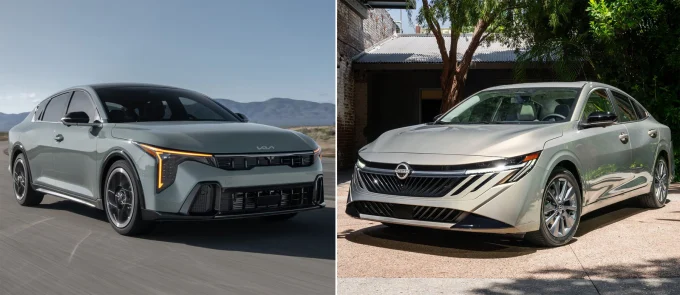
Interestingly, this leaves U.S. consumers heavily dependent on foreign brands for entry-level vehicles. Detroit’s homegrown manufacturers have largely pivoted away from small, affordable cars in recent years, focusing instead on high-margin SUVs and trucks. This has left a vacuum now filled by popular models such as:
- Toyota Corolla
- Honda Civic
- Nissan Sentra
- Hyundai Venue
Currently, eight out of the ten cheapest new cars sold in the U.S. are produced by foreign automakers.
The Financial Reality for the American Consumer
The stakes for the average consumer are high. With the average price of a new car in the U.S. climbing to approximately $50,000, the few remaining options priced under $20,000 are the only lifeline for buyers on a tight budget.
Automakers argue that without a stable, tax-free framework across North America, producing these vehicles within the U.S. is simply not a viable business move. High labor costs and existing cross-border investments make shifting production impossible in the short term. Consequently, instead of attempting to absorb the costs, manufacturers may simply stop selling these budget-friendly versions in the U.S. market altogether.