
Geely is acquiring part of Ford’s Valencia plant to bypass EU tariffs and scale European EV production. Discover the strategic shift here.
In a bold move to navigate the tightening regulatory landscape in Europe, Chinese automotive giant Geely has reached an agreement to acquire a portion of Ford’s manufacturing operations in Valencia, Spain. This strategic pivot is designed to help Geely dodge steep import tariffs and establish a firm foothold in the European electric vehicle (EV) market.
A Strategic Foothold in Valencia
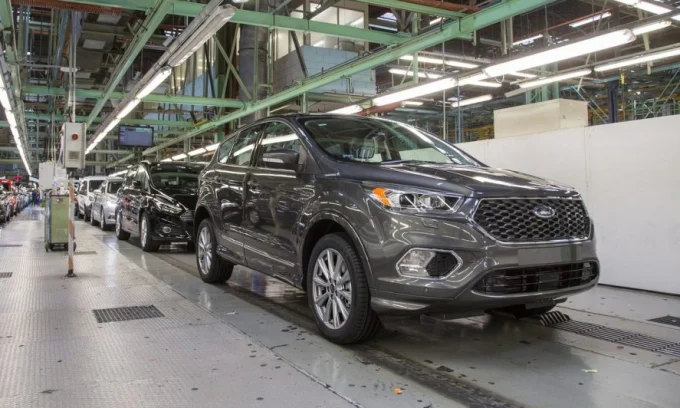
According to reports from Tribuna de Automocion, Geely has agreed to take over the Body 3 assembly line at Ford’s Almussafes plant in Valencia. Historically, this specific line was responsible for the production of the Mondeo, Galaxy, and S-Max. While the Valencia plant maintains an annual capacity of 300,000 vehicles, it currently focuses primarily on the Ford Kuga.
This deal is a win-win for both parties. For Ford’s European division, the sale provides a significant cash infusion at a time when regional sales have been under pressure. For Geely, it provides immediate access to established infrastructure within the EU.
Beating the Tariff Barrier
The primary driver behind this acquisition is economic survival. The European Union has imposed a rigorous 18.8% tariff on electric vehicles imported from China. By shifting production to Spanish soil, Geely can effectively bypass these costs, making its vehicles more price-competitive against local European brands.
What will Geely produce?
Geely plans to utilize its advanced GEA modular platform at the Valencia site. This versatile architecture allows for the integration of both fully electric motors and plug-in hybrid (PHEV) systems across various vehicle sizes.
The first priority for the plant will be the Galaxy EX2, an electric crossover comparable in size to the Ford Puma. Known as the Galaxy Xingyuan in its home market, the model has already proven to be a bestseller in China and is slated for a 2025 European rollout.
Ford’s New Partnership Strategy
This deal highlights a broader trend for Ford, which is increasingly relying on strategic partnerships to sustain its European lineup. Ford is moving away from sole proprietary production in favor of shared architectures:
- Volkswagen Partnership: The new Capri and Explorer models utilize Volkswagen’s MEB platform.
- Renault Partnership: Two upcoming EV models will be built using Renault’s Ampere architecture, expected before the end of the decade.
There are even indications that Ford may leverage Geely’s capabilities to produce certain Ford models, further deepening the synergy between the two brands.
The Wider Chinese Influx into Europe
Geely isn’t the only Chinese player eyeing Spanish soil. SAIC is currently exploring a production site in Ferrol, located in the Galicia region of northwest Spain. This trend underscores a larger shift in the global automotive industry: Chinese manufacturers are no longer content with just exporting; they are building local roots to dominate the next era of mobility in Europe.