
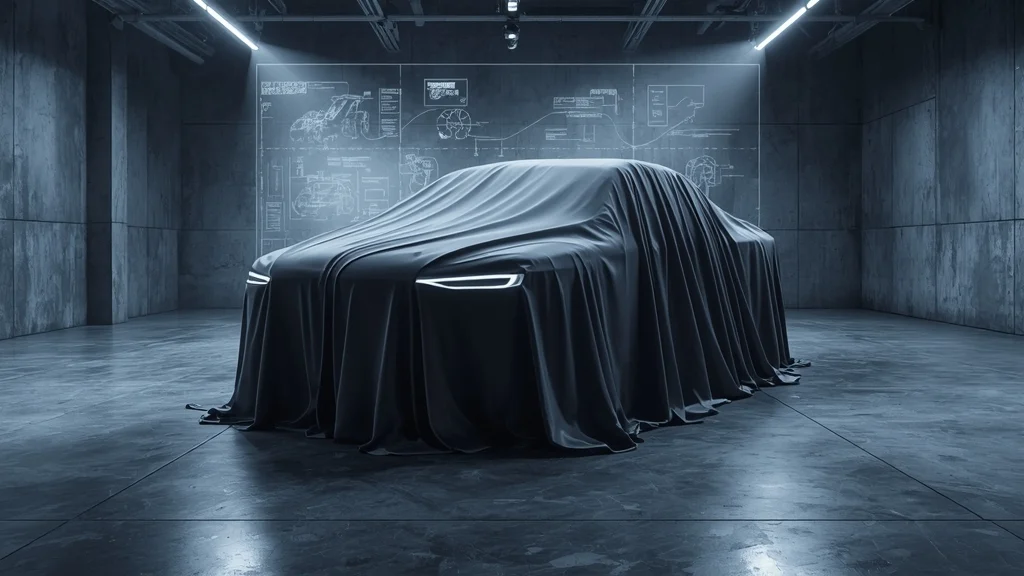
Ford is secretly building a $30,000 electric pickup to challenge Chinese EV dominance by 2027. Discover the ‘Skunk Works’ project inside. Read more!
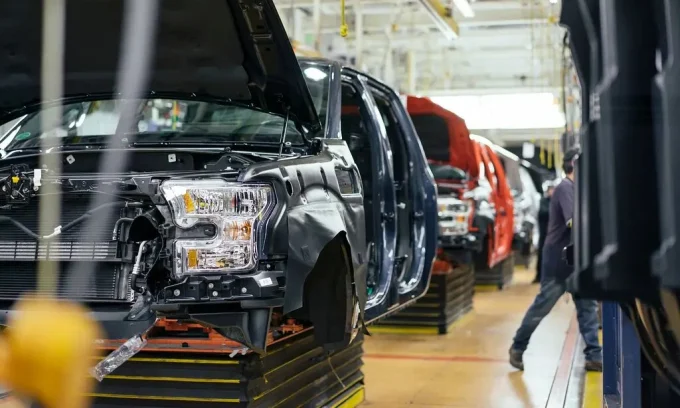
At 3:00 AM, while most of the world sleeps, the production lines at one of Ford’s truck plants are humming. In the shadows of the facility, a small group of engineers is testing a vehicle that few within the company even know exists. This is not just another prototype; it is the centerpiece of a high-stakes gamble known as the “Skunk Works” project.
A Bold Mission: The $30,000 EV
Launched in 2022 with a target date of 2027, Ford’s secret project has one ambitious goal: to create an electric vehicle (EV) produced in the U.S. that can compete head-to-head with the budget-friendly, tech-heavy EVs currently dominating the global market from China.
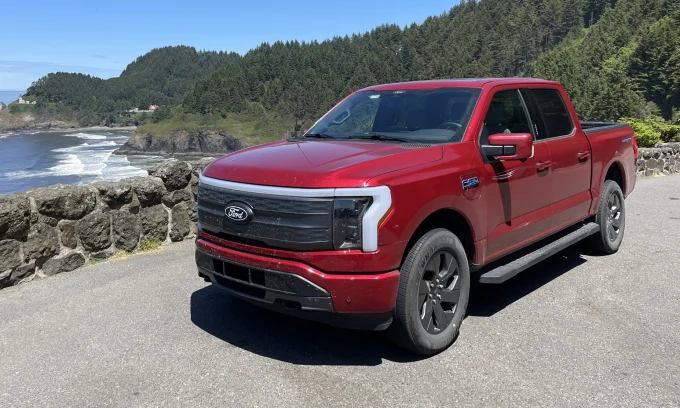
The target is a mid-sized electric pickup truck with a price tag of approximately $30,000—roughly the cost of a Toyota Camry. Ford aims for this truck to offer a range of about 480 km (approx. 300 miles) on a single charge and performance speeds that rival the legendary Mustang, all while integrating technology capable of challenging Tesla and its Chinese counterparts.
The “Model T Moment”: Breaking a Century of Tradition
To achieve this price point, Ford has had to do something it rarely does: tear up the rulebook. CEO Jim Farley has described this initiative as a “new Model T moment” for the company. For a century, the automotive industry has been notoriously conservative, but Ford is now fighting to move beyond the gas-guzzling SUVs and pickups that have long fueled its profits.
The project is led by a blend of Silicon Valley disruptors—veterans from Tesla and Apple—and a handpicked group of Ford employees. Operating out of an isolated office in Irvine, California, this team has spent years working in near-total secrecy to avoid the bureaucratic drag of the corporate headquarters in Detroit.
Engineering Efficiency
The team’s approach is a radical departure from traditional Ford engineering. By slashing thousands of meters of heavy copper wiring and removing hundreds of unnecessary parts, the new pickup is 15% more aerodynamic than previous Ford models.
Perhaps most significantly, Ford is adopting a “mega-casting” approach. Instead of welding numerous small pieces together, they are using a modular system that stamps out three large aluminum blocks—a technique pioneered by Tesla and Chinese EV makers to drastically reduce labor costs and production time.
Recruiting the “Misfits”
The culture clash between “Old Detroit” and “Silicon Valley” was inevitable. Doug Field, the former Apple and Tesla executive leading the effort, realized that the project needed a specific type of person: the “misfits.”
Ford sought out employees who were frustrated by the company’s rigid structure—those with high technical competence but a flexible, risk-tolerant mindset. While some estimated that 20% of Ford’s workforce fit this description, veteran employees suggested the real number was closer to 2%.
Candidates were put through rigorous interviews featuring “Google-style” problem-solving questions, such as estimating how many pairs of shoes could be made from a single cow’s hide, to test their approach to uncertainty.
The Roadblocks to Innovation
The journey hasn’t been without its failures. The team faced significant hurdles, including structural concerns where a prototype’s frame nearly collapsed in the paint booth and critical leaks where the modular components met.
There was also friction with existing management. Lisa Drake, who oversees EV industrialization, initially clashed with the Skunk Works team when they requested delays in ordering battery components to further optimize range—a move that contradicted standard manufacturing protocols. Eventually, a compromise was reached, allowing for optimization without stalling the timeline.
Can Ford Actually Win?
As the project moves into its final stages at a plant in Louisville, Kentucky, the pressure is mounting. The team is now obsessed with marginal gains, recently celebrating the discovery of a part that saves just $8 per vehicle—a small amount that becomes massive when scaled across hundreds of thousands of units.
However, skeptics remain. Some analysts point to the cooling EV market in the U.S. and the lack of government subsidies compared to China. Even the CEO of Hyundai Motor, José Muñoz, has stated that competing with Chinese EVs without government subsidies is “impossible.”
Whether Ford’s secret gamble pays off remains to be seen, but for the veterans on the factory floor, the change is already palpable. As one supervisor put it, in thirty years at Ford, the only thing that usually changed was the shape of the sheet metal. Now, the entire foundation is shifting.