
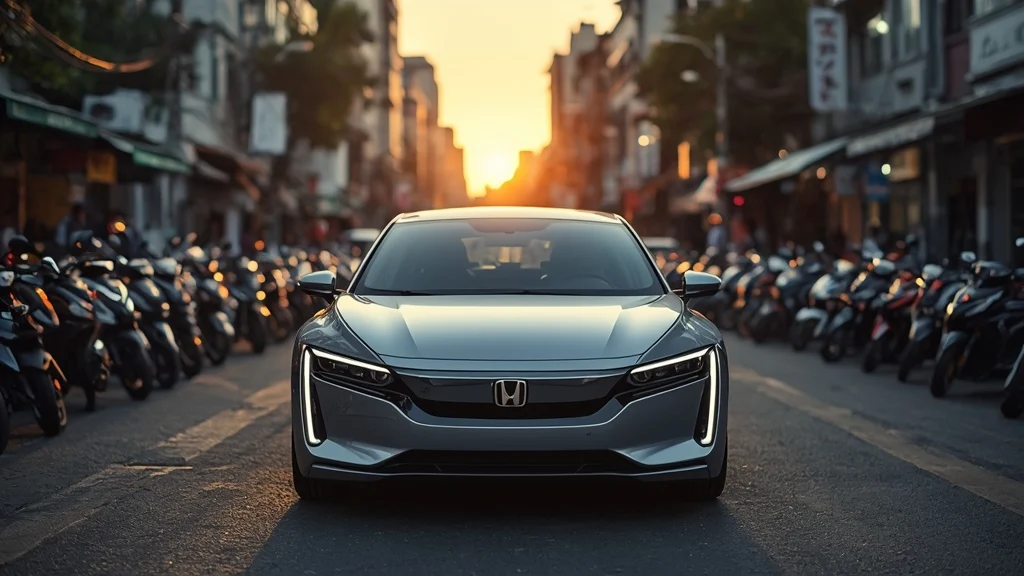
Honda faces its first loss in 70 years due to EV struggles. Discover how its motorcycle empire is keeping the company afloat. Read the full analysis.
For the first time in nearly 70 years, Honda has reported an annual loss, marking a sobering moment for one of the world’s most iconic automotive giants. The primary culprit? A massive $9 billion restructuring effort in its electric vehicle (EV) division, revealing the immense risks traditional automakers face when betting heavily on a transition that is moving slower than expected.
The EV Reality Check: Scaling Back Ambitions
Toshihiro Mibe, CEO of Japan’s second-largest automaker, recently announced a significant strategic retreat. Honda is scrapping its ambitious goal of having EVs make up 20% of its new vehicle sales by 2030. Even more telling is the abandonment of its target to transition entirely to EVs or fuel-cell vehicles by 2040.
The company’s retreat extends to physical infrastructure as well. Honda has indefinitely paused a massive $11 billion EV and battery production project in Canada—the largest investment the company had ever planned for the North American nation.
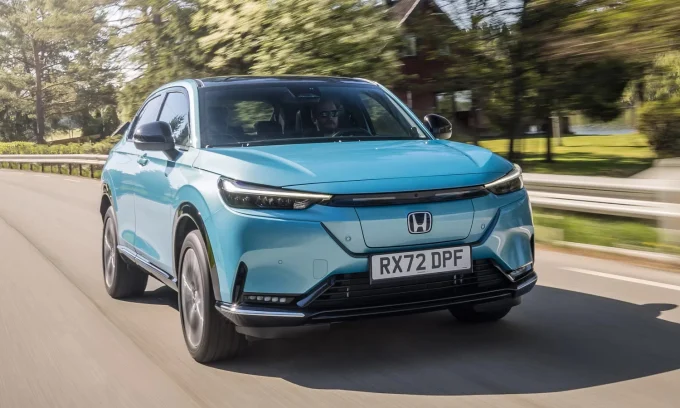
The Financial Toll
The numbers paint a stark picture. Honda reported an operating loss of 414.3 billion yen (approximately $2.63 billion) for the fiscal year ending in March. This figure far exceeded analyst expectations of a 315.6 billion yen loss, and stands in jarring contrast to the 1.2 trillion yen profit recorded the previous year.
Specifically, the EV sector has been a financial drain, with total losses related to electrification reaching 1.45 trillion yen. The company expects to shoulder an additional 500 billion yen in costs in the current fiscal year.
Two Wheels, One Lifeline: The Power of the Motorcycle
While the four-wheel division is burning through cash to survive the EV transition, Honda’s motorcycle business is doing the heavy lifting. It is no longer just a secondary revenue stream; it has become the company’s ultimate safety net.
Honda’s strategy for recovery relies heavily on its dominance in the two-wheeler market, particularly in emerging economies. Key highlights include:
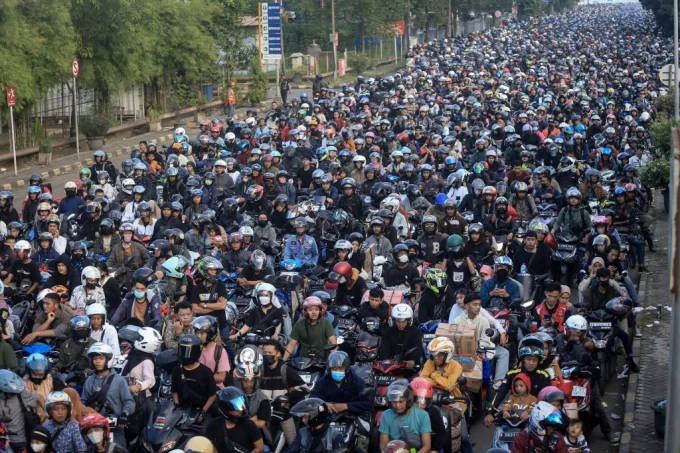
- Market Expansion: Honda is aggressively expanding production in India, aiming for a record-breaking 22.8 million units in sales.
- Regional Strength: Record profits from India and Brazil have significantly offset the losses from the EV sector and declining car sales in China.
- Utilitarian Demand: In markets like Vietnam, Thailand, Indonesia, and the Philippines, motorcycles are not luxury items but essential daily transport for millions of commuters.
Why Motorcycles Win Where EVs Struggle
The contrast in development costs is staggering. While EVs require multi-billion dollar investments in battery ecosystems, complex software, and advanced autonomous driving hardware, a small-displacement internal combustion engine (ICE) motorcycle is relatively cheap to produce and refine.
By perfecting a formula of affordability and reliability over several decades, Honda has created a high-volume, high-margin engine that provides the cash flow necessary to keep shareholders happy and the lights on in the EV labs.
The Great Irony of ‘Future Mobility’
There is a profound irony in Honda’s current position. For years, the company has branded itself as a forward-thinking mobility leader pushing for a green, electric future. Yet, its actual survival currently depends on millions of simple, gasoline-powered motorcycles weaving through the streets of Asia.
However, this safety net may not last forever. Experts, including James Hong of Macquarie, warn that the motorcycle segment will eventually face its own pressure to electrify in key markets like Vietnam and India. For Honda, the clock is ticking to ensure that its two-wheeled empire can evolve as successfully as the company hopes its four-wheeled fleet will.