
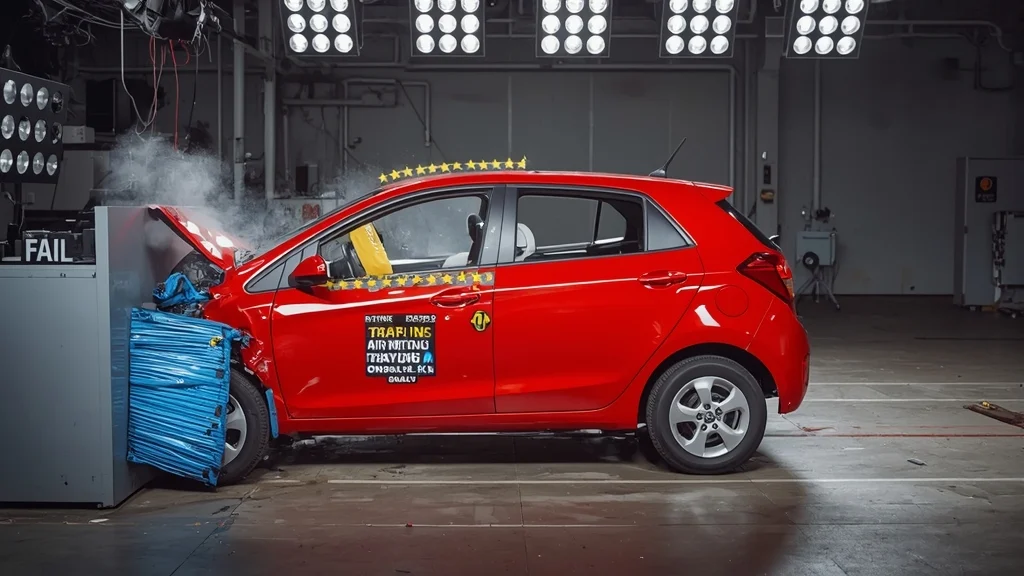
Hyundai Grand i10 receives a 0‑star safety rating from Global NCAP, exposing crucial safety flaws. Learn why this budget favorite falls short and what it means for drivers.
Global NCAP recently released its latest crash‑test results for vehicles manufactured in India, and the Hyundai Grand i10—once hailed as an affordable, city‑friendly hatchback—received a shocking 0‑star rating for adult occupant protection.
Key findings from the Global NCAP test
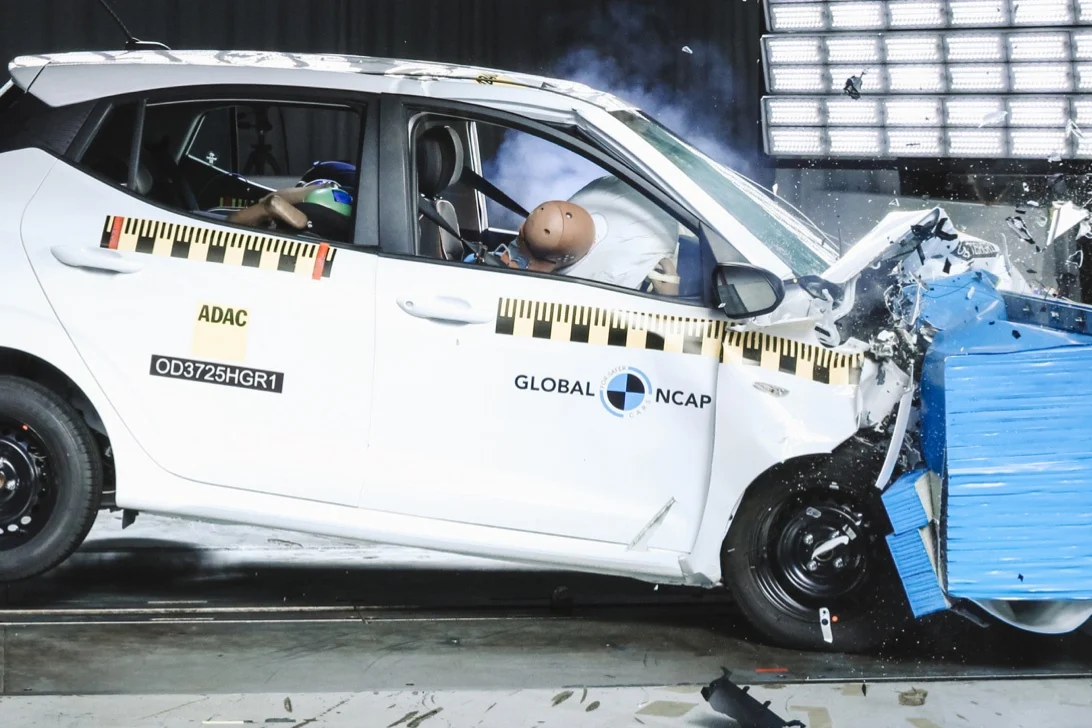
The assessment revealed that the Grand i10 is missing crucial safety hardware. The car does not have side‑impact airbags or knee airbags, dramatically raising the risk of serious injury in a frontal collision. Moreover, the protection offered to the driver’s chest was deemed inadequate during impact testing.
Critical safety shortcomings
- No side‑impact airbags or knee airbags.
- Poor chest‑belt performance for the front‑row occupants.
- Fails to protect occupants in side‑impact crashes—each metric received a red “fail” rating.
- Absence of a three‑point seat‑belt for every seating position.
Child‑seat safety concerns
The Grand i10 does feature ISOFIX anchor points, but it lacks a passenger‑airbag de‑activation system. If a child’s seat is installed in the front row, the airbag could remain active, creating a potentially lethal scenario.
Missing driver‑assistance technologies
Given its low price point, the vehicle is completely devoid of modern ADAS (Advanced Driver‑Assistance Systems). There is no automatic emergency braking, lane‑departure warning, or forward‑collision alert to help mitigate accidents.
Structural weaknesses
NCAP’s bodyshell evaluation classified the Grand i10’s frame as “unstable.” The structure does not absorb additional impact forces effectively, limiting its ability to protect occupants in higher‑severity crashes.
Implications for prospective buyers
While the Hyundai Grand i10 remains one of the most competitively priced hatchbacks on the market, its safety performance is markedly inferior to many rivals in the same segment. Consumers should weigh the low purchase price against the absence of essential safety features and consider alternatives that offer at least a basic level of occupant protection.
For the latest updates on vehicle safety ratings and recommendations, stay tuned to our coverage.