
Explore how Hyundai and Toyota are shifting from car wars to a humanoid robot showdown, reshaping valuations and the future of automation. Read more now!
For decades, the rivalry between South Korea’s Hyundai and Japan’s Toyota has been measured in sales figures, hybrid technology and, more recently, electric‑vehicle roadmaps. Yet a new frontier is rewriting the competitive script: humanoid robots.
Rethinking an Auto Rivalry
Historically, investors priced Hyundai lower than Toyota, reflecting thinner profit margins, perceived governance risks and a lag in cutting‑edge tech. Toyota, the world’s most advanced carmaker, enjoyed a premium valuation while Hyundai was seen as the underdog.
Today that gap is closing. As robotics move from concept labs to commercial floors, analysts are reassessing each company’s growth trajectory, and the price‑to‑earnings (P/E) ratios tell a striking story.
Hyundai’s Bold Move at CES 2026
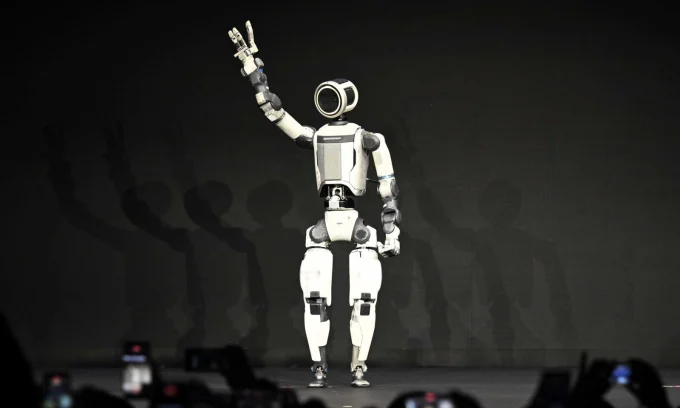
At the Consumer Electronics Show in January 2026, Hyundai stole the spotlight with Atlas, a human‑shaped robot built by its U.S. subsidiary Boston Dynamics. The showcase was more than a demo; it outlined an ambitious roadmap:
- Construction of a dedicated robot‑manufacturing plant in the United States, targeting an annual output of 30,000 units by 2028.
- Initial pilot production to start at Hyundai’s existing facility in Georgia.
- Full ownership of Boston Dynamics’ controlling stake, secured in 2021, now leveraged to accelerate industrial‑automation capabilities.
The plan positions Hyundai as a potential mass‑producer of humanoid machines, directly competing with traditional industrial‑robot leaders.
Toyota’s Measured Path
In contrast, Toyota’s robot strategy has been cautious and partnership‑driven. The company introduced the T‑HR3 humanoid in 2017, branding itself as a pioneer in advanced robotics. Since then, Toyota’s public updates have focused on niche applications—elder‑care assistance, disaster‑response, and remote operation—rather than large‑scale manufacturing.
Recent moves highlight this collaborative approach:
- Joint AI research with Hyundai’s Boston Dynamics to enhance Atlas’s behavior modeling using Toyota’s large‑scale behavior‑tree models.
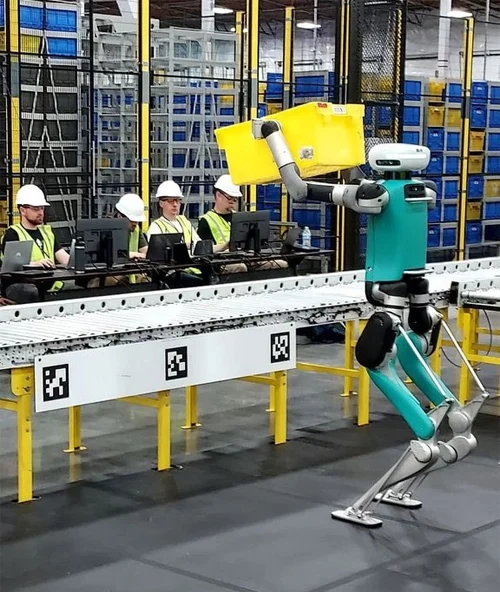
- Deployment of seven Digit robots from Agility Robotics at its Ontario plant in February, integrating them into a RAV4 production line as a pilot test.
- Introduction of the soft‑robot Punyo in September 2024 for safe household interaction, followed by the launch of Woven City—a living lab for service robots in real‑world environments.
These efforts underscore Toyota’s focus on safe, small‑scale service robots rather than high‑volume industrial units.
Valuation Shifts: Numbers Speak
After CES 2026, Hyundai’s P/E ratio surged past Toyota’s, climbing above 10. According to Yonhap Infomax, Hyundai’s P/E hit a fresh high of 12 on February 2, the strongest level since the 2021 Apple Car speculation spike.
Even with Toyota’s recent robot rollout, Hyundai’s 12‑month trailing P/E sits at 10.8, compared with Toyota’s 9.4. In the past year, Hyundai’s valuation multiple has jumped roughly 42 % year‑over‑year, reflecting growing investor confidence in its robotics pivot. Toyota’s multiple, by contrast, has risen only modestly.
Industry experts note that Toyota’s early lead with T‑HR3 has not translated into mass‑production momentum, while Hyundai’s aggressive factory plans are reshaping market expectations.
What the Future Holds
Professor Kim Pil‑su of Daelim University observes that Toyota’s emphasis on small, human‑safe service robots could secure a “first‑mover advantage in safe interaction,” but may leave the company vulnerable in the industrial‑automation race.
Meanwhile, Hyundai, alongside Tesla and several Chinese automakers, is betting hard on large‑scale humanoid manufacturing. If successful, this could redraw the competitive map of the auto industry, positioning robot producers as the next automotive giants.
As the two titans shift from traditional vehicle wars to a new battlefield of silicon, steel and moving limbs, investors and analysts will be watching closely—because the next decade may be defined not by horsepower, but by the power of a walking machine.