
Malaysia introduces strict price and power floors for imported EVs to encourage local assembly. See how this impacts EV prices. Read more!
Malaysia is fundamentally shifting its strategy regarding the adoption of electric vehicles (EVs). In a move to protect domestic interests and catalyze local manufacturing, the Ministry of Investment, Trade and Industry (MITI) has announced stringent new requirements for imported electric vehicles.
New Barriers for Imported EVs
Starting July 1st, the Malaysian government will implement strict minimum thresholds for all completely built-up (CBU) electric vehicles entering the country. To qualify for import, EVs must now meet two primary criteria:
- Minimum Value: A CIF (Cost, Insurance, and Freight) value of at least 200,000 RM (approximately $51,000 USD).
- Minimum Power: An engine output of at least 241 horsepower (hp), a slight reduction from the previous 268 hp threshold.
These regulations signal a clear policy pivot: Malaysia is effectively closing the door on budget-friendly foreign EVs in favor of high-end, luxury models.
The End of Tax Holidays
The announcement comes following the conclusion of a four-year special tax exemption period for CBU electric vehicles under the AP (Approved Permit) system, which is set to expire on December 31, 2025. While MITI has clarified that existing inventory—including vehicles currently in showrooms, ports, or in transit—can still be sold under the previous tax-free rules, all new shipments arriving after July must adhere to the new guidelines.
The Heavy Cost of Importation
For the average Malaysian consumer, this policy shift means a significant increase in the cost of switching to green energy. Without special exemptions, imported EVs will now face a cumulative tax structure that includes:
- Import Duty: 30%
- Excise Duty: 10%
- Sales and Service Tax (SST): 10%
Because these taxes are applied cumulatively to the CIF value, the final retail price will skyrocket. Industry forecasts suggest that an EV with a minimum CIF value of 200,000 RM will cost approximately 286,000 RM ($72,940 USD) after taxes, before accounting for distributor margins and logistics costs.
Impact on Global Brands and FTAs
The impact will vary depending on the vehicle’s origin. For cars coming from countries without a Free Trade Agreement (FTA) with Malaysia, retail prices are expected to start between 300,000 and 350,000 RM ($76,500 – $89,300 USD).
Even for partners like China, which benefit from a lower 5% import duty under existing FTAs, the mandatory 200,000 RM price floor means that showroom prices are unlikely to drop below 250,000 RM ($63,800 USD).
The Big Picture: Protecting the Home Front
MITI asserts that these measures are essential for creating a “transparent and balanced” policy environment. By raising the barriers for imports, the Malaysian government aims to force foreign manufacturers to invest in CKD (Completely Knocked Down) operations. In other words, if brands want to sell affordable EVs in Malaysia, they must build them inside the country.
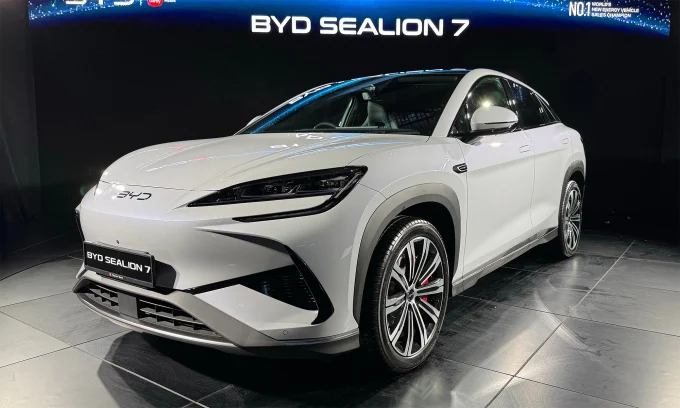
This strategy is already yielding results for domestic players. In 2025, the top-selling EV in Malaysia is the Proton eMas7—a local product and twin to the Geely Galaxy E5. While imported models like the BYD Sealion 7 remain popular, the government’s goal is to ensure that the future of Malaysian mobility is manufactured on Malaysian soil.