
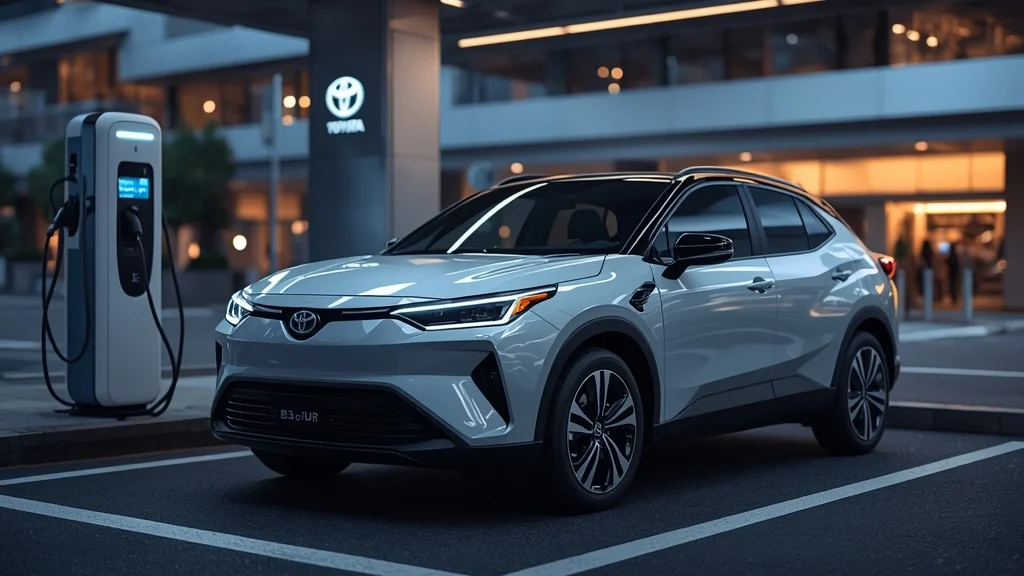
Toyota’s EV sales skyrocket in Japan as new government subsidies edge out rivals like BYD. Discover how policy is shaping the EV race. Read more!
The electric vehicle (EV) landscape in Japan is undergoing a seismic shift. While Toyota was once criticized for being a latecomer to the electrification race, recent data suggests the automotive giant is making a massive comeback—driven not just by technology, but by strategic government policy.
A Record-Breaking Leap in Sales
According to recent reports from Nikkei Asia, the Japanese EV market is witnessing unprecedented growth. In the first quarter of 2026, total EV sales across the market surged by 80% year-on-year, reaching a record 26,959 units.
The standout performer, however, is Toyota. The company reported selling 7,241 electric vehicles in Q1 2026, a staggering leap from the mere 212 units sold during the same period in 2025. This represents a growth rate of 3,316%, effectively increasing their sales volume 33 times over.
The Catalyst: Strategic Government Subsidies
This explosion in demand isn’t accidental. The primary driver is the Japanese government’s revamped EV subsidy program. To bolster domestic industry, the government introduced financial support of approximately $8,320 for every EV assembled within Japan.
Toyota’s bZ4X model was perfectly positioned to capitalize on this. By meeting all the necessary criteria for maximum incentives, the actual cost to the consumer dropped to a highly competitive $22,400, making it an irresistible option for budget-conscious buyers.
Creating a Financial Barrier for Competitors
While Toyota reaps the rewards, international competitors—specifically those from China—are finding the Japanese market increasingly difficult to penetrate. BYD, a global EV powerhouse, has hit a significant roadblock due to these domestic-centric rules.
- The Subsidy Gap: While domestic models get over $8,000, imported BYD models only qualify for subsidies between $2,250 and $2,460.
- The Competitive Edge: This creates a price disparity of over $6,000 between a domestic Toyota and an imported BYD.
The result is stark: while Toyota’s growth is exponential, BYD’s sales grew by a modest 16%, with approximately 5,100 units sold.
Tesla’s Steady Climb
It wasn’t just Toyota that benefited. Tesla also saw positive momentum, with sales growing by 140% to reach approximately 5,100 units. Tesla’s success is attributed to its ability to leverage specific tax incentives designed for high-performance electric vehicles.
The Rise of Global Automotive Protectionism
The current situation in Japan is a microcosm of a larger global trend. It proves that while consumers are eager to adopt EV technology, their decisions are heavily influenced by financial incentives.
More importantly, it signals a shift away from the ideal of a “free market.” From Washington to Tokyo, governments are increasingly erecting financial barriers to shield legacy domestic automakers from the influx of affordable, high-efficiency EVs from China.
In 2026, producing a cheaper and more efficient electric car is no longer enough to dominate the global stage. To win, manufacturers must now navigate a complex web of protectionist policies and geopolitical financial strategies.