
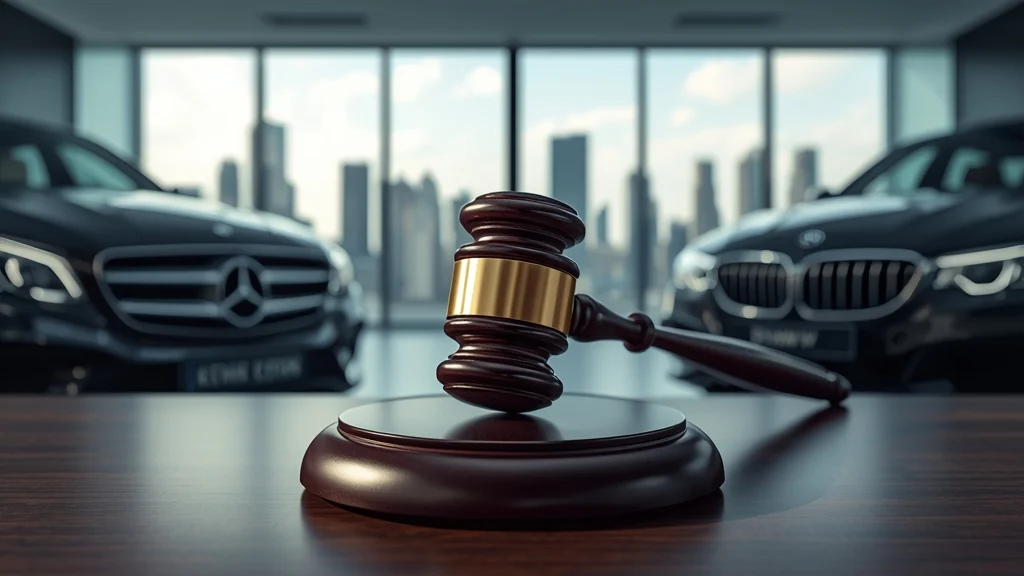
German courts rule in favor of Mercedes and BMW against a 2030 combustion engine ban. Discover what this means for the future of driving. Read more!
In a significant legal victory for the German automotive industry, luxury giants Mercedes-Benz and BMW have successfully avoided a potential court-mandated ban on the sale of internal combustion engine (ICE) vehicles. A German court recently dismissed a lawsuit that sought to force the two manufacturers to stop selling gasoline and diesel cars much sooner than previously planned.
The Legal Battle: Environmental Activism vs. Corporate Regulation
The legal challenge was spearheaded by representatives from Deutsche Umwelthilfe (DUH), a prominent environmental action group. The plaintiffs argued that automotive manufacturers have consumed a disproportionate share of the global and national carbon budgets, thereby accelerating climate change.
Based on this premise, the group pushed for a ruling that would compel BMW and Mercedes-Benz to cease the sale of all combustion engine vehicles starting in 2030. This timeline would have been significantly more aggressive than the current government mandates.
A Complex Legal Question
Beyond the environmental concerns, the case touched upon a critical legal precedent: Can private companies be legally forced to reduce emissions beyond the limits already established by government regulations?
Essentially, the lawsuit attempted to hold these corporations to a standard of environmental compliance that exceeded the actual laws of the land. This raised concerns about the boundaries of judicial power versus legislative authority.
The Court’s Verdict
Despite the plaintiffs’ efforts, the Federal Court of Justice in Germany officially rejected the lawsuit. Judge Stephan Seiters stated clearly that the responsibility for creating and implementing climate protection legislation rests with lawmakers, not the courts.
While the ruling is a major win for the automakers, the battle may not be entirely over. DUH has indicated that they may consider an appeal, suggesting that the ideological and legal debate regarding carbon budgets and corporate responsibility remains active.
Industry Reaction and the Broader EU Landscape
BMW reacted positively to the news, expressing relief that they would not be forced into a premature exit from the ICE market. The company highlighted its long-term commitment to climate protection and its ongoing investment in sustainable mobility solutions.
This victory comes at a time when the broader European automotive landscape is shifting. It is not the only “win” for traditional manufacturers recently. The European Commission has signaled a more flexible approach to the 2035 combustion engine ban.
The New EU Direction
Rather than a hard cutoff, the EU is considering allowances that would let companies continue selling specific types of vehicles alongside battery-electric (BEV) and hydrogen models. These include:
- Pure gasoline and diesel vehicles that run on carbon-neutral e-fuels.
- Hybrid vehicles that meet strict efficiency standards.
To qualify, these vehicles must achieve a 90% reduction in tailpipe emissions compared to the 2021 standards by the time the 2035 regulations take full effect.
For Mercedes and BMW, these legal and regulatory developments provide crucial breathing room to transition their fleets toward electrification without sacrificing the legacy of the internal combustion engine overnight.