
Japan slashes EV subsidies for BYD to prioritize domestic battery production. Discover how this impacts the global EV market. Read more!
Japan is tightening the reins on its electric vehicle (EV) incentive program, sending a clear signal that domestic production is the priority. In a move that significantly impacts foreign manufacturers, the Japanese government is slashing subsidies for Chinese EV giant BYD, favoring brands that utilize locally produced batteries.
The Big Drop: BYD’s Incentives Slashed
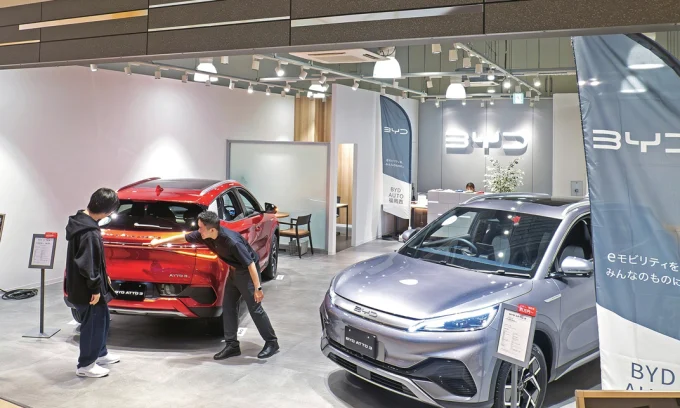
The Ministry of Economy, Trade and Industry (METI) has recalculated its clean energy vehicle subsidies, and the results are a major blow to BYD. The subsidies for BYD vehicles, which previously ranged between 350,000 and 400,000 yen (approximately $2,200 to $2,520), are set to plummet to just 150,000 yen (around $936).
These revised calculations will take effect in April, with the most severe cuts kicking in by January 2026. This shift marks one of the steepest declines in support for any automotive manufacturer currently operating in the Japanese market.
Winners and Losers in the Subsidy Shift
The new policy isn’t just about cutting costs; it’s about strategically directing investment toward Japanese soil. The primary beneficiaries are domestic manufacturers who have integrated local supply chains.
- Toyota: The bZ4X remains the gold standard for these incentives, retaining the maximum subsidy of 1.3 million yen (approx. $8,200) thanks to its use of Japanese-made batteries.
- Nissan: While still well-supported, the Nissan Ariya will see its subsidy decrease from 1.29 million yen ($8,100) to 1 million yen ($6,300) by 2027.
- Foreign Imports: Brands like Audi and Hyundai are also facing significant reductions, as many of their imported models rely on batteries manufactured outside of Japan.
- Tesla: Interestingly, Tesla’s subsidies, which reach up to 1.27 million yen, are expected to remain unchanged.
A Hurdle for BYD’s Japan Expansion
Entering the Japanese market is no small feat. Currently, EVs account for less than 2% of new car sales in Japan. Despite this slow adoption, BYD has been aggressive, planning to launch a specialized electric “kei-car” (the small, boxy vehicles popular in Japan) in 2025 to gain a foothold in the domestic market.
However, the reduction in subsidies arrives as a significant setback. For a brand trying to convince conservative Japanese consumers to switch to electric, the loss of financial incentives makes the price point less competitive against established local rivals.
The Bigger Picture: Economic Nationalism in the EV Race
This move is widely seen as a protective measure. As China’s BYD grows into one of the top six automakers globally, Japan is leveraging its fiscal policy to shield its own industry from the rapid rise of Chinese EV dominance.
This trend mirrors a global shift where governments are no longer using EV incentives simply to promote “green” energy, but as a tool for geopolitical and economic leverage. By tying subsidies to battery origin, Japan is effectively forcing manufacturers to invest in local factories and technology if they want to remain competitive.
As Chinese manufacturers continue their global expansion, the battle for market share will likely be decided not just by the quality of the cars, but by how well these companies navigate the increasingly complex web of local trade policies and supply chain requirements.