
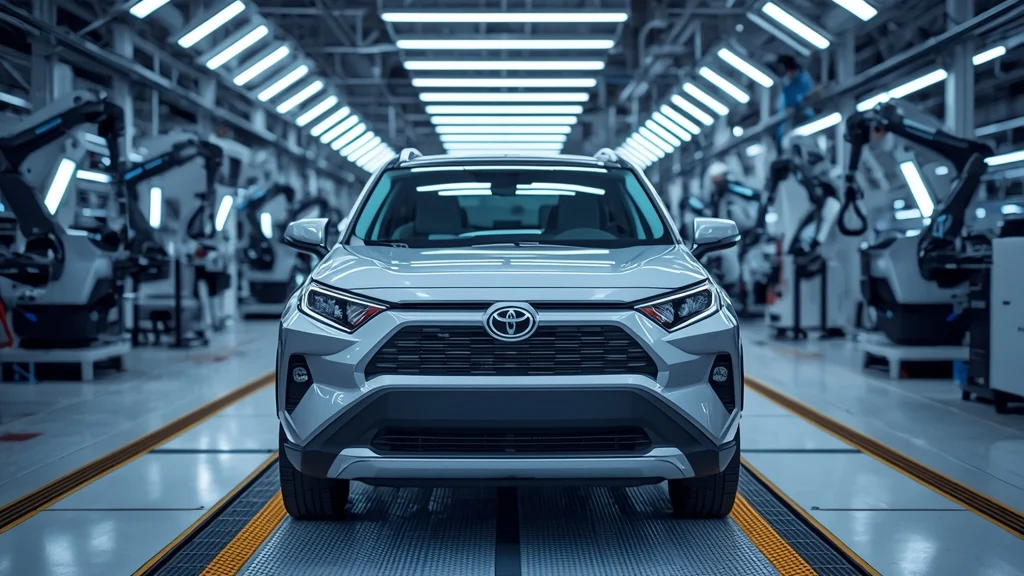
Toyota’s global production falls for the 4th month as the new RAV4 hybrid rolls out. Is demand still strong? Discover the details here.
Toyota, the world’s leading automaker, has seen its global production decline for the fourth consecutive month. While the numbers might seem concerning at first glance, a closer look reveals that this dip is not due to a lack of consumer interest, but rather a strategic transition in its most popular model lineup.
Production Dips Despite Record-Breaking Momentum
According to recent data, Toyota’s global production fell by 3.9% compared to the same period last year, totaling 749,673 vehicles. This trend has also mirrored in global sales, which saw a 3.3% decrease to 737,134 units.
This comes as a slight cooling period following a record-breaking year in 2025, where Toyota solidified its position as the world’s best-selling automaker for the sixth consecutive year, moving a staggering 11.3 million vehicles globally.
The RAV4 Transition: A Strategic Shift to Electrification
The primary culprit behind the production slowdown is the generational handover of the Toyota RAV4. As one of the brand’s most critical pillars in both the US and global markets—with cumulative sales exceeding 15 million units—any change in its production cycle sends ripples through the entire supply chain.
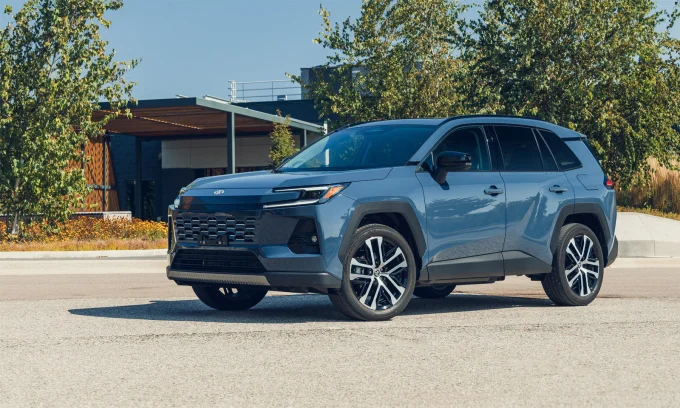
The new 6th-generation RAV4 represents a bold step in Toyota’s electrification strategy. Moving away from pure internal combustion engines, the new lineup focuses exclusively on hybrid and plug-in hybrid (PHEV) variants:
- Standard Hybrid: Delivers a combined output of 226 horsepower.
- Plug-in Hybrid (PHEV): Boasts a powerful 320 horsepower and an electric-only driving range of approximately 80 km.
- Enhanced Safety & Style: Features the latest Toyota Safety Sense 4.0 and a completely redesigned interior to attract modern buyers.
Regional Impacts: Why Canada Felt the Hardest Hit
While the decline is global, the impact has been unevenly distributed. The most dramatic drop occurred in Canada, where production plummeted by 46.2%. This sharp decline dragged North American production down by 9.1% overall.
The reason is simple: logistics. Approximately 80% of RAV4s destined for the US market are manufactured at Toyota’s two assembly plants in Ontario, Canada. As these plants transition their lines to the new generation, Canada becomes the epicenter of the temporary supply disruption.
Other regions also saw declines, including the Middle East (20.4%), China (11.5%), and Japan (2.6%).
A Temporary Hurdle, Not a Structural Crisis
Despite the production bottlenecks and inventory shortages at dealerships, consumer appetite remains high. In fact, sales in the US increased by 5.1% despite the scarcity of the new RAV4.
Industry analysts, including those from Autoblog, suggest that this is merely a matter of time. As Toyota’s factories calibrate their processes for the new hybrid-centric lineup, production is expected to stabilize. The data suggests that this is a localized, temporary disruption rather than a structural failure in demand or company health.