
US automakers and lawmakers warn Trump against opening doors to Chinese EVs to protect national security and jobs. Discover the full story here.
A High-Stakes Warning to the White House
As President Donald Trump prepares for critical discussions with Chinese President Xi Jinping, a unified front has emerged within the American automotive sector. From powerhouse manufacturers to bipartisan lawmakers, the message is clear: Do not open the doors to Chinese automobiles.
The urgency stems from a perceived vulnerability in the US market. While the US has long been a global leader in automotive engineering, the rapid ascent of China’s electric vehicle (EV) sector has sent shockwaves through Detroit and Washington.
The Clash of Visions: Open Markets vs. National Security
The tension began when President Trump expressed a surprisingly open stance during a talk with the Detroit Economic Club. He suggested it would be “wonderful” if Chinese automakers established factories on US soil and hired American workers, stating, “Let China in, let Japan in.”
These comments sparked immediate alarm among industry lobbyists. For months, the US auto sector has been systematically pushing for strict data security regulations and high tariffs on Chinese EVs to create a protective barrier around the domestic market.
Why the US is Wary of Chinese Competition
Industry leaders, steel manufacturers, and labor unions argue that competing with China is not a fair fight. They point to several critical advantages held by Chinese firms:
- Unrivaled State Support: Massive government subsidies that allow Chinese firms to operate with minimal financial risk.
- Economies of Scale: A colossal production capacity that drives costs down.
- EV Tech Dominance: A head start in battery technology and supply chain integration.
- Aggressive Pricing: The ability to flood markets with ultra-low-cost vehicles that domestic brands cannot match.
Beyond economics, the concern is one of national security. Democratic lawmakers, including Senator Elissa Slotkin of Michigan, have warned that allowing Chinese investment into the US auto infrastructure could trigger an irreparable security crisis, citing risks related to data privacy and critical infrastructure control.
The Affordability Crisis and the ‘Chinese Threat’
The timing of this push is critical. The US is currently facing a severe automotive affordability crisis. With the average new car price now exceeding $51,000 according to Kelley Blue Book, American consumers are increasingly desperate for cheaper options. This creates a dangerous opening for low-cost Chinese imports to gain a foothold.
Learning from the European Struggle
The US auto industry is closely watching the “cautionary tale” unfolding in Europe and North America:
- Europe: Chinese brands have rapidly increased their market share, doubling to 6% in 2025 as consumers pivot toward affordable EVs amidst rising fuel costs.
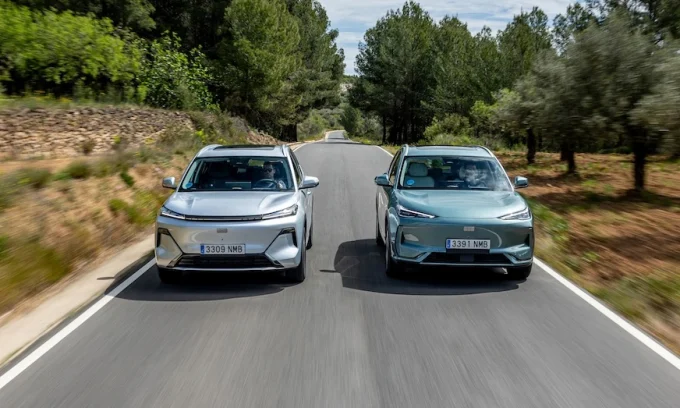
- Mexico: Roughly 34 Chinese brands are already active in the Mexican market, capturing approximately 15% of the share by offering prices significantly lower than anything available in the US.
- Canada: The country has begun importing roughly 49,000 Chinese EVs annually.
The Domino Effect: Volkswagen’s Dilemma
The struggle isn’t limited to the US. In Germany, Volkswagen is undergoing a massive restructuring, with plans to cut 50,000 jobs by 2030. This desperation has led to internal debates about whether to open underutilized factories to Chinese manufacturers.
While the IG Metall union suggests such moves must be evaluated with extreme caution, factories like the Zwickau EV plant are already being viewed as potential candidates for Chinese partnerships. This underscores a global trend: the sheer scale of Chinese EV production is forcing traditional automotive giants to choose between autonomy and survival.