
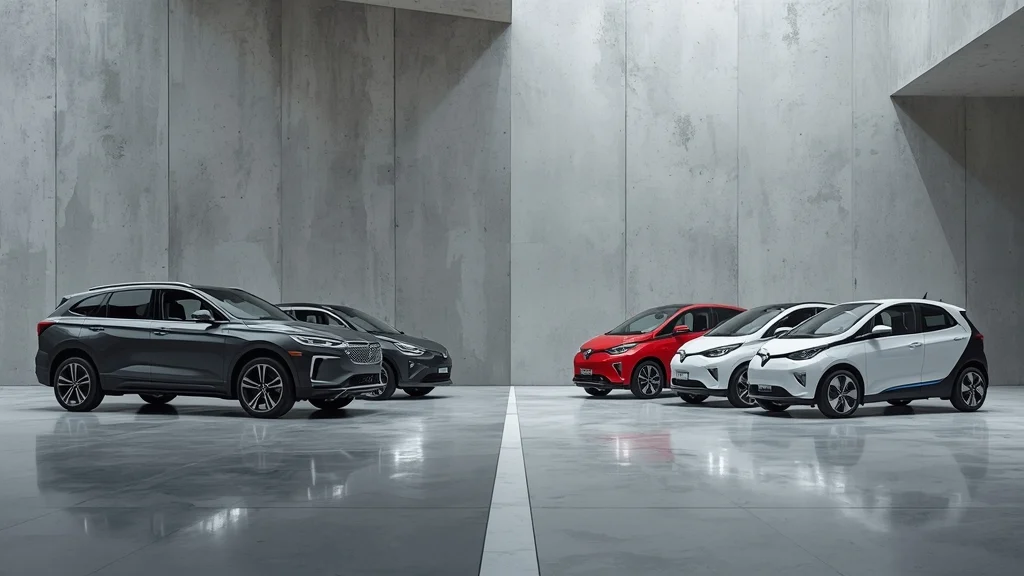
One average US new car costs as much as four budget EVs in China. Explore the price war driving affordable electric mobility. Read more!
The Beijing Auto Show recently served as a stark reminder of the aggressive price wars currently reshaping the global automotive landscape. In China, the world’s largest auto market, fierce competition has driven the cost of new vehicles down to a fraction of what consumers pay in the United States, the second-largest market.
The Mathematical Divide: $51,500 vs. $12,000
According to data from Kelley Blue Book, the average listing price for a new car in the U.S. sat at approximately $51,500 in March. Meanwhile, the Chinese market is flooded with budget-friendly alternatives. Data from DCar, a prominent Chinese automotive information platform, reveals that there are over 200 battery-electric and hybrid models available for under $25,000.
The disparity becomes even more shocking when looking at the top sellers. Reuters highlighted a list of the five best-selling EVs in China with starting prices below $12,000. Essentially, for the price of one average new car in America, a consumer in China could purchase four high-demand electric vehicles.
Featured Budget EVs Dominating the Chinese Market
While these compact electric vehicles are largely absent from U.S. showrooms—and may never arrive due to regulatory and market differences—they offer a glimpse into a different philosophy of urban mobility.
Geely EX2: The Feature-Packed City Car
The Geely EX2 has emerged as a powerhouse in the domestic market, projected as a top seller for 2025 across all vehicle categories. Despite its size, it doesn’t feel like a “budget” car inside. Analysts note that the EX2 offers a surprising sense of spaciousness and build quality.
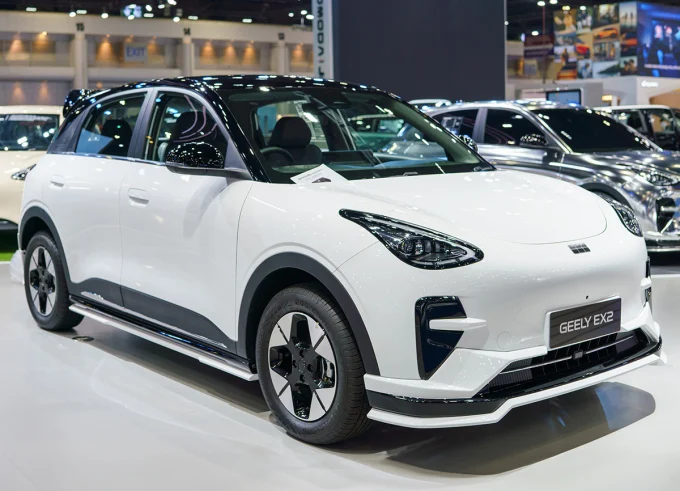
- Key Features: A front trunk (frunk), ample cabin storage, and a massive 14.6-inch central touchscreen.
- Performance: The top-tier version boasts a range of approximately 410 km (based on Chinese testing standards).
- Global Expansion: Following its 2024 debut, Geely began exporting the EX2 to Brazil, Indonesia, and Thailand in 2025.
Wuling: From “Micro” to “Highway-Capable”
Wuling has mastered the art of the “city box.” The Mini EV is a minimalist, playful vehicle designed for short urban hops. To better accommodate adults, the 2026 version has been lengthened to include four doors and improved rear seating.
To put its size in perspective, you could park two previous-generation Mini EVs in the space required for a single Ford F-150—the best-selling vehicle in the U.S. The Mini EV is built for efficiency, with a top speed of 100 km/h and a range of 204 km.
For those needing more versatility, Wuling offers the Bingo Pro. Starting at just over $8,000, this retro-styled EV is designed for highway travel, offering a significantly improved range of 402 km.
BYD Seagull: The Efficiency King
BYD stands as the titan of the small EV sector in China. Three of its top models, all starting under $12,000, sold a staggering 700,000 units in the past year alone. The standout is the Seagull, which disrupted the market upon its launch three years ago due to its blend of style, performance, and unbeatable pricing.
The 2026 Seagull is an evolution of the original, adding sophisticated tech such as:
- Advanced Safety: Optional LiDAR and remote sensing systems to support driver assistance.
- Enhanced Range: Up to 505 km on the high-end trim.
- Practical Upgrades: While the original model saved costs with a single windshield wiper (which some users found inadequate in heavy rain), the 2026 model now comes standard with dual wipers and fast-charging capabilities.
Conclusion: A Tale of Two Markets
The gap between U.S. and Chinese car pricing reflects more than just manufacturing costs; it reflects a difference in urban needs and market competition. While the U.S. continues to favor larger, more expensive vehicles like the F-150, China is rapidly scaling a fleet of affordable, high-tech micro-EVs that make sustainable transport accessible to the masses.