
China’s BYD postpones the debut of its flagship Great Tang electric SUV as record pre‑orders strain battery supplies. Discover the impact on the EV market – read on.
Chinese automaker BYD has announced a postponement of the official launch of its much‑anticipated Great Tang electric SUV. The model, slated for a public debut on June 8, was originally set for May, but soaring pre‑order numbers have put unprecedented pressure on the company’s battery supply chain.
Why the Delay?
According to sales staff from BYD’s Dynasty Network, more than 100,000 pre‑orders have been placed for the Great Tang, with an initial surge of over 30,000 orders recorded within the first 24 hours of sales opening. While the demand underscores the SUV’s appeal, it also means that some dealers have yet to receive the first production units or even display models.
BYD’s chairman, Wang Xuan Fu, confirmed that the current production capacity for the second‑generation Blade battery – the power source for the Great Tang – cannot keep pace with the rapid increase in demand for fast‑charging EVs.
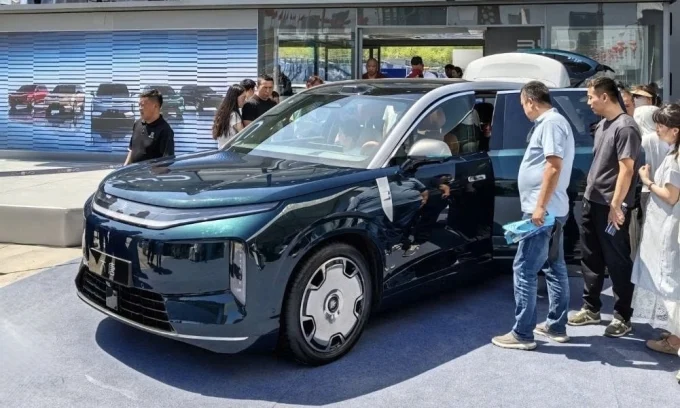
Battery Constraints and Fast‑Charging Claims
The Great Tang is equipped with BYD’s second‑generation Blade battery and a high‑speed charging system that, on paper, can top up from 10% to 70% in just five minutes, and reach 97% in nine minutes. However, the company admits that the ramp‑up of this technology is limited by the existing battery manufacturing lines.
Key Specifications of the Great Tang
- Body style: Full‑size, 7‑seat electric SUV
- Dimensions: 5,263 mm (L) × 1,999 mm (W) × 1,790 mm (H); wheelbase 3,130 mm
- Powertrain: Dual‑motor AWD, 0–100 km/h in 3.9 seconds
- Battery: 2nd‑gen Blade lithium‑iron‑phosphate pack
- Charging: 10‑70% in 5 min, 10‑97% in 9 min (fast‑charge)
- Suspension: Intelligent dual‑chamber pneumatic system (DiSus‑A) with rear‑wheel steering
- Price range: ¥250,000–¥320,000 (≈ US$36,700–US$47,000)
Market Impact
The Great Tang enters a fiercely competitive segment of large family SUVs in China, where manufacturers are racing to offer longer range, ultra‑fast charging, and spacious three‑row cabins. BYD’s delay highlights a broader industry challenge: aligning rapid consumer interest with the physical limits of battery production.
Analysts expect the postponement to be short‑term, as BYD works to expand its Blade battery output. In the meantime, the high pre‑order volume signals strong buyer confidence in BYD’s EV technology and could set a benchmark for future large‑format electric vehicles.
What’s Next?
BYD has not announced a new launch date, but the company assures that deliveries will resume once battery supply stabilises. Prospective buyers and industry watchers should stay tuned for updates on production schedules and any potential revisions to pricing or specifications.
For the latest developments on BYD’s electric lineup and the evolving EV market, visit BYD’s official site or follow reputable automotive news outlets.