
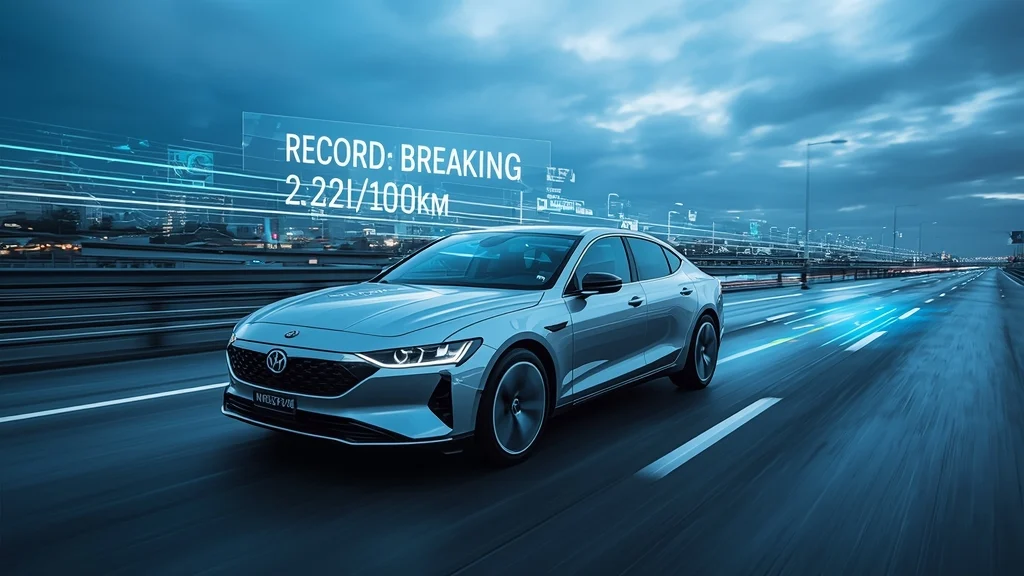
Geely’s new i-HEV system sets a world record of 2.22L/100km, challenging Toyota’s hybrid dominance. Discover the AI-powered tech here!
For decades, the Toyota Prius has been the gold standard for hybrid efficiency, synonymous with the transition toward sustainable driving. However, a new challenger has emerged from China. Geely has officially unveiled its i-HEV intelligent hybrid system, claiming a level of fuel economy that not only rivals but surpasses the legendary Prius.
A New World Record in Fuel Economy
In recent highway testing, a Geely Emgrand equipped with the i-HEV system recorded a staggering fuel consumption of just 2.22 liters per 100 km. According to Geely, this achievement has earned them a new Guinness World Record, overtaking the previous mark of 2.53 liters per 100 km held by the Toyota Prius.
This isn’t just a marginal gain; it represents a significant leap in efficiency that positions Geely as a serious threat to the long-standing dominance of Japanese automakers in the hybrid sector.
AI-Driven Efficiency: The Secret Sauce
The core of the i-HEV system is its integration of an AI-based energy management platform. Unlike traditional hybrids, this system analyzes environmental conditions in real-time—including temperature, humidity, and altitude—to optimize energy flow and maximize efficiency.
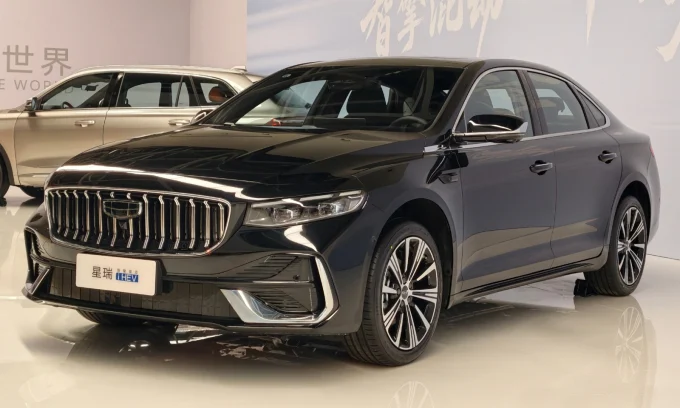
Beyond fuel savings, Geely is leveraging its advanced vehicle architecture to provide computing power that enables “smart driving” features. The company claims these advanced autonomous capabilities are currently absent in many competing Japanese hybrid models, offering a more comprehensive “tech package” for the modern driver.
Technical Specifications at a Glance
- Thermal Efficiency: An industry-leading 48.4% for mass-produced engines.
- Power Output: 308 horsepower.
- Acceleration: 0-30 km/h in just 1.84 seconds.
- Drive System: An innovative 11-in-1 electric drive unit.
- Engine Options: Available in 1.5L, 1.5TD, and 2.0TD configurations.
Strategic Shift in the Global Market
While Japanese manufacturers built their empire on standard hybrids, Chinese brands have pivoted toward plug-in hybrids (PHEVs) and AI-integrated systems. The i-HEV system uses smaller batteries (roughly 1-2 kWh), which significantly reduces material costs compared to full EVs or large-battery PHEVs, making them more affordable and sustainable to produce.
Yale Zhang, an executive at Automotive Foresight in Shanghai, describes this as a “comprehensive challenge” to Japanese dominance. With higher power, better electric range, and superior intelligence, Geely is targeting one of the most profitable segments for Japanese OEMs both domestically and internationally.
What’s Next for Geely?
Geely plans to roll out the i-HEV system across its flagship lineup by 2026. The technology will be integrated into the following models:
- Preface (Xingrui)
- Monjaro (Xingyue L)
- Emgrand
- Boyue
Furthermore, Geely is not stopping at hybrids. Chairman Li Shufu has recently highlighted the potential of methanol fuel, noting that it offers ten times the energy density of lithium-ion batteries. This suggests that Geely is pursuing a multi-pronged approach to energy, ensuring they remain competitive regardless of whether the future is electric, hybrid, or alternative-fuel based.
As Toyota continues to see strong hybrid demand—reporting approximately 4.4 million hybrid sales in 2025—the arrival of the i-HEV marks a pivotal moment in the automotive arms race. The battle for the most efficient car on the road has officially entered a new, AI-driven chapter.