
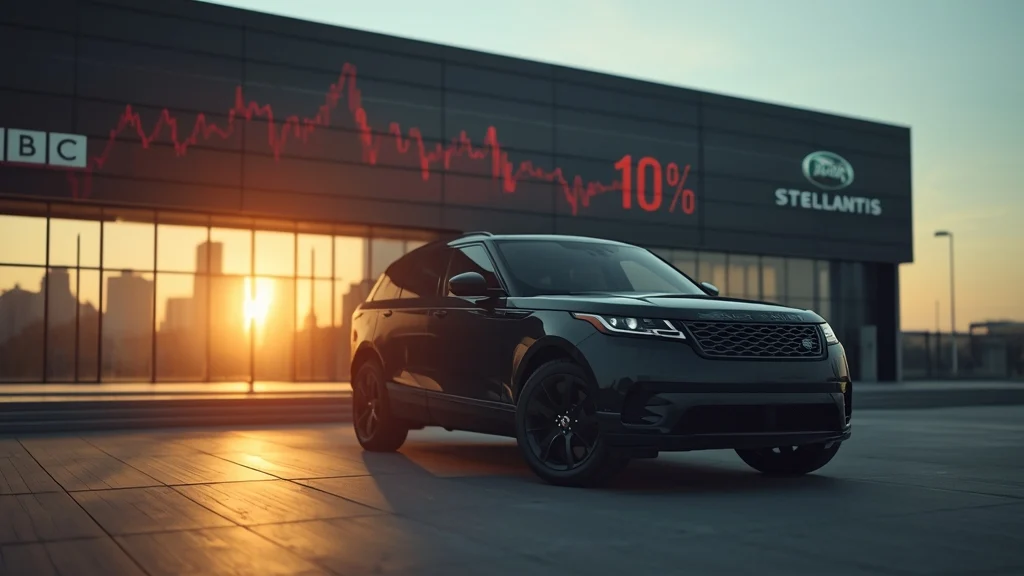
Jaguar Land Rover’s modest 4% profit target disappoints investors, dropping Tata Motors shares 10%. Discover the US‑focused plan to revive growth.
Background: A Tough Year for the Luxury Automaker
Jaguar Land Rover (JLR) has faced a cascade of challenges over the past twelve months, from higher U.S. import duties and a disruptive cyber‑attack to supply‑chain pressures linked to the Middle‑East conflict. These headwinds have eroded margins and put the British‑owned brand under intense scrutiny.

Profit Outlook Disappoints Investors
For the current fiscal year JLR forecasts an operating margin of just 4 %, a modest improvement from the 0.7 % recorded last year but far below the 10 % target the company once set. The muted outlook triggered a sharp sell‑off in Tata Motors shares, which fell around 10 % on the news.
U.S. Market as the New Growth Engine
JLR says it will double down on the United States, where affluent buyers continue to demand premium SUVs. By focusing on higher‑margin models such as the Range Rover, Defender and Discovery, the automaker hopes to lift overall profitability.

Stellantis Partnership Expands North‑American Footprint
Through a strategic alliance with Stellantis, JLR plans to broaden its presence in North America without building a new factory. The collaboration marks a shift away from the heavy reliance on Chinese production that characterised the brand’s previous growth strategy.
China Market Weakness Persists
China, once a key pillar of JLR’s sales, has slowed dramatically as domestic competitors intensify and the local economy cools. The brand has seen order volumes dip, prompting a re‑evaluation of its manufacturing footprint in the region.
Electrification, Hybrid Investment and Cost Cuts
JLR will keep investing in hybrid powertrains for its flagship models while accelerating the rollout of fully electric vehicles. At the same time, the company is pursuing a $2.3 billion cost‑reduction programme over the next two years and aims to lower the breakeven volume to 300,000 vehicles.
Implications for Tata Motors
JLR accounts for roughly 80 % of Tata Motors’ revenue, so its performance directly influences the parent’s share price. The recent dip underscores investor concern that the turnaround may take longer than expected, even as the group maintains a £18 billion (US$24 billion) investment plan through FY2024‑25.
Analysts will be watching closely how the U.S. push, the Stellantis tie‑up and the hybrid‑to‑electric transition shape JLR’s earnings in the coming quarters.