
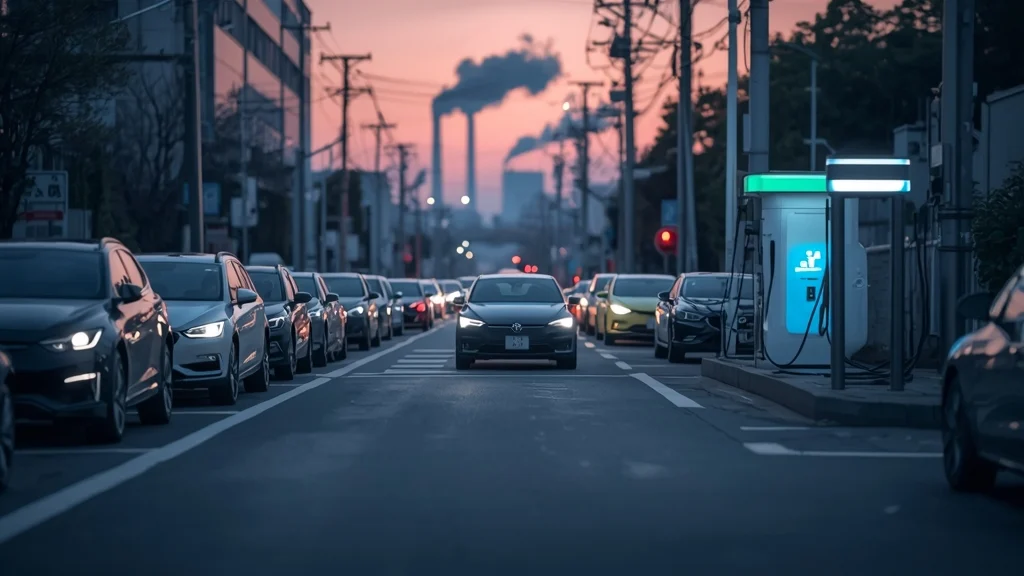
Japan’s auto giants lag behind China and Europe as electric vehicle adoption stalls. Discover why the shift to EVs is slow and what’s next. Read more now.
Fuel Prices and Government Support
Rising oil prices, driven by Middle‑East tensions and the threat of supply disruptions through the Strait of Hormuz, have forced the Japanese government to spend roughly ¥500 billion a month on gasoline and diesel subsidies. Even with this aid, pure‑electric vehicles (BEVs) account for just about 1 % of the cars on Japan’s roads, leaving most consumers heavily dependent on fossil fuels.
Why the EV Transition Is Lagging
The automotive sector contributes around 10 % of Japan’s GDP and is a cornerstone of the national economy. Yet it also produces roughly 16 % of the country’s CO₂ emissions—more than the total emissions of nations such as Nigeria or Colombia. Despite its economic weight, the shift to electric mobility is proceeding at a snail’s pace.
In 2024, over 60 % of newly sold vehicles were either hybrids or ran on alternative fuels, but BEVs made up less than 2 % of the market. Japanese manufacturers argue that hybrids better suit the current charging infrastructure and consumer needs.
Toyota’s “Multi‑Path” Strategy
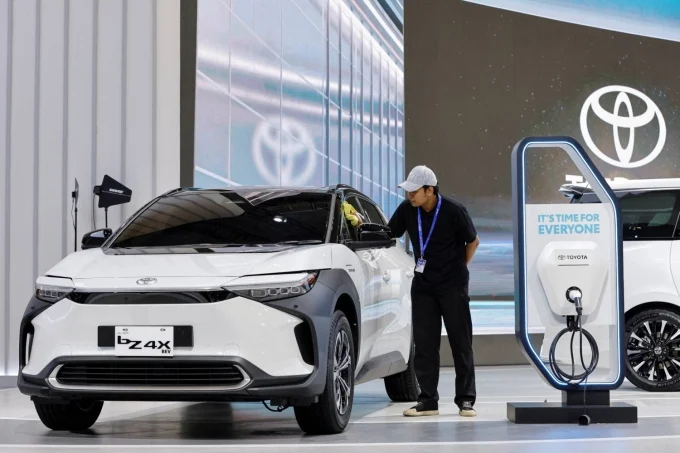
Toyota describes its approach as a “multi‑directional” strategy, refusing to put all its bets on a single technology. The company continues to develop hybrids, plug‑in hybrids, hydrogen fuel‑cell models, and carbon‑neutral fuels alongside battery‑electric cars. For the fiscal year ending 2025, Toyota expects a 30 % rise in global BEV sales, reaching about 188 000 units. While impressive, this figure is tiny compared with the roughly 4.7 million electric‑powered vehicles the company plans to sell across all power‑train types.
Price, Range Anxiety, and Charging Gaps
One of the biggest hurdles is cost. In 2025, nearly 80 % of internal‑combustion‑engine (ICE) cars sold in Japan were priced under ¥4 million (about US$25 000), whereas only a handful of BEVs broke the ¥4.1 million barrier. Consumers also worry about long charging times, limited driving range, and a still‑sparse network of fast‑charging stations.
This creates a vicious circle: automakers hesitate to launch new BEV models because demand is low, and charging‑station operators are reluctant to invest heavily when the fleet of electric cars remains small. The result is a market that trails China and Europe by a wide margin.
Japanese Makers Take a Cautious Leap
Some manufacturers are still pushing forward, albeit cautiously. Subaru is developing four new electric models, and Mazda is building its own EV platform. Honda, however, recently scrapped several BEV projects to refocus on hybrids after its electric‑car division posted losses running into the hundreds of billions of yen.
The Energy Mix Question
Japan’s power generation remains heavily fossil‑fuel‑based. In 2024, over 83 % of electricity came from non‑renewable sources, with coal alone supplying more than a quarter of the nation’s power. This raises doubts about the true environmental benefit of EVs when the grid is still powered by coal and gas.
Professor Shigemi Kagawa of Kyushu University warns that even if Japan stops selling new gasoline cars, the country will struggle to meet its carbon‑neutral goals unless emissions are cut across the entire supply chain and electricity generation. According to his research, halving the share of fossil fuels in the power mix by 2030 would only reduce national CO₂ output by about 10 %.
Renewable Energy Use in Factories
Japanese automakers are also lagging on renewable energy adoption. Toyota sources roughly 18 % of its electricity from renewable sources, Nissan about 9 %, and Subaru 10 %. Mazda, on the other hand, still derives about 80 % of its plant power from coal‑fired thermal electricity, although it pledges to eliminate coal by 2030.
Betting on Hydrogen and Bio‑fuels
Beyond batteries, many Japanese firms are investing in hydrogen fuel‑cells and advanced bio‑fuels. Toyota and Honda lead the charge with hydrogen‑powered vehicles, while Mazda is researching algae‑derived fuels that emit far less CO₂ than conventional gasoline. The industry believes these alternatives can cut emissions without overhauling existing infrastructure.
Environmental Critics and Global Competition
Environmental NGOs argue that Japan’s hesitation on BEVs is eroding its competitive edge. Research group InfluenceMap notes that the Japan Automobile Manufacturers Association has repeatedly lobbied to soften or delay stringent emissions regulations in major markets.
Meanwhile, China’s electric‑car sector is expanding its global influence, and countries such as Vietnam, Thailand, and Turkey are accelerating their EV rollouts faster than Japan. If the Japanese auto industry does not accelerate its electric transition, it risks missing climate targets and losing the market share it has built over decades.
Looking Ahead
Japan stands at a crossroads. The nation’s automotive giants have the engineering prowess and brand equity to lead the next mobility revolution, but they must overcome high vehicle prices, an under‑developed charging network, and a fossil‑fuel‑heavy power grid. The coming years will determine whether Japan can catch up with its global rivals or watch its once‑dominant auto sector fade into the background.