
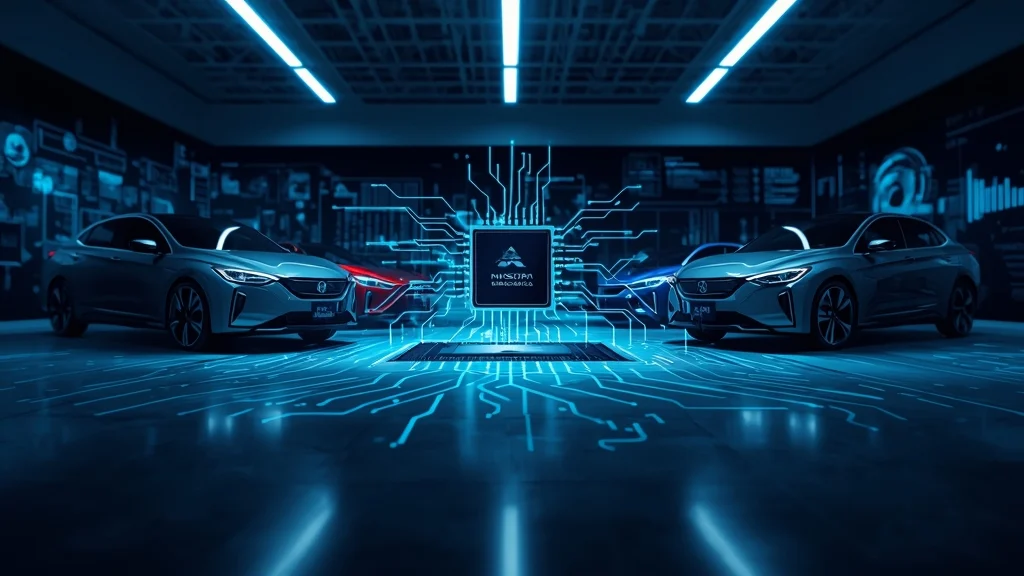
Honda, Nissan and Mitsubishi are joining forces to standardize a new central ECU for hybrid and electric vehicles, cutting costs against Tesla and Chinese rivals. Learn more now!
In a bold move to stay ahead of the accelerating electric‑vehicle (EV) race, Japan’s three automotive heavyweights—Honda, Nissan and Mitsubishi—have announced plans to standardise a next‑generation central electronic control unit (ECU). The shared platform is designed to power both hybrid models and fully electric cars, while embedding every autonomous‑driving function and infotainment service needed for future software‑defined vehicles (SDVs).
Why a Common ECU Matters
By converging on a single hardware architecture, the trio aims to slash component costs, streamline production lines, and accelerate the rollout of new features across their model ranges. The new ECU will act as the brain of the vehicle, handling everything from driver‑assist algorithms to the touchscreen interface—all via software updates.
Cost Pressures From Tesla and Chinese EV Makers
Asian and North‑American markets are witnessing an unprecedented price war, with Tesla’s aggressive pricing and a wave of competitively priced Chinese EVs eroding traditional profit margins. Sharing the ECU allows the Japanese firms to achieve economies of scale comparable to their rivals, helping them keep retail prices attractive without compromising on technology.
Beyond Hardware: The Software Question
Industry insiders say the ECU agreement could be just the first step. Both Honda and Nissan are reportedly exploring deeper integration—potentially synchronising the operating systems and software stacks that run on these units. A unified software platform would make it easier to push over‑the‑air updates, add new driver‑assist features, and even support third‑party apps.
A History of Close Ties
About 18 months ago, Honda and Nissan were on the brink of a historic merger that ultimately fell apart at the last minute. Despite that setback, the two companies have continued to collaborate on a range of projects, keeping the door open for future joint ventures.
North American Production Synergies
In the past six months, the three manufacturers have been scouting for a joint‑venture production hub in North America. If approved, Nissan could supply pickup trucks to both Honda and Mitsubishi, while the partners jointly develop larger‑segment vehicles for the continent. Earlier this year, Nissan announced plans to assemble pickups for Honda at its Canton, Michigan plant—a facility that remains under‑utilised after Nissan scrapped two electric‑sedan projects slated for 2025.
Looking Ahead
The formal partnership agreement is expected to be signed within the next few weeks, according to sources at Nikkei Asia. Once in place, the shared ECU could become a cornerstone of the Japanese automakers’ strategy to reclaim market share and compete on price, performance, and innovation against both legacy rivals and the fast‑growing Chinese EV sector.
For consumers, the outcome promises more affordable, feature‑rich electric and hybrid models from brands they already trust—delivered on a common, future‑proof hardware platform.