
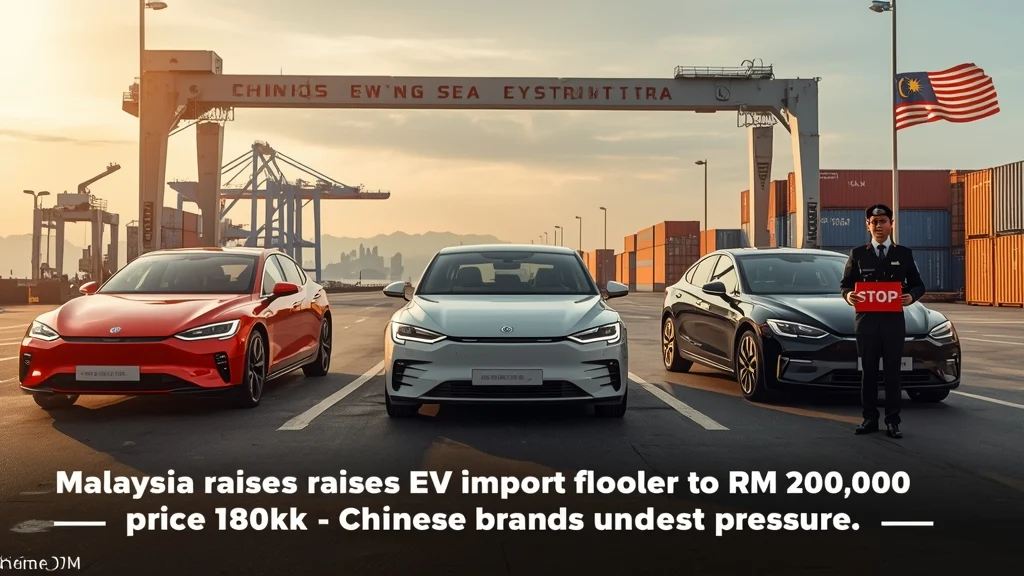
Malaysia’s EV import restrictions raise the price floor to RM200,000 and power minimums, squeezing Chinese manufacturers. Discover the market impact now.
From July 1, Malaysia’s Ministry of Investment, Trade and Industry (MITI) has introduced two strict conditions for fully built electric‑vehicle (EV) imports. The CIF price must be at least RM200,000 (about US$49,160) and the motor must deliver a minimum of 180 kW (241 hp). The move narrows the market for many Chinese EV brands that have been gaining ground in the country.
New Import Criteria
The regulations apply to completely built units (CBU) arriving at Malaysian ports. After adding taxes, dealer margins and operating costs, the on‑road price of qualifying models will often exceed the RM200,000 threshold by a large margin.
Chinese Brands Face Immediate Setbacks
Chinese manufacturers currently hold about 60% of Malaysia’s new‑energy vehicle market, a share projected for 2025. However, the new rules instantly disqualify several popular models:
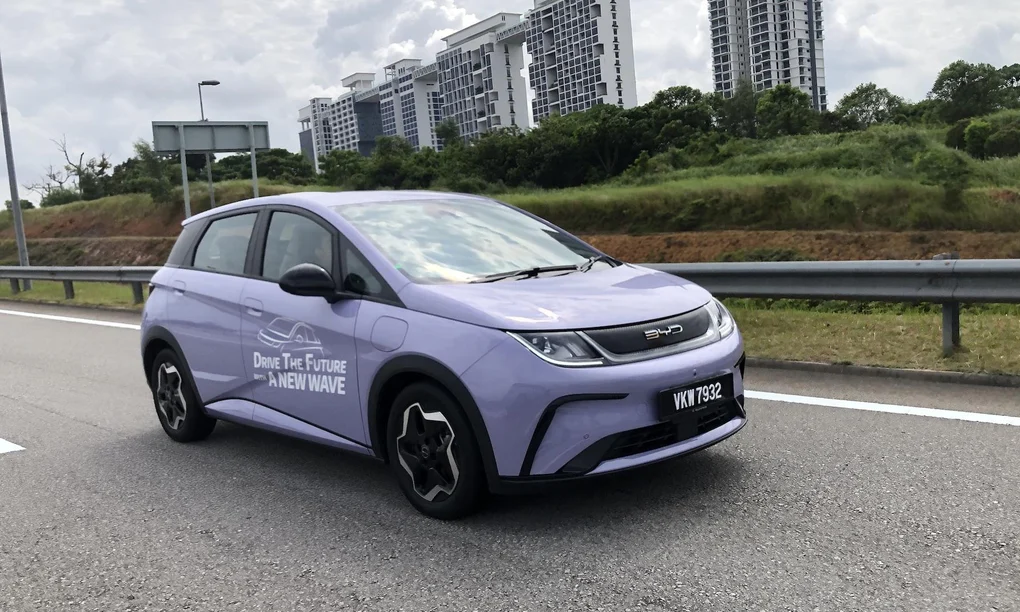
- All seven BYD models listed for Malaysia start below the RM200,000 floor.
- The BYD Dolphin and the base Atto 3 fall short of the 180 kW power requirement.
- Other contenders such as the Zeekr 7X and Chery Omoda E5 also fail to meet one or both criteria.
With these constraints, the previously rapid growth of Chinese EVs could stall unless manufacturers adapt quickly.
Consumer Uncertainty Grows
Potential buyers are feeling the impact. Amy Lau, a 28‑year‑old trainee doctor, says the rule change jeopardises her plan to purchase a RM100,000 imported EV with her brother. “We saved for years, and now we might not have enough money,” she explains.
Marketing professional Nur Aisyah Rahman adds that even sales staff are unsure how the new pricing will affect existing orders. “If the price gap is only a few thousand ringgit, I can manage, but a larger shift could upend my financing plan,” she says.
Engineer Bernard Lim worries that higher import costs will ripple through charging infrastructure, insurance premiums and resale values.
Local Assembly as a Workaround
To sidestep the CBU restrictions, some Chinese firms are exploring local knock‑down (CKD) assembly. However, MITI’s upcoming rules for projects launched after September 1 2025 impose tough conditions:
- Minimum local‑sale price of RM100,000.
- At least 80% of production must be exported, limiting domestic sales to 20%.
- High‑value processes such as body‑in‑white welding, painting and final assembly must occur in Malaysia.
BYD’s 600,000 m² assembly plant in Tanjung Malim (Perak) is now stalled, as analysts deem the 80% export quota unrealistic for the company, which already operates large facilities in Thailand, Indonesia and China.
Other manufacturers have found more immediate solutions. In June, Leapmotor began assembling its C10 model at a Stellantis‑owned plant in Gurun (Kedah) using existing lines. Xpeng announced a partnership with local OEM EPMB to build its G6 model, also avoiding the export‑quota hurdle.
Government Rationale
MITI says the tighter framework is designed to attract high‑quality investment, accelerate technology transfer and build a robust domestic supply chain—goals similar to those achieved by Malaysia’s homegrown brands Proton and Perodua.
While the policy aims to strengthen the local automotive ecosystem, it also creates a short‑term squeeze for Chinese EV makers and the consumers eager to adopt greener transport.