
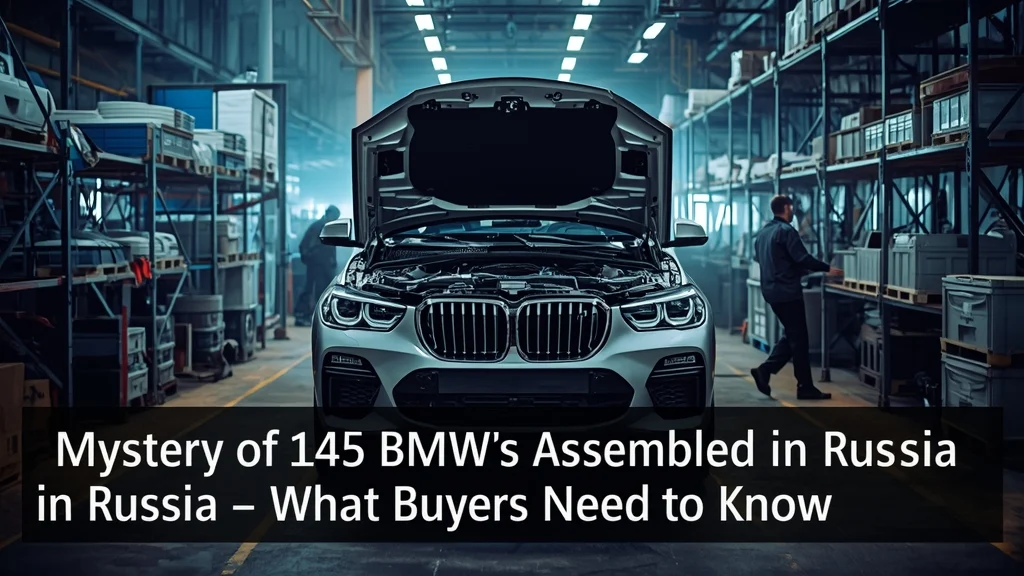
Discover why 145 BMWs are still being assembled in Russia despite BMW’s 2022 exit, and what it means for buyers. Read the full story now!
Even though the German automaker officially halted production in Russia in 2022, a surprising 145 BMWs are slated for sale in 2025. The cars are being assembled locally by Avtotor, a longtime partner based in Kaliningrad, using components that have been sitting in warehouses for years.
How the cars are still being built
Industry analysts say Avtotor still holds a sizable stock of BMW parts that were delivered before the German parent withdrew. By piecing together these leftovers, the factory can finish complete vehicles without direct oversight from BMW.
Sales surge despite the exit
Data examined by Russian newspaper Kommersant shows that BMWs assembled locally are projected to sell 2.8 times more in 2025 than in the same period of 2024. The brand’s strong appeal in Russia keeps demand alive, even for these “semi‑official” models.
Price point and market positioning
- Entry‑level models start at roughly 11.9 million rubles (≈ $154,000).
- Higher‑spec variants are listed up to 13.6 million rubles (≈ $172,000).
- These locally assembled cars are generally cheaper than fully imported BMWs, making them attractive to affluent Russian buyers.
Quality and warranty concerns
In March 2025, BMW’s Russian representative office warned that quality control at Avtotor had ended when the partnership contract expired in 2022. Some components may have degraded in storage, and there is a risk that parts from third‑party suppliers— not originally designed for the specific models— could have been mixed in.
The office cautioned that operating vehicles assembled without BMW’s supervision could pose safety risks for drivers and other road users. Retailer Fresh Auto also highlighted potential issues with warranty coverage and the availability of genuine replacement parts.
Future outlook: 2026 and beyond
Kommersant predicts that Avtotor’s assembly line may continue into 2026, but output will likely be limited as the stock of original BMW components dwindles.
One theory, voiced by Maxim Kadakov, editor‑in‑chief of Za Rulem, suggests Avtotor could start importing parts from China’s BMW Brilliance joint venture. While Reuters reported that BMW’s Chinese subsidiary was instructed to block parallel exports to Russia, Kadakov believes the German group might be turning a blind eye.
Another source argues that sourcing from China is impractical, and BMW’s Russian office says it is closely monitoring the situation to prevent any negative impact on customers and partners.
What Avtotor assembled before the split
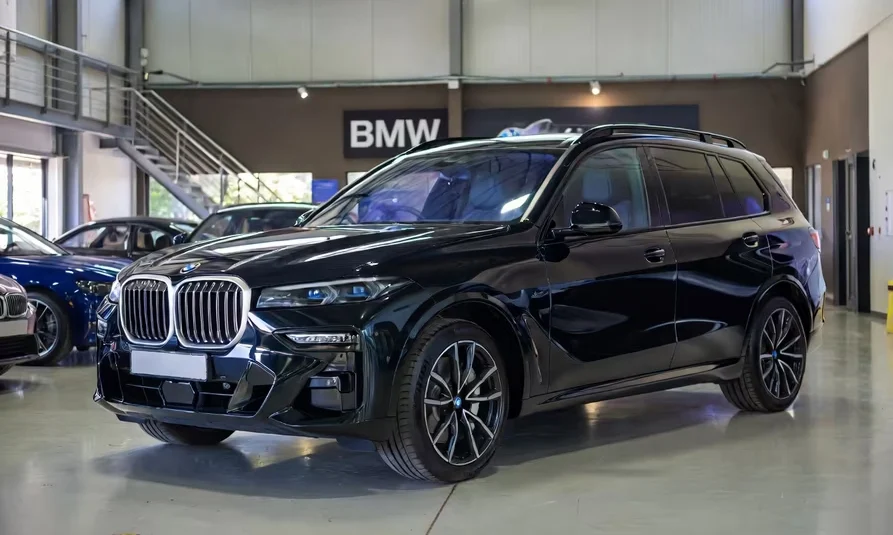
Before the partnership ended, Avtotor produced the X5, X6 and X7 SUVs, as well as the 5‑Series sedan. The company had planned a multi‑million‑dollar expansion to create a fully integrated plant covering stamping, painting and final assembly for those models, but the new facility never became operational.
By the end of 2021, Avtotor had shipped more than 261,000 BMWs since it started in October 1999. Today, the plant has shifted to assembling vehicles for Chinese brands such as BAIC and Jetour.
Consumer appetite remains strong
Surveys of Russian dealers and experts reveal that the BMW badge still carries significant prestige. According to data from Avtostat, total BMW sales—including both imported and locally assembled units—are expected to reach 16,740 cars in 2025.
Despite the uncertainties, a segment of Russian buyers is willing to pay premium prices for these locally assembled BMWs, attracted by the combination of brand cachet and a slightly lower price tag compared with fully imported models.
Key takeaways for prospective buyers
- Verify the vehicle’s VIN and confirm whether it was assembled by Avtotor.
- Ask about warranty terms; many dealers may refuse to honor BMW’s official warranty on locally assembled units.
- Consider the potential difficulty in sourcing genuine spare parts, especially as original component stocks run low.
- Stay informed about any regulatory updates from BMW’s Russian office that could affect ownership rights or resale value.
As the situation evolves, the mystery of these 145 BMWs highlights the complexities of operating in a market where geopolitical shifts intersect with consumer demand for luxury performance.