
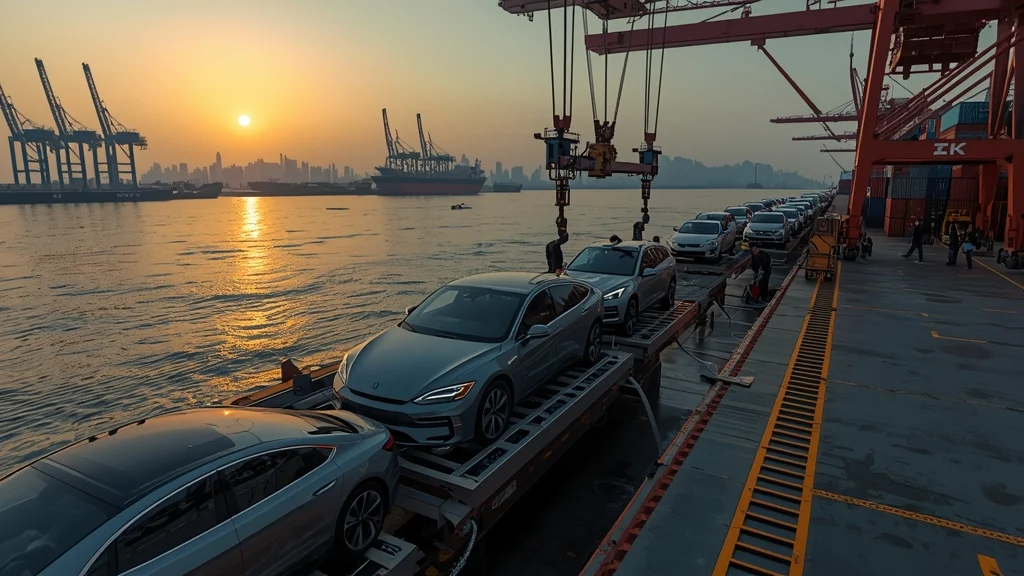
Discover how China overcomes a RoRo ship shortage with flat‑rack, container and mega‑carrier solutions to keep global car exports rolling. Read more now!
China’s automobile sector is booming, especially in electric vehicles, but a surprising logistical hurdle is limiting its ability to ship cars overseas.
The RoRo Vessel Shortage
Roll‑on/roll‑off (RoRo) ships are purpose‑built for loading cars directly onto decks. In recent months, demand has outstripped supply, leaving many Chinese manufacturers scrambling for alternatives.
Flat‑Rack Innovation by Leapmotor
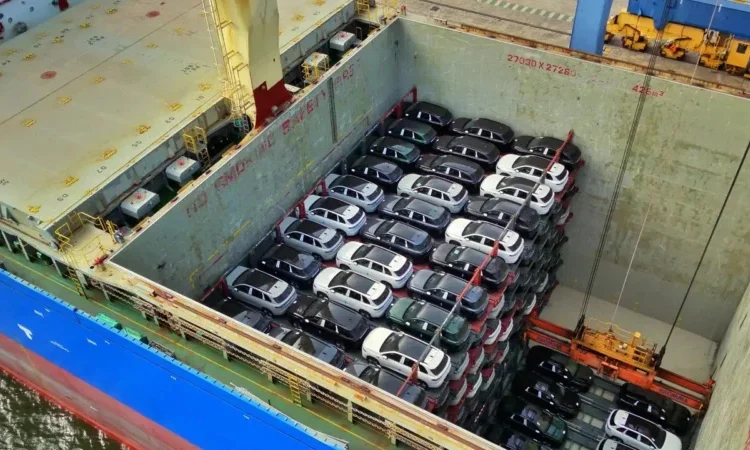
Facing the shortage, Leapmotor – backed by Stellantis – turned to a “flat‑rack” system supplied by Cosco. Vehicles are secured onto metal frames, then stacked on conventional cargo ships. This method helped ship more than 1,800 cars to Brazil, after which Stellantis’ logistics network delivered them to customers.
Container Solutions Gain Traction
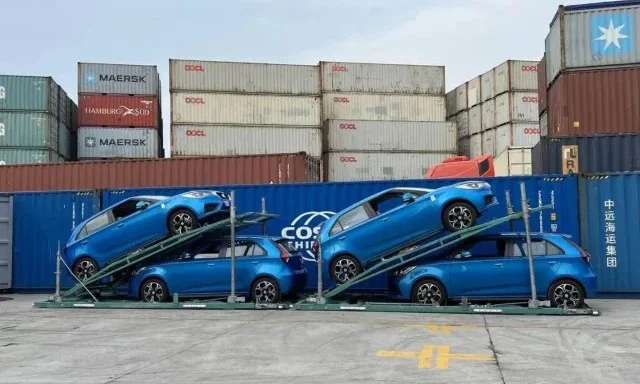
While RoRo ships remain the most efficient for auto transport, the current capacity crunch has accelerated the use of containers. New safety standards now allow a standard 40‑foot container to carry two to four cars, offering a flexible and environmentally friendlier option.
Cosco’s Multi‑Purpose Vessels Turned Car Carriers
Cosco repurposed its 62,000‑DWT paper‑pulp vessels with fold‑away flat racks that can hold over 1,000 cars per voyage. Each 14.6‑metre rack lets a driver board, secure the vehicle, and then the rack is lowered into the hold and stacked up to eight tiers high. The company also developed a super‑wide V‑Rack for commercial‑vehicle transport.
Mega‑Carriers Lead the Way
Chinese dominance is further reinforced by the world’s largest pure‑car‑and‑truck carriers (PCTC) operated by Hyundai Glovis. The Glovis Lander, Leader, and Lighthouse each boast a capacity of more than 10,000 small cars (10,800 CEU). All three vessels were built by China’s CSSC shipyards, underscoring the shift of mega‑carrier production to Chinese yards.
BYD’s Own Fleet
BYD, the global EV leader, has taken the unconventional step of commissioning its own dedicated car‑carrier fleet, with several ships already in service.
Why China Commands the Car‑Carrier Market
Chinese shipyards can deliver RoRo and PCTC vessels 15‑20% cheaper than Korean competitors, thanks to standardized designs, mass production, and in‑house component manufacturing. Coupled with a surge in Chinese vehicle exports—particularly electric models—this price advantage has cemented China’s lead in automotive logistics.
Implications for the Global Auto Industry
Experts note that the car‑carrier market is highly specialised; countries without large export volumes struggle to compete. China’s cost‑effective shipbuilding, innovative flat‑rack solutions, and expanding carrier fleet ensure that its vehicles continue to reach markets worldwide, even amid logistical bottlenecks.
As the industry adapts, the blend of traditional RoRo ships, containerised transport, and flat‑rack methods will likely become the new norm for global car shipments.