
EU to levy countervailing duties on Chinese plug‑in hybrids, aiming to level the playing field. Discover the impact on Europe’s auto market – read now.
The European Union is preparing a new set of trade measures aimed at Chinese plug‑in hybrid electric vehicles (PHEVs). According to Germany’s Handelsblatt, Brussels plans to introduce countervailing duties that will hit Chinese manufacturers hard, in an effort to offset what the EU sees as market‑distorting subsidies.
What the proposed duties entail
Following an earlier anti‑subsidy investigation that resulted in extra tariffs on fully electric cars from China, the EU is now extending its approach to the PHEV segment. The additional duties will be layered on top of the standard 10% import tariff that applies to all vehicles entering the bloc.
Manufacturer‑specific rates
- BYD: an extra 17% duty, raising the total import tax to 27%.
- Geely: an additional 18.8%, for a combined rate of 28.8%.
- SAIC (parent of MG): the highest surcharge at 35.3%, pushing the overall tariff to 45.3%.
By contrast, PHEVs that are not from the targeted Chinese firms continue to face only the baseline 10% duty and are exempt from the supplementary charges.
Why the EU is acting now
Chinese PHEVs have been gaining a foothold in Europe faster than fully electric models. In May, BYD became the best‑selling plug‑in hybrid brand in Germany, registering 4,290 new units. Its compact SUV Atto 2 DM‑i led the month with 2,113 registrations, followed by the larger Seal U DM‑i and the family‑oriented Seal 6 DM‑i Touring. BYD has also introduced the Dolphin G DM‑i, a compact city car aimed at expanding its PHEV lineup.
Industry insiders say Chinese manufacturers quickly identified a loophole: PHEVs were subject only to the standard 10% duty, allowing them to undercut European rivals that face higher taxes on fully electric vehicles. “It’s a gap the EU must close,” one senior analyst explained.
Impact on European manufacturers
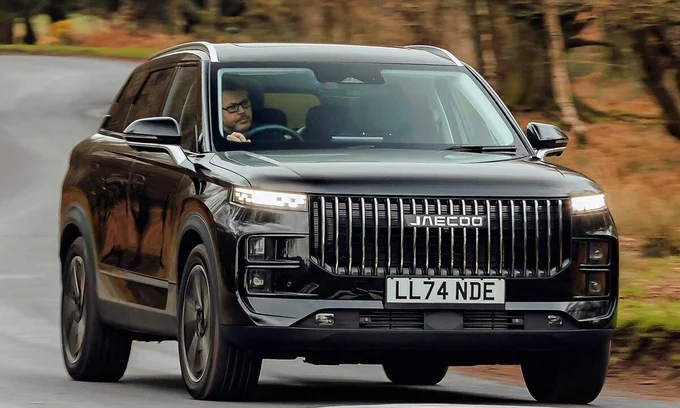
European carmakers are feeling the pressure. The surge of affordable Chinese PHEVs threatens to erode market share at a time when the EU automotive sector is already grappling with stricter emissions standards and a shift toward electrification. Chinese exports now account for roughly 10% of new vehicle sales across the continent.
Political and strategic dimensions
While the EU’s trade stance has softened in the past—particularly to avoid antagonising Beijing—growing concerns over competitive fairness are prompting a tougher approach. At the same time, Chinese firms are adapting by moving production closer to European consumers. Some are leasing under‑utilised capacity at existing plants owned by companies like Nissan, while others are planning greenfield factories within the EU to sidestep tariff hurdles.
Patrick Hummel, an analyst at UBS, cautions that higher duties may not fully halt Chinese expansion. “Profit margins on PHEVs remain attractive in Europe, and manufacturers are already re‑shoring production,” he notes.
Next steps
The proposed duties are still under discussion among EU member states, but an official investigation has been launched. If approved, the new tariffs could be implemented within the next few months.
Regardless of the outcome, Chinese automakers are unlikely to abandon their European ambitions. The market’s appetite for affordable, hybrid technology suggests that the competition will continue to intensify.
What this means for consumers
For European buyers, the move could translate into higher prices for Chinese plug‑in hybrids, potentially narrowing the price gap with domestic models. However, the increased scrutiny may also encourage greater transparency around subsidies and lead to a more level playing field for all manufacturers.
Stay tuned as the EU finalises its policy and watch how the automotive landscape evolves in the months ahead.