
The EU is preparing countervailing duties on Chinese plug‑in hybrid cars to curb subsidies. Learn how this could reshape the European auto market – read more now.
Background
The European Commission is drafting a new set of countervailing duties aimed at plug‑in hybrid electric vehicles (PHEVs) imported from China. The move follows an earlier anti‑subsidy levy on fully electric cars that sought to protect domestic manufacturers from what Brussels sees as unfair market distortion caused by Chinese state support.
Proposed Duty Structure
Under the current tariff framework, a standard 10% import duty applies to all passenger cars entering the EU. The proposed measures would add a manufacturer‑specific surcharge on top of that baseline rate.
- BYD models would face an additional 17% levy, raising the total duty to 27%.
- Geely would be hit with an 18.8% surcharge, for a combined rate of 28.8%.
- SAIC, the parent company of MG, would see the highest extra charge at 35.3%, pushing its overall duty to 45.3%.
By contrast, conventional PHEVs that are not of Chinese origin would continue to pay only the 10% standard duty and would be exempt from any extra charges.
Impact on Chinese Brands
The tax gap has encouraged Chinese manufacturers to focus heavily on the PHEV segment, where the lower duty makes their cars more price‑competitive in Europe. In May, BYD became the best‑selling plug‑in hybrid brand in Germany, registering 4,290 new vehicles.
Within BYD’s lineup, the compact SUV Atto 2 DM‑i led the month with 2,113 registrations, followed by the larger Seal U DM‑i and the family‑oriented Seal 6 DM‑i Touring. The company has recently introduced the city‑friendly Dolphin G DM‑i to broaden its PHEV portfolio.
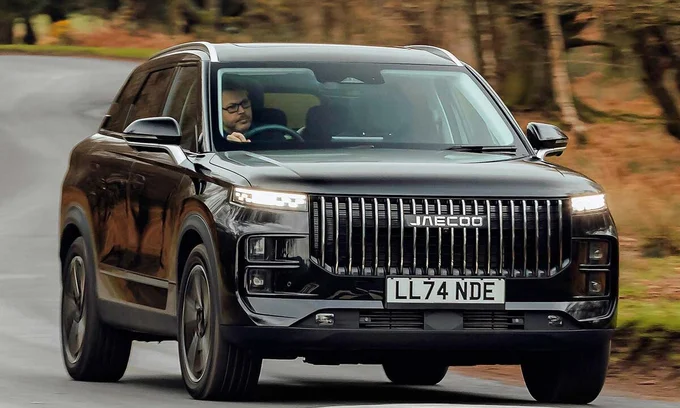
Other Chinese firms are following suit. Chery has exported tens of thousands of PHEVs to Europe, while its pure‑electric sales remain a small fraction of its total output.
European Industry Response
European automakers, already feeling pressure from a surge of Chinese vehicles that now account for roughly 10% of new car registrations on the continent, view the proposed duties as a necessary defensive step. Industry insiders say Chinese manufacturers quickly identified the loophole created by the lower PHEV tariff and exploited it, describing the situation as “a gap the EU must close.”
However, analysts caution that higher duties may not fully halt Chinese expansion. UBS analyst Patrick Hummel notes that profit margins on PHEVs remain attractive in Europe, and many Chinese firms are relocating production closer to the market—either by leasing under‑utilised capacity at existing plants (e.g., Nissan’s facilities) or by planning new factories within the EU to sidestep tariffs altogether.
Political Landscape and Outlook
European governments, once hesitant to antagonise Beijing, are now more open to tougher trade measures as concerns about industrial competitiveness rise. While consumer acceptance of Chinese brands continues to grow, the forthcoming duties could make the path to market more challenging for Chinese automakers.
The exact timing of the tariffs is still under discussion, but a formal investigation has reportedly begun. If approved by member states, the new duties could be implemented within the next few months.
In short, the EU’s countervailing strategy signals a decisive shift in trade policy, but Chinese manufacturers are unlikely to abandon their European ambitions anytime soon.