
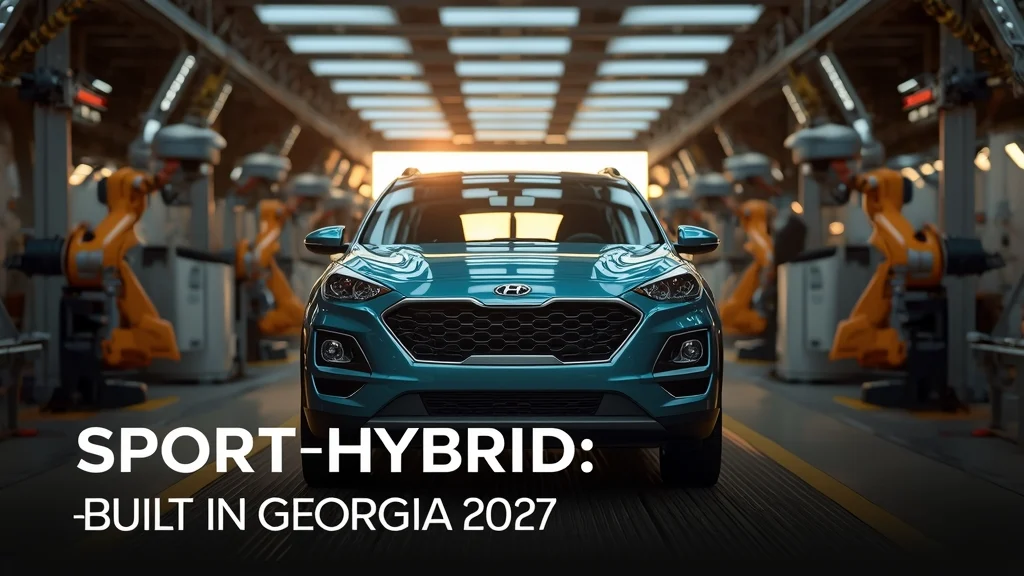
The new Kia Sportage Hybrid will be built at Hyundai’s Metaplant in Georgia, boosting US sales from 2027. Learn more about the specs and market impact today.
Production Move to Metaplant
Kia is relocating the production of its upcoming Sportage Hybrid from traditional gasoline assembly lines to Hyundai’s state‑of‑the‑art Metaplant facility in Ellabell, Georgia. The plant, originally earmarked for electric models such as the Ioniq 5 and Ioniq 9, will now share its assembly floor with the new hybrid SUV.
What the Shift Means for U.S. Buyers
Starting in 2027, the Georgia‑built Sportage Hybrid will roll out to dealerships across the United States, with the first units expected on dealer lots by the summer of that year. All trim levels – LX, S, EX, X‑Line and SX‑Prestige – will be produced at the same site, giving U.S. customers a locally sourced alternative to fully imported models.
Hybrid Powertrain Details
- 1.6‑liter turbocharged inline‑four gasoline engine
- 1.49 kWh battery pack
- Combined output: 232 hp (173 kW) and 367 Nm (271 lb‑ft) of torque
- Available with front‑wheel drive or all‑wheel drive
The setup pairs efficient gasoline performance with electric assistance, delivering brisk acceleration while keeping fuel consumption competitive in the compact SUV segment.
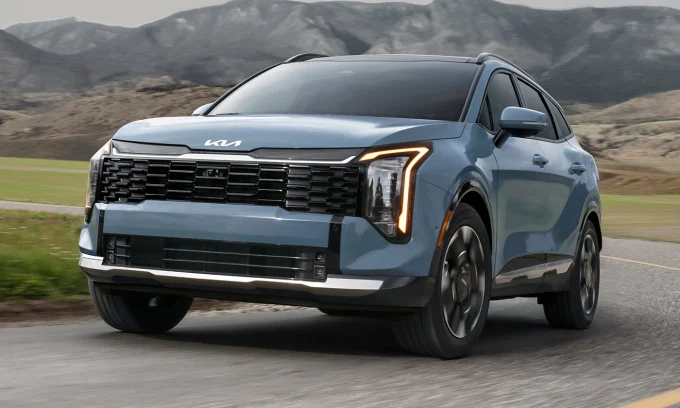
Hybrid Sales Momentum
Hybrid models have become the engine of growth for both Kia and its parent company Hyundai. In 2025, the two brands set record sales in the U.S., driven largely by strong demand for electrified vehicles. Hyundai’s Sonata Hybrid saw a 171 % year‑over‑year increase in April, while Kia’s May sales climbed to 80,502 units, up from 79,007 the previous year.
Within Kia’s lineup, the Sportage Hybrid posted a staggering 171 % surge, the Sorento Hybrid rose 101 %, and the Carnival Hybrid grew 32 %. Overall, Kia’s hybrid sales jumped 179 % year‑to‑date.
Future Outlook
As long as fuel prices remain high and electric‑vehicle incentives stay limited, hybrid demand is likely to keep rising, narrowing the gap with established models such as the Toyota Camry and Honda Accord hybrids. Conversely, a dip in fuel costs or a resurgence of EV subsidies could shift buyer focus back toward pure‑electric offerings, prompting Hyundai to double down on its EV portfolio.
By positioning the Metaplant to produce both electric and hybrid models, Hyundai and Kia are hedging their bets, ensuring they can capture market share no matter which technology path dominates the road ahead.