
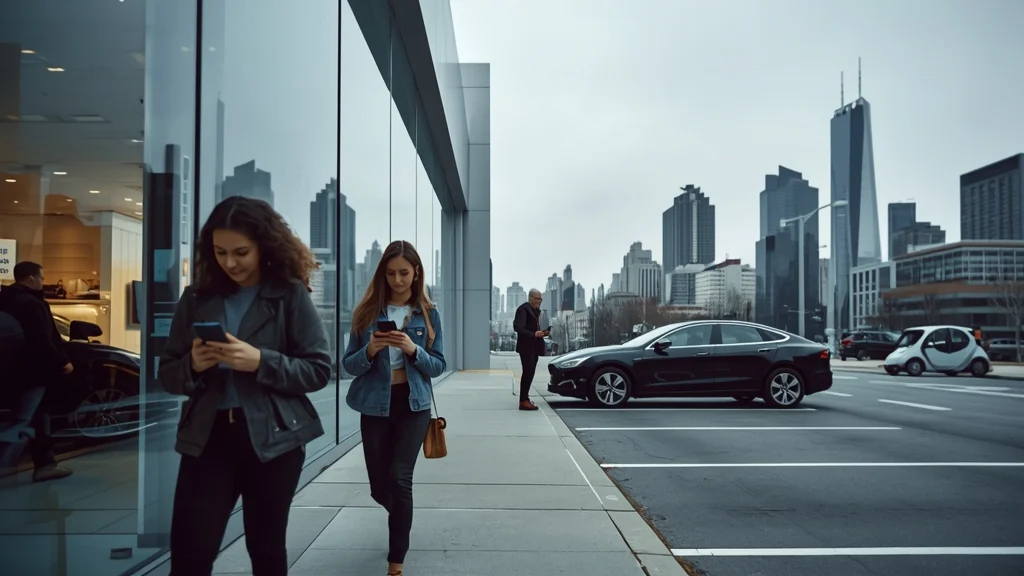
Young Americans are shunning driver’s licenses, pushing US auto sales into a steep decline. Discover the forces reshaping the market – read more now.
Young Americans Are Turning Away From Driving
Recent research shows that roughly 50% of 16‑year‑olds in the United States do not hold a driver’s licence. That’s a stark contrast to the near‑70% licence‑holding rate recorded among the same age group between 1966 and 1984.
Mark Gottfredson, a partner at Bain & Company, cautions that while many still obtain a licence before turning 25, the overall delay is already reshaping demand for new vehicles.
New‑Car Registrations Are Slipping Among Millennials and Gen Z
Data from S&P Global Mobility reveal that the share of new‑car registrations attributed to 18‑34‑year‑olds fell from 12% in Q1 2021 to under 10% by mid‑2025. In contrast, drivers aged 55 and older now account for almost half of all new registrations over the past two years.
Cost Pressures Are Driving the Shift
“Affordability is the main driver behind this trend,” says Craig Daitch, founder and chairman of market‑research firm Telemetry. Monthly car‑loan payments in the U.S. have risen about 30% over the last four years, and nearly 20% of new‑car purchases now require payments exceeding $1,000 per month.
Sam Fiorani, vice‑president of global vehicle forecasting at AutoForecast Solutions, adds, “When you look ahead, younger consumers are more likely to rely on Uber or Lyft for mobility rather than owning a car. The pool of financially‑able first‑time buyers is shrinking.”
The Rise of Alternative Mobility and Robotaxis
Emerging technologies pose an additional challenge. Bain projects that if affordable robotaxi services become widespread within the next 15 years, the proportion of licensed drivers could drop another 2‑3 percentage points, leaving only about 85% of Americans with a licence.
That would also reduce the average number of cars per driver from 1.2 to 1.1, meaning roughly one vehicle would be removed for every five to ten households.
A “Perfect Storm” Threatens the US Auto Industry
Combining youthful apathy, rising costs, and demographic headwinds creates a perfect storm for car makers. Ten years ago, the U.S. market peaked at 17.6 million new‑car sales annually. Bain forecasts a drop of more than 2 million units by 2040, with little chance of returning to the golden era.
Historically, the auto sector relied on a steady 1% annual population growth. Today, global population growth is slowing, and the U.S. fertility rate is projected at 1.6 children per woman in 2025—well below the replacement level of 2.1.
Immigration, once a buffer of roughly one million newcomers each year, is expected to be halved by stricter policies over the next 15 years, further tightening the pool of prospective car buyers.
Cars Are Staying on the Road Longer
Another factor pulling down new‑car sales is the increasing longevity of vehicles. The deregistration rate (vehicles scrapped or exported as used) has dropped from 6% in 2000 to 5% in 2025, and could fall to 4.4% by 2040.
According to S&P Global Mobility, the average age of cars on U.S. roads reached a record 12.8 years in 2025. With higher upfront costs and concerns about battery durability or software updates for electric models, both consumers and manufacturers are incentivised to extend vehicle lifespans.
“Cars can’t simply be designed for a 5‑10‑year life cycle anymore. It makes no sense to spend $50,000‑$100,000 on a vehicle that becomes a scrap heap in less than a decade,” Fiorani notes.
Intense Competition and Consolidation Ahead
If these trends continue, the U.S. market will undergo a ruthless consolidation. With roughly 450 model lines currently competing for market share, a shrinking pie will force many brands to either merge or exit.
“Competition in the United States will become ferocious. Too many manufacturers and brands are chasing a dwindling pool of buyers, pushing the market toward consolidation,” Gottfredson concludes.
What This Means for Consumers and the Industry
For consumers, the shift could mean more flexible ownership models, such as subscription services, longer‑term leases, or shared‑mobility solutions. For automakers, the challenge lies in adapting product portfolios, pricing strategies, and technology investments to a market where fewer people are buying new cars, and those who do are demanding greater value and sustainability.
Stay informed as the landscape evolves – the future of driving in America may look very different from today’s expectations.