
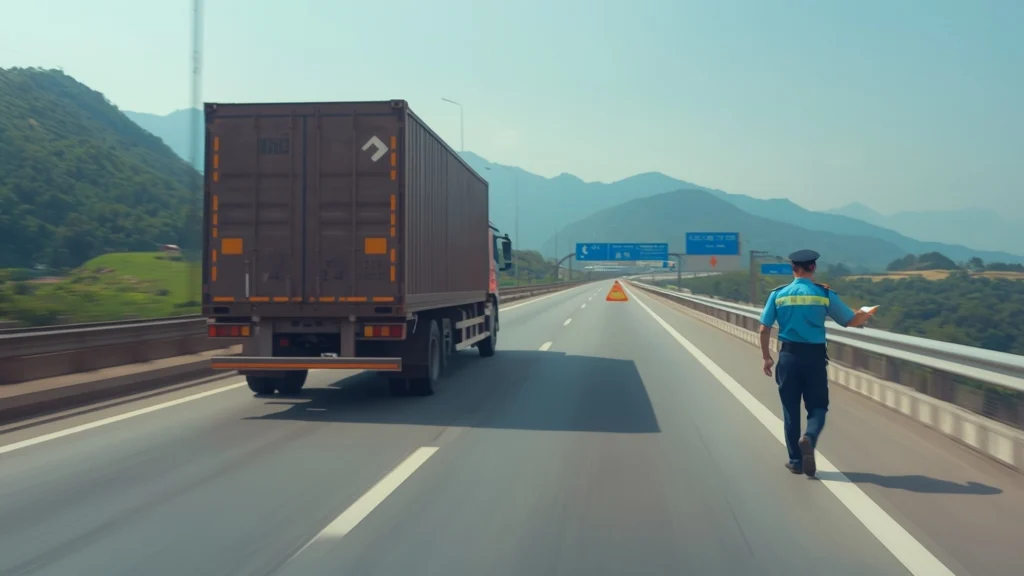
Drivers who stop illegally on Vietnamese highways face fines of 12‑14 million VND and 6 license points. Learn the rules and avoid penalties – stay safe today!
In recent weeks, Vietnam’s traffic police have handed out a series of hefty penalties to drivers who stop their vehicles on the fast‑moving lanes of the country’s highways. Fines range from 12 million to 14 million VND (roughly $500‑$600) and are accompanied by a six‑point deduction from the driver’s licence.
Recent enforcement actions
On the morning of June 17, a patrol unit from the Highway Traffic Police (CSGT) on the Vĩnh Hảo‑Phan Thiết corridor stopped a cargo truck (license plate 85H‑XX.05) that was parked at kilometre 236+900 without the required safety measures. The driver was cited under point c of Article 6 of Decree 168 and fined 14 million VND.
A day later, on the Ho Chi Minh City‑Trung Lương‑Mỹ Thuận highway, another driver (plate 94H‑011.XX) halted his car at kilometre 54+600 but failed to display a warning triangle or emergency lights at least 150 m behind the vehicle. Because the vehicle was stopped due to a technical issue, the same penalty applied.
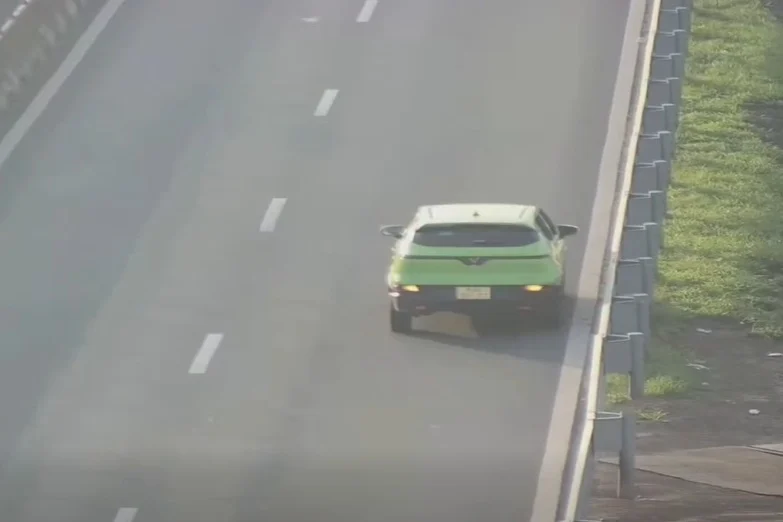
Similar violations were recorded at kilometre 55+700 (plate 63A‑051.XX) where the driver again omitted the required hazard signals. Each case resulted in a fine between 12 million and 14 million VND and the loss of six licence points.
What the law requires
Vietnam’s traffic regulations (Decree 168) specify that any vehicle forced to stop on a highway because of a breakdown, tire blow‑out, fuel shortage, or other unavoidable circumstance must:
- Activate emergency lights (hazard flashers).
- Place a reflective warning triangle at least 150 m behind the stopped vehicle.
- Avoid stopping on the travel lane whenever possible; if unavoidable, the driver must ensure the vehicle is as far to the side as safety permits.
Failure to meet these conditions is classified as a serious safety violation, reflecting the high speeds and limited reaction time on Vietnamese expressways.
Statistics: why stops happen
From January 1 to June 15, the Central Highway Police recorded 960 incidents of vehicles stopping on the Trung Lương‑Mỹ Thuận route alone. The breakdowns were caused by:
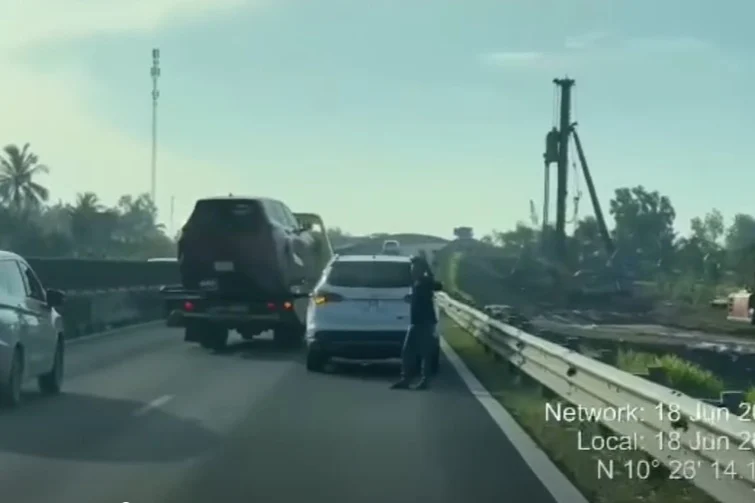
- Tyre blow‑outs – 57% of cases.
- Engine failure – 24% of cases.
- Other mechanical problems and fuel exhaustion – the remaining 19%.
These figures highlight the importance of vehicle maintenance before embarking on long‑distance trips.
Safety tips for drivers
To avoid fines and, more importantly, to keep yourself and other road users safe, consider the following checklist before hitting a Vietnamese highway:
- Inspect tyre pressure and tread depth.
- Check oil, coolant, and fuel levels.
- Carry a functional spare tyre, a reflective warning triangle, and a working set of hazard lights.
- If a breakdown occurs, move the vehicle as far to the shoulder as possible and place the warning triangle at the required distance.
- Stay inside the vehicle if traffic is heavy, and only exit when it is safe to do so.
By following these simple steps, drivers can minimise the risk of accidents and avoid the steep penalties now being enforced across Vietnam’s highway network.
Bottom line
Stopping on a Vietnamese expressway without proper warning signals is treated as a serious traffic offence, carrying fines of up to 14 million VND and a six‑point licence deduction. The message from the authorities is clear: maintain your vehicle, use the required safety equipment, and respect the speed‑focused environment of the country’s highways.