
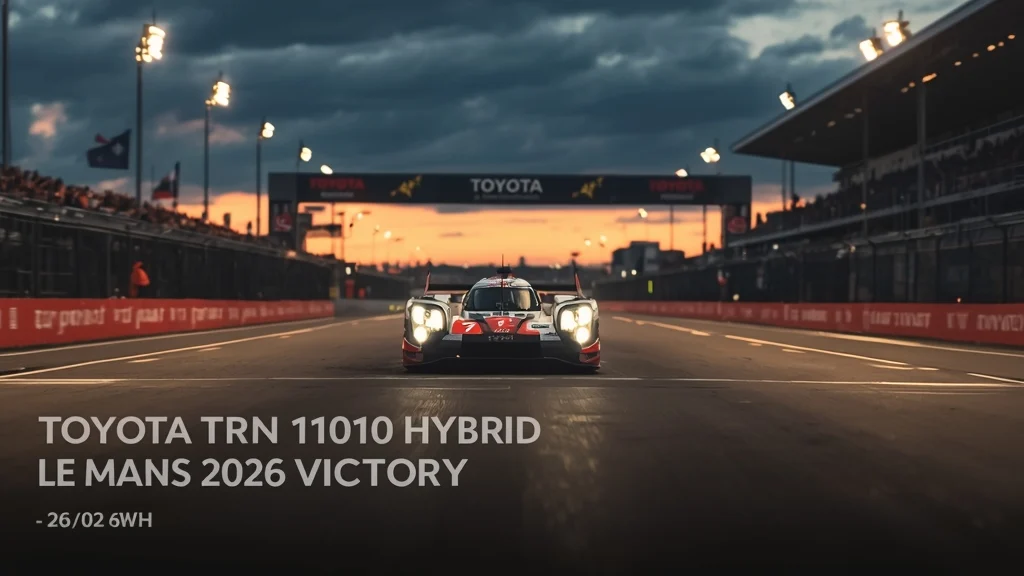
Discover how Toyota’s TR010 Hybrid clinched victory at the 2026 24‑Hour Le Mans, showcasing cutting‑edge hybrid technology and racing prowess. Read more now!
Race Overview
On June 14, 2026, at the legendary Circuit de la Sarthe in Le Mans, France, the Toyota TR010 Hybrid crossed the finish line after completing 381 laps (5,190.33 km) in the 24‑Hour Race. A crowd of 350,105 spectators witnessed the dramatic showdown.
Winning Crew
British driver Mike Conway, Japan’s Kamui Kobayashi and Dutch racer Nyck de Vries piloted car #7 to a margin of just 10.913 seconds over the competition. For Conway and Kobayashi, it marked their second Le Mans win, the first coming in 2021.
From LMP1 to LMH
When the FIA retired the iconic LMP1 class in favor of the new Le Mans Hypercar (LMH) category, Toyota’s dominant TS050 Hybrid concluded its era with three consecutive victories (2018‑2020). The GR010 Hybrid succeeded it, winning in 2021 and 2022. The TR010 Hybrid, introduced in 2026, is an evolution of the GR010, rebranded under Toyota Racing after the Gazoo Racing name change.
Technical Highlights
The TR010 draws its styling from the 2020 Toyota GR Super Sport concept. Under the hood sits a 3.5‑litre twin‑turbo V6 delivering 680 hp, paired with a front‑mounted 272 hp electric motor. Although the exact torque figures are confidential, the combined output is capped at 670 hp to comply with FIA Balance‑of‑Performance rules. The hybrid system harvests energy during braking and releases it for rapid acceleration.
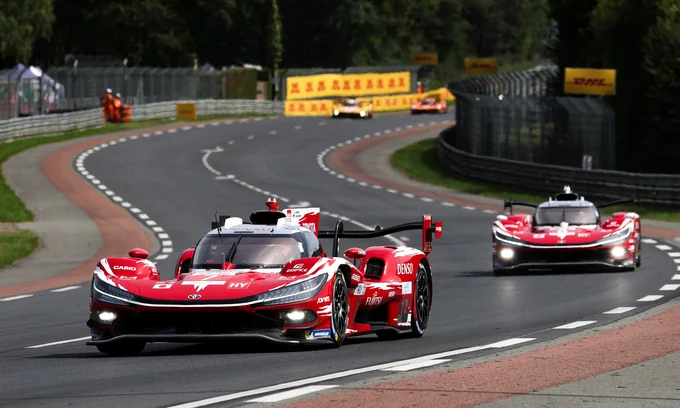
Key specifications:
- Maximum speed: 330‑343 km/h, depending on setup and BoP limits.
- Weight: 1,040 kg (162 kg heavier than the TS050).
- Dimensions: 250 mm longer, 100 mm wider, and 100 mm taller than its predecessor.
- Aerodynamics: A single rear wing is the only adjustable element for the entire season, requiring a versatile carbon‑fiber composite body that balances downforce on tight corners with low drag on long straights.
- Braking: Akebono monoblock calipers with ventilated carbon discs, hydraulic rear‑brake architecture, and 18‑inch magnesium alloy wheels wrapped in Michelin slicks.
Race Strategy and Victory
Car #7 started from a modest grid position after a challenging qualifying session and even suffered a tyre puncture early on. The team capitalized on clean air periods, executed early refuelling stops, and managed the hybrid power delivery efficiently. These tactics shaved crucial seconds, allowing the trio to pull ahead and secure overall victory, while car #8 finished third, 20.417 seconds behind.
World Endurance Championship Context
The WEC season spans eight rounds across iconic circuits such as Spa‑Francorchamps, Fuji Speedway and the 24‑Hour of Le Mans. Races range from six to twenty‑four hours, demanding three‑driver line‑ups and relentless reliability. The Hypercar class, which includes LMH and LMDh machines, sits at the top of the hierarchy, alongside LMP2 and LMGT3 categories.
What This Means for Toyota
By clinching the 2026 Le Mans title, Toyota reasserts its position at the forefront of hybrid endurance racing, challenging rivals like Ferrari and BMW and showcasing the potential of next‑generation hybrid technology in motorsport.
Stay tuned for more insights into the evolving world of hybrid hypercars and the upcoming WEC battles.