
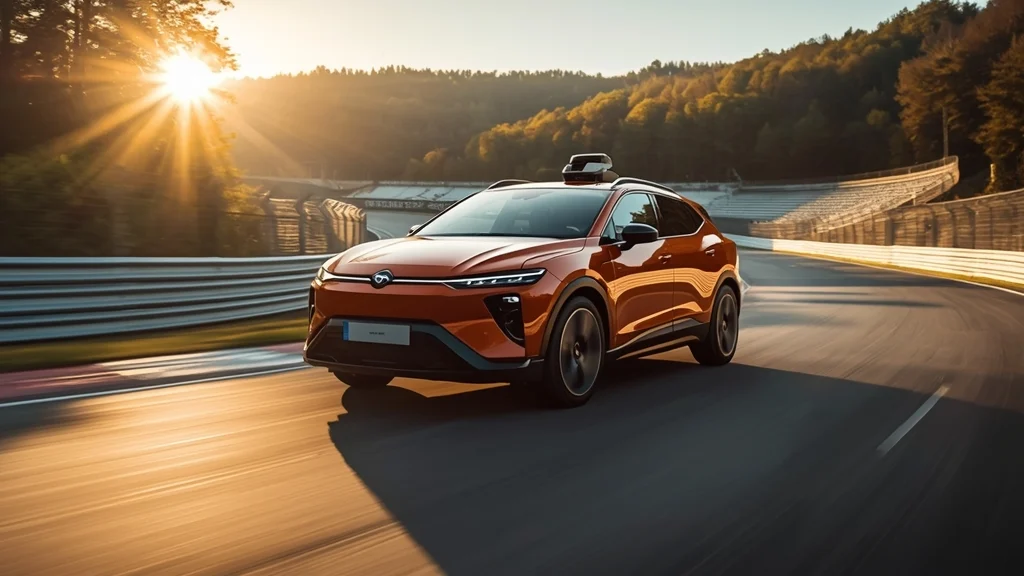
Xiaomi’s electric SUV YU7 GT completed its first autonomous 20.8 km Nürburgring lap in 10:29.483, showcasing driver‑assist tech. Learn more now!
In a historic first, Xiaomi’s electric SUV YU7 GT completed a completely driver‑less lap of the legendary Nürburgring Nordschleife, clocking in at 10 minutes 29.483 seconds over the 20.8‑km circuit.
How the autonomous run unfolded
The vehicle navigated the 154‑turn track without a human behind the wheel, handling acceleration, braking and steering entirely on its own. The lap time was recorded using the Nürburgring’s official timing system, making it the inaugural fully autonomous run to receive an official result at the “Green Hell.”
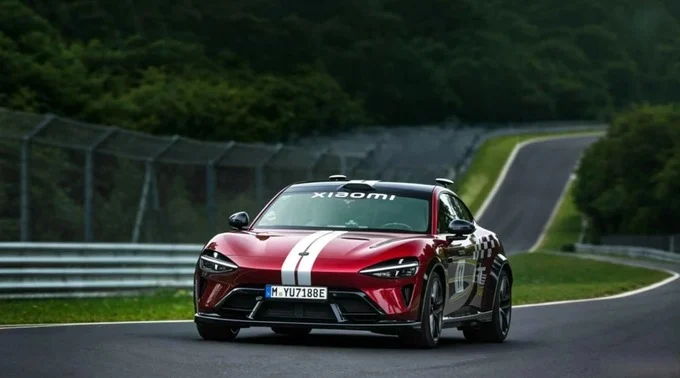
Performance highlights
- Maximum speed reached about 210 km/h (130 mph) on the Döttinger Höhe straight, one of the fastest sections of the circuit.
- The self‑driving software was tuned for safety and stability rather than pushing the car to its absolute limits.
- Compared with a professional driver in a YU7 GT equipped with the Track Package, who lapped the circuit in 7 minutes 22.755 seconds, the autonomous lap was roughly three minutes slower, underscoring the current gap between AI and human expertise.
Why the Nürburgring matters
With more than 70 corners, steep elevation changes and constantly varying surface conditions, the Nordschleife is a proving ground for durability, handling and emerging technologies. Automakers worldwide use it to benchmark new powertrains, chassis setups and, increasingly, software‑based driver‑assist systems.
Industry implications
Experts say the significance of Xiaomi’s achievement lies not in the raw lap time but in the system’s ability to process massive sensor data and make split‑second decisions in a high‑speed, complex environment. The successful run demonstrates that Chinese EV makers such as Xiaomi, BYD and Nio are investing heavily in advanced autonomous‑driving software, shifting the competitive focus from pure hardware specs to intelligent control algorithms.
Looking ahead
Xiaomi has previously showcased the performance of its electric sedan SU7 Ultra and set earlier Nürburgring records with the YU7 GT under human control. This latest autonomous lap adds another milestone to the brand’s tech‑centric narrative and signals a growing confidence in software‑driven performance.
As the electric‑vehicle market continues to evolve, the ability to prove autonomous capabilities on world‑renowned tracks could become a key differentiator for manufacturers aiming to lead the next generation of smart mobility.