
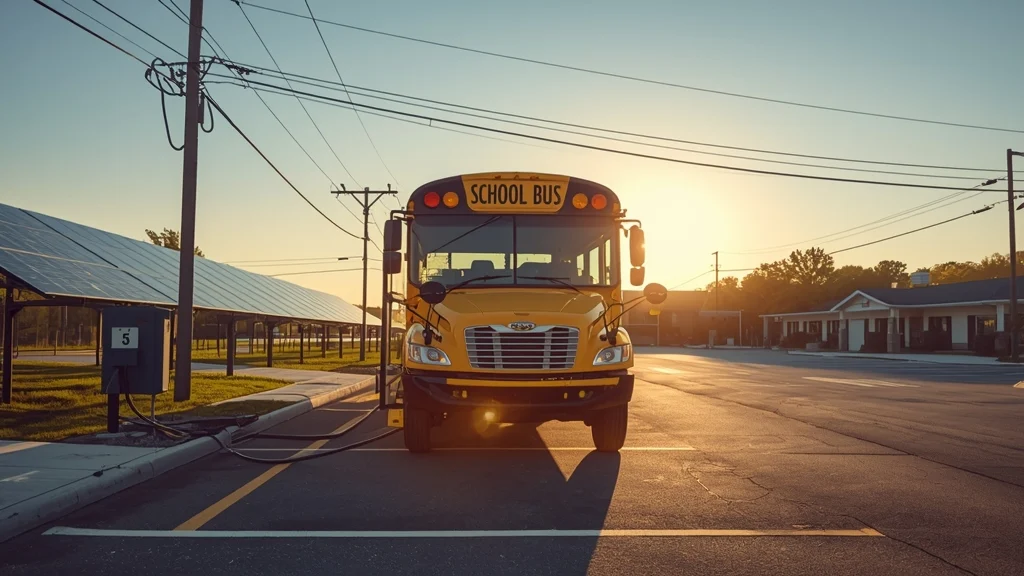
Hundreds of U.S. electric school buses use vehicle‑to‑grid tech to supply power during summer demand. Discover how solution can reshape the grid – read now
When the school bell stops ringing for the summer, many electric school buses sit idle in depots. Rather than letting their batteries sit unused, districts across the United States are tapping into a new source of clean energy: the buses themselves.
What is Vehicle‑to‑Grid (V2G)?
Vehicle‑to‑Grid, or V2G, is a technology that lets an electric vehicle not only draw power from the grid but also send electricity back when it’s needed. The concept works like a giant, mobile battery. During off‑peak hours—when electricity is cheap and demand is low—buses charge up. When the temperature soars and the grid strains under air‑conditioning loads, the stored energy can be dispatched back to the grid.
How School Buses Are Turning Into Power Plants
Hundreds of electric school buses are already part of V2G pilots, from California to North Carolina. The vehicles typically run only in the early morning and late afternoon, leaving the bulk of the day free for energy export. In a typical summer week, a fleet of 230 buses can collectively feed around 8 MWh back into the system—enough to power several hundred homes for a few hours.
While 8 MWh sounds modest compared with the 160,000 MW required by the nation’s largest grid operator (PJM) during a heat wave, the initiative demonstrates a scalable model. As more buses hit the road, their combined capacity could become a significant piece of the energy‑storage puzzle.
Current Projects Across the U.S.
California leads the charge. State policy requires every publicly funded electric bus to be V2G‑ready, and utilities are investing in bidirectional chargers. In Oakland Unified, 74 buses operated by Zum and PG&E are expected to supply roughly 2.1 GWh of electricity each year. A second rollout in San Francisco Unified will add 104 buses, delivering about 3 GWh annually, with the fleet expanding to 238 buses by the 2027‑2028 school year.
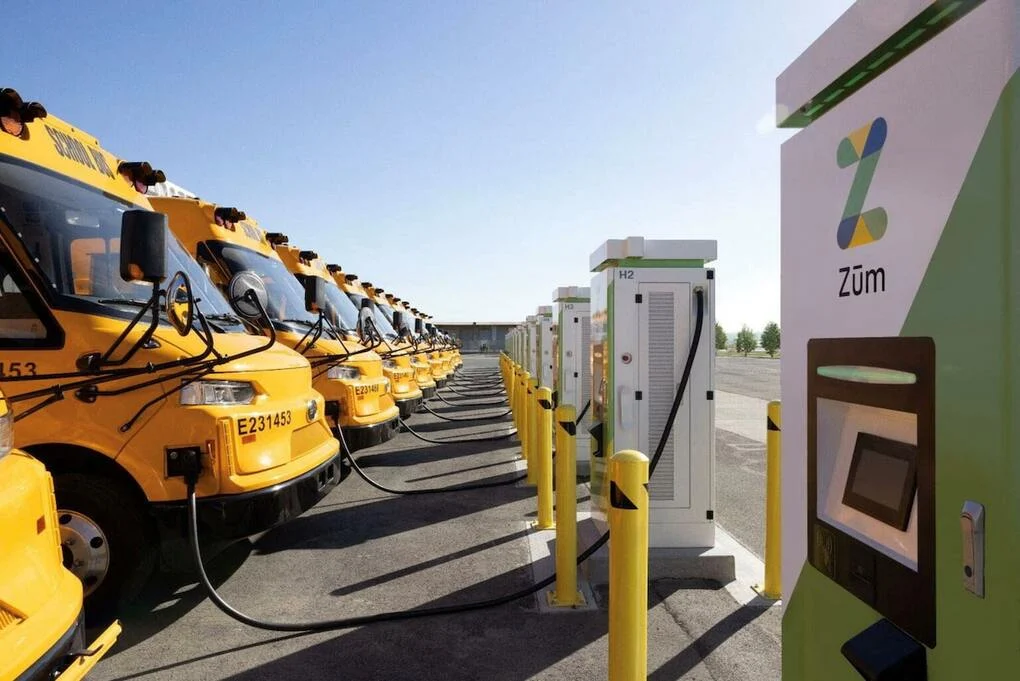
Connecticut plans to put 46 V2G‑enabled buses into service this August, while North Carolina is testing buses as backup power for schools during extreme weather. In Florida, a district is exploring the use of 13 buses as mobile cooling stations and emergency power sources for residents after storms.
Benefits and Limitations
Beyond easing peak‑load stress, V2G can lower electricity bills for school districts, provide revenue streams from energy markets, and reduce the need for new fossil‑fuel peaker plants. It also pairs well with on‑site solar arrays, allowing schools to charge buses with renewable power.
However, several hurdles remain. Bidirectional chargers are considerably more expensive than standard units, and many utilities need infrastructure upgrades to handle simultaneous injections from hundreds of vehicles. A unified national standard for V2G is still in development, and concerns linger about battery degradation and warranty impacts from frequent cycling.
Looking Ahead: Scaling Up V2G
The World Resources Institute estimates that at least 31 utilities in 21 states are already experimenting with V2G on school buses. With the national electric‑bus fleet projected to double to roughly 14,600 units within a few years—about 3 % of all school buses—most of the new vehicles will be V2G‑compatible.
Analysts at ICF predict the United States will need an additional 445 GW of capacity by 2030, driven in part by growing data‑center demand. Harnessing the latent storage in school buses could help bridge that gap, but the fleet must expand dramatically to make a measurable impact.
As the technology matures and costs fall, electric school buses could evolve from simple transportation tools into vital grid assets, helping keep lights on and air conditioners humming even on the hottest days.