
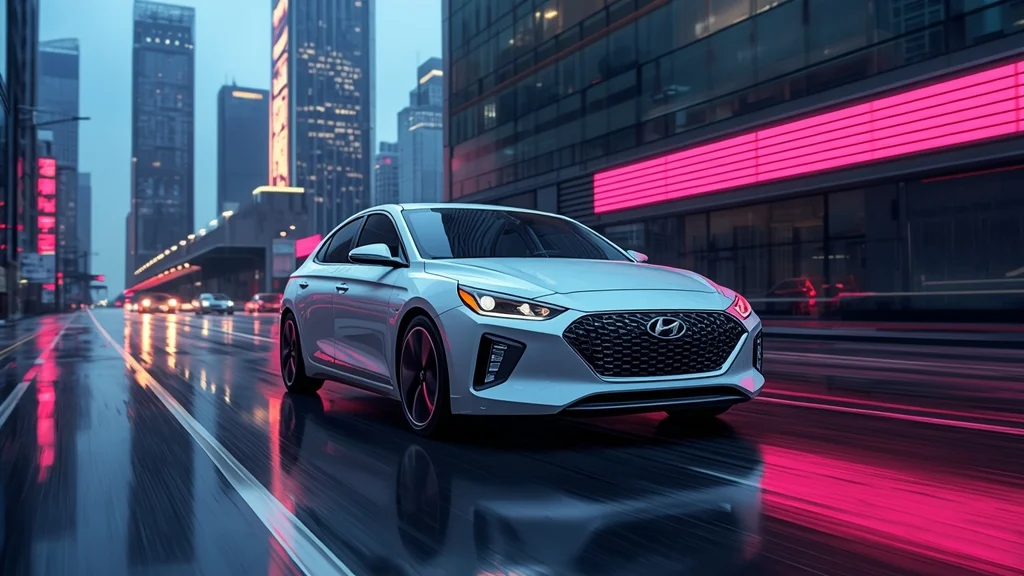
Explore Hyundai’s bold ‘In China, for China’ strategy to reclaim market share amidst fierce EV competition. Read the full analysis here.
Between 2010 and 2016, Hyundai enjoyed a golden era in China. Selling over a million vehicles annually, peaking at 1.1 million units in 2016, China became the automaker’s largest global market, eventually eclipsing its home turf in South Korea. However, the tide turned abruptly.
A Sudden Decline: From Market Leader to Underdog
The downfall began with geopolitical tensions surrounding the deployment of the U.S. THAAD missile defense system, which triggered a backlash against Korean brands. Sales plummeted by 30% to 785,000 units in 2017 and continued a steep slide, dropping to roughly 440,000 by 2020.
The decline accelerated as China pivoted aggressively toward electrification. Local giants like BYD and Geely leveraged massive state subsidies, tax incentives, and a dominant local battery supply chain to crush foreign competitors. Today, domestic brands command nearly 70% of the market, with annual sales exceeding 34 million vehicles. By 2025, Hyundai’s annual sales are projected to dip to around 130,000 units, leaving the company with less than 1% market share.
The “In China, for China” Pivot
While many global automakers are scaling back or exiting China entirely, Hyundai is doing the opposite. The company has adopted a bold new mantra: “In China, for China, towards the Global.”
According to Kim Pil-su, a professor of automotive engineering at Daelim University, the sheer scale of the Chinese market makes it impossible to ignore. “Even a 0.5 percentage point increase in market share translates to over a million additional cars sold,” Kim explains, highlighting why Hyundai believes there is still a path to victory.
Ambitious Goals and New Models
Hyundai CEO Jose Munoz has laid out a clear roadmap for recovery. In a recent letter to shareholders, he announced plans to launch 20 new models over the next five years, with the goal of hitting an annual sales target of 500,000 vehicles.
To achieve this, Hyundai is moving away from its previous approach of selling global models with minor tweaks. Instead, they are rebuilding their strategy from the ground up, tailoring design, technology, and services specifically to Chinese consumer preferences.
Electrification and Local Innovation
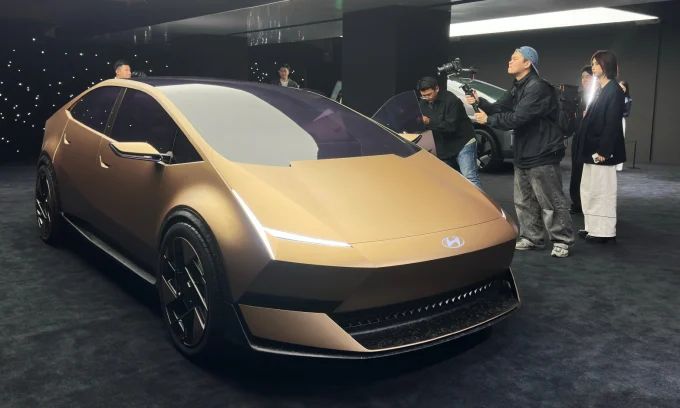
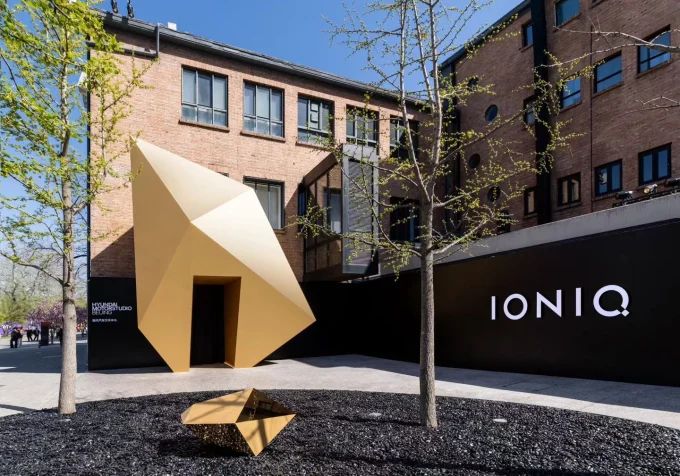
The centerpiece of this comeback is the Ioniq brand. Hyundai recently introduced the brand to the Chinese market with two striking concepts: the Ioniq Venus sedan and the Ioniq Earth SUV. A mass-production Ioniq model is slated for debut at the China Auto Show 2026.
Localized Branding and Tech
- Celestial Naming: In a move to resonate with local culture, Hyundai will ditch the numeric naming convention (like Ioniq 5 or 6) in favor of names based on planets for its Chinese lineup.
- Smart Driving: Hyundai is partnering with Momenta, a leading Chinese autonomous driving startup, to develop driver-assistance features optimized for the unique complexities of Chinese road conditions.
- Range-Extenders: Recognizing the demand for flexibility, Hyundai will introduce range-extended electric vehicles—combining an electric motor with a gasoline engine that charges the battery on the go.
A Historic Shift in Leadership
Perhaps the strongest signal of Hyundai’s commitment is the appointment of Li Fenggang as the head of operations in China this past November. For the first time in the joint venture’s 23-year history, a Chinese national is leading the charge. This move is designed to accelerate localization and grant strategic autonomy to local leadership in one of the world’s most competitive automotive landscapes.
Hyundai is betting that by blending its global engineering prowess with deep local integration, it can reclaim its former glory in a market that remains one of the most lucrative—and challenging—in the world.