
Discover Hyundai’s all‑new i20 crossover, a bold shift from hatchback to SUV‑style for Brazil. See specs, pricing, and launch details – read more now!
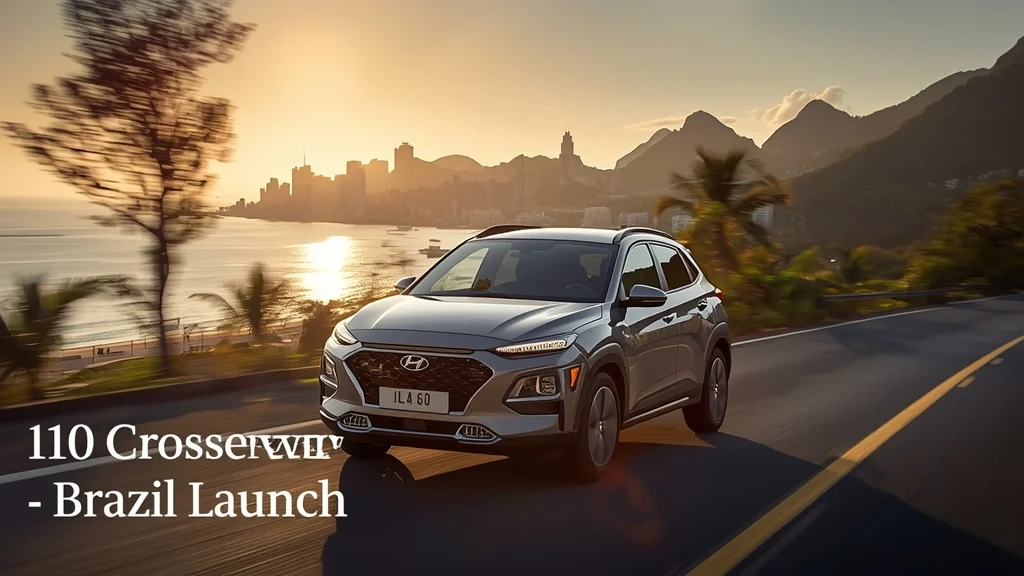
Brazil is the first market globally to welcome the fourth‑generation Hyundai i20, a model that trades its classic hatchback look for a bold, SUV‑inspired shape. The Brazilian‑only version showcases Hyundai’s strategy to blend compact‑car practicality with the rugged appeal of a crossover.
Design: From Rounded Hatchback to Boxy Crossover
The new i20 abandons the soft, rounded lines of its predecessors. Its front end features a wide, Y‑shaped LED light strip that merges daytime running lights with the main headlamp, while a pronounced grille and a high‑mounted bumper give the car a more dominant stance. Plastic cladding wraps the lower front bumper and wheel arches, and black‑accented pillars reinforce the square‑off silhouette.
Key exterior highlights include:
- Large, honey‑comb grille that emphasizes a premium feel.
- Full‑width LED daytime running lights extending across the car’s width.
- Diamond‑cut 17‑inch alloy wheels on the top‑spec Ultimate trim.
Dimensions and Proportions
While the Brazilian i20 shares the same 2,580 mm wheelbase as the outgoing third generation, its overall size has grown slightly. The new model measures 4,130 mm in length (up from 4,065 mm) and stands 1,505 mm tall (versus 1,455 mm previously), giving it a more upright, crossover‑like presence without compromising city‑friendly maneuverability.
Interior: Dual‑Screen Cockpit
Inside, Hyundai introduces a digital cockpit built around a floating 12.3‑inch display that combines two screens into one seamless unit. Despite the high‑tech feel, the automaker retains a familiar layout of physical buttons, a rotary knob beneath the touchscreen, and dedicated climate controls positioned centrally between the vents. The Ultimate trim adds two‑tone artificial‑leather upholstery for a touch of luxury.
Powertrain Options for Brazil
Unlike some markets that are exploring electrification, the Brazilian i20 sticks to conventional internal‑combustion engines:
- Standard 1.0‑liter naturally aspirated three‑cylinder delivering 79 hp.
- Turbocharged 1.0‑liter unit boosting output to 113 hp.
Both engines drive the front wheels through either a manual gearbox or an automatic transmission, depending on the chosen trim.
Production and Market Positioning
Hyundai will assemble the i20 at its Piracicaba plant in Brazil, alongside the locally‑tailored HB20, HB20S and Creta models. The HB20 remains Hyundai’s flagship Brazil‑only vehicle, featuring a multi‑fuel engine that runs on gasoline or ethanol.
The introduction of the i20 crossover raises questions about the future of the HB20’s second generation, which debuted in 2019 and received a mid‑cycle refresh in 2022. Analysts predict the i20 could eventually replace the older HB20 as Hyundai consolidates its B‑segment lineup.
Pricing and Competition
Brazilian pricing starts at R$99,990 (approximately US$19,800) for the base manual version and climbs to R$139,990 (about US$27,700) for the top‑spec automatic turbo model. The i20 will compete directly with compact rivals such as the Volkswagen Polo, Chevrolet Onix, Toyota Yaris and Fiat Argo.
Future Outlook: Global i20 Strategy
In Europe, customers continue to receive the third‑generation i20, launched in 2020 and refreshed in 2023, built in Turkey. A next‑generation global i20 is expected to debut either later this year or by 2027, sharing the Brazilian platform’s core architecture but likely adopting a lightweight hybrid drivetrain for markets that demand greener solutions.
Potential variations for the European market may include a sportier N Line trim and an even more performance‑focused i20 N, possibly equipped with a more powerful self‑charging hybrid system.
What’s Next?
As Hyundai redefines the i20’s identity, the shift from hatchback to mini‑crossover illustrates the brand’s commitment to adapt to evolving consumer preferences—especially in emerging markets like Brazil where space, style and versatility are paramount. Stay tuned for official launch dates, test‑drive events, and further details on the global rollout.